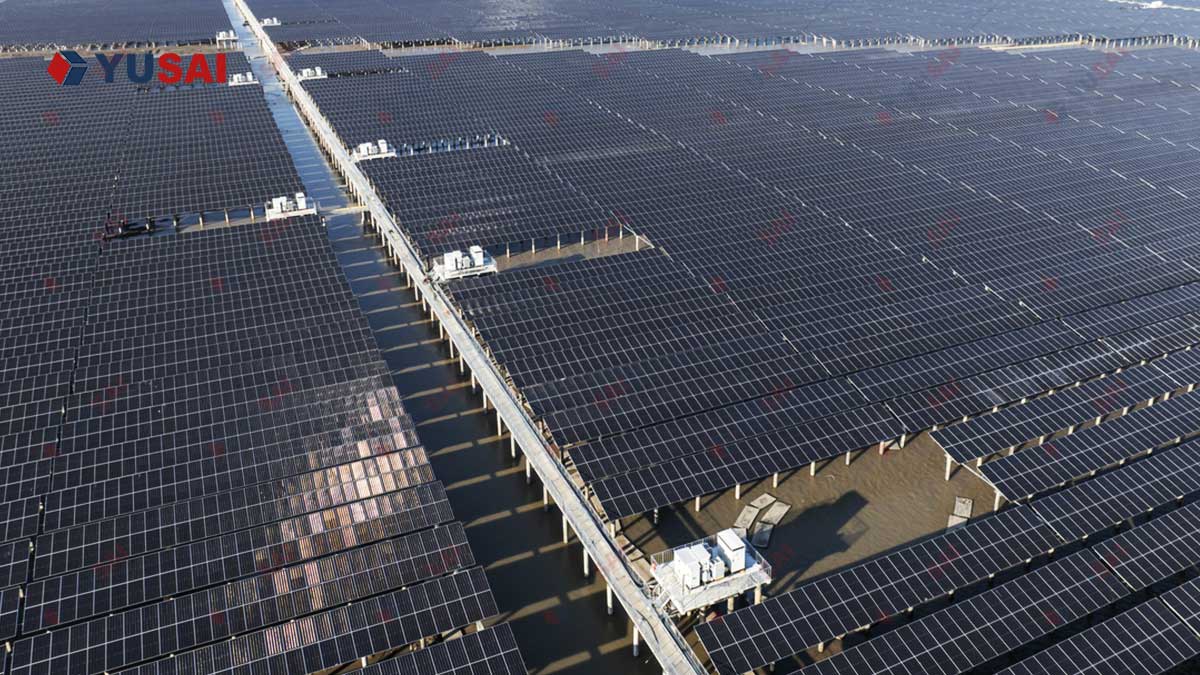
With the rapid development of technology, solar power generation is gradually entering households, becoming an important choice in our pursuit of a green lifestyle. Driven by this trend, the production and use of silicon solar panels are rising at an unprecedented rate, contributing significantly to global energy transition and environmental protection.
However, the widespread application of solar power has also raised concerns about the disposal of waste solar panels, prompting the question: Can solar panels be recycled?
Solar panels, as high-tech products, contain various valuable recyclable resources. Silicon, silver, aluminum, and other metallic materials, as well as special semiconductor materials, are essential components. Professional recycling of these materials can effectively reduce the need for new resource extraction, lower production costs, and significantly mitigate environmental pollution, achieving resource recycling.
The recycling process for solar panels involves several key steps. First, waste panels are initially identified and classified, and appropriate recycling methods are selected based on their materials and models. Second, professional dismantling and separation technologies are used to meticulously separate the various parts of the panel. Finally, valuable materials are extracted to prepare for subsequent reuse.
Currently, the main recycling technologies for waste solar panels include physical recycling and chemical recycling.
Physical recycling primarily uses mechanical force to disassemble and separate the solar panels, then sorts and recycles various materials (such as glass, silicon wafers, silver, etc.). This method is simple to operate, low in cost, and the recycled materials have high reuse value. However, physical recycling has the following drawbacks. First, the complex structure of solar panels means that some materials may be damaged during disassembly, reducing their reuse value. Second, physical recycling cannot effectively remove harmful substances (such as lead and cadmium) from solar panels, causing secondary pollution to the environment.
Chemical recycling mainly extracts useful elements from solar panels through chemical reactions. This method can extract valuable metals from solar panels and has a high recycling efficiency. However, chemical recycling methods require the use of large amounts of chemical reagents (such as inorganic acids), and the process may generate harmful gases and waste liquids, posing potential hazards to the surrounding environment and the safety and health of operators.
On June 3, 2024, Chinese scientists published an article in *Nature Sustainability* on the recovery of silicon solar panels using a salt etching method. This method promises to recover silver and silicon from discarded silicon solar panels without using toxic mineral acids or generating secondary pollution.
The research results were published in *Nature Sustainability*. Image source: *Nature Sustainability*. Researchers used a salt etching method, utilizing the property that molten NaOH-KOH can react with SiNx, SiO2, Al2O3, and Si, reacting from top to bottom with the surface coating of the silicon solar panel to peel off the silver wires embedded between the silicon panel and the silicon nitrogen compound. This etching process takes only 180 seconds and achieves recovery rates of up to 99.0% for silver and 98.0% for silicon.
Furthermore, this recycling process also recovers other valuable metals such as copper, lead, and tin from solder strips using a selective oxidation-alkali leaching-electrodeposition method. Unlike traditional silicon solar panel recycling processes, this method does not require the use of corrosive inorganic acids, reducing chemical waste and environmental pollution. This recycling process directly obtains silver wire, avoiding the dissolution and deposition of silver, making it more efficient than other recycling methods.
This study also utilized salt etching to conduct recycling experiments on different types of solar cells. The results show that this recycling method is applicable to various cell architectures, achieving high recovery rates and purity of both silver and silicon, making it a universally applicable method for recycling silicon solar panels.
The environmental impact of solar power generation is complex and far-reaching, and the integrity of the solar panel’s lifecycle is of widespread concern. We should actively promote the application of solar power generation, fully leveraging its advantages in environmental protection and energy security, while also constantly monitoring and addressing potential environmental risks and challenges, jointly promoting the green and sustainable development of clean energy.