
Solar Panel Pyrolysis Tunnel Furnace
— Solar Panel Pyrolysis Tunnel Furnace
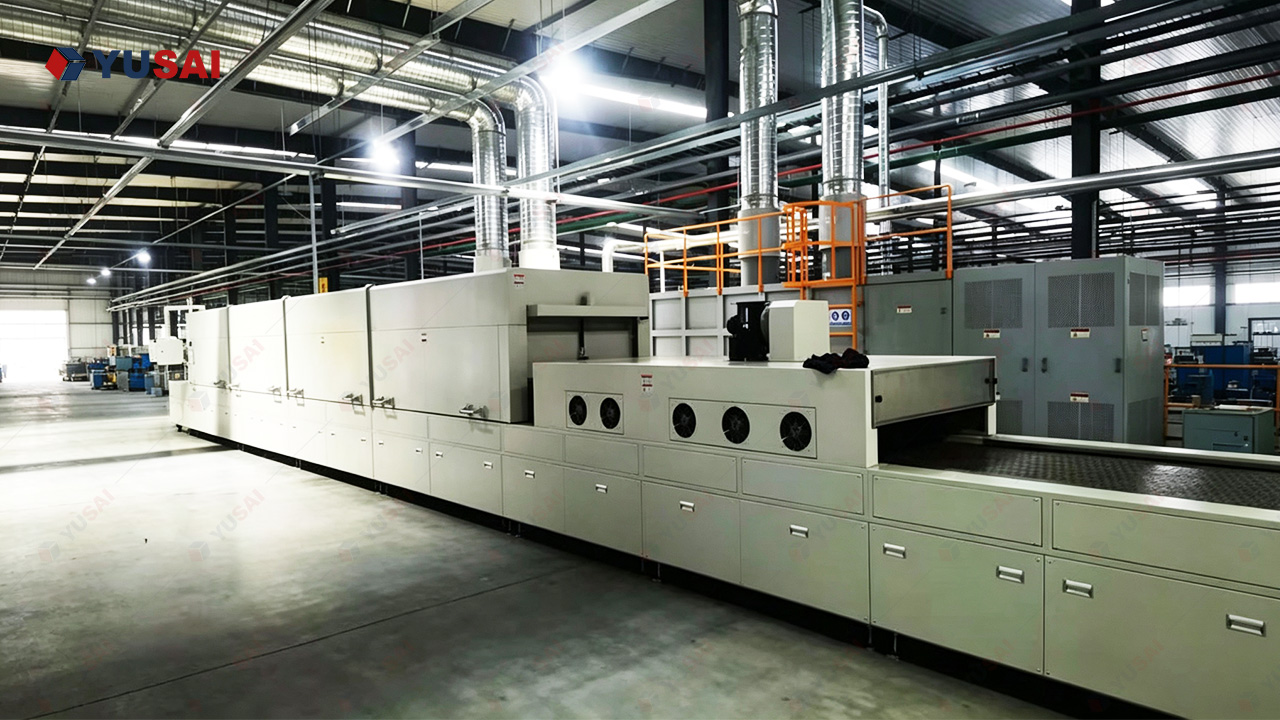
The solar panel pyrolysis tunnel furnace is an industrial-grade continuous thermal recycling system that decomposes EVA encapsulation and backsheet polymers from end-of-life photovoltaic (PV) modules inside an oxygen-free tunnel at precisely controlled temperatures of 400–600°C. It recovers intact silicon wafers, clean tempered glass, copper ribbons and silver-bearing materials — with material purity up to 99% — so recyclers can turn retired solar panels into high-value secondary raw materials instead of landfill waste. The furnace is energy-efficient (recycling its own pyrolysis gas as fuel), PLC-automated, and fully compliant with international emission standards.
Product Overview
A solar PV panel is a multi-layer composite: tempered glass, EVA (ethylene-vinyl acetate) encapsulant, silicon cells, backsheet film, aluminum frame, junction box and copper ribbon. The EVA and backsheet layers bond the structure so tightly that mechanical crushing alone cannot separate them cleanly — it shatters the glass and contaminates it with polymer residue, producing low-value mixed fractions.
Our continuous solar panel pyrolysis tunnel furnace solves this problem with thermal decomposition. Panels (with aluminum frame and junction box removed) travel on a variable-speed conveyor through a sealed, oxygen-free tunnel. Heat is applied in multiple independently controlled zones, causing the EVA and backsheet polymers to vaporize and lose their bonding force. The glass simply falls away from the silicon cells, and every valuable layer can then be recovered cleanly.
Designed for solar panel recycling plants, solar-farm decommissioning projects, e-waste processors and PV manufacturers, the system supports processing capacities from 1.0 to 3.0 tons per hour (customizable) and integrates seamlessly with the rest of a complete solar panel recycling line — frame removal machine, glass removal machine, crushing & sorting equipment and silver electrolytic refining units.
What is a solar panel pyrolysis tunnel furnace? It is a continuous conveyor-type industrial furnace that thermally decomposes the polymer layers of decommissioned PV modules in a low-oxygen or oxygen-free atmosphere, enabling clean, high-purity separation of glass, silicon, copper and precious metals without combustion or secondary pollution.
Recycling Value Analysis
1. What is inside a waste solar panel?
Typical composition of crystalline silicon PV modules:
- Tempered glass — 60–80%
- Aluminum frame — 10–15%
- Silicon cells — 5–10%
- EVA encapsulant — 5–8%
- Backsheet (TPT/PET) — ~5%
- Conductive materials (copper, silver) — ~1%
- Junction box — 2–3%
2. Where the value is
- Aluminum frames — removal rate ≥ 99% with purity ≥ 98%; sold directly as clean aluminum scrap.
- Tempered glass — recovered intact (not powdered) at 85–95% recovery and ≥ 90% purity; sold back to glass manufacturers or cullet traders.
- Silicon wafers / powder — recovery ~95%, with silicon content up to ~45% in concentrate; suitable for metallurgical-grade reuse, PV feedstock, or sale to silicon buyers.
- Copper ribbons & wires — recovery ≥ 95% with purity ≥ 95%; sold as #1/#2 copper scrap.
- Silver (from cells & paste) — refined by electrolysis to purity > 99%; the highest-value precious-metal revenue stream.
- Pyrolysis syngas & oil — recycled as furnace fuel, saving up to 30% of fuel cost.
3. Market drivers
- Retirement wave: Silicon PV modules have a typical service life of 25–30 years. Early large-scale installations are now reaching end-of-life, and the volume of decommissioned panels is rising sharply across Europe, North America and Asia-Pacific.
- Rising disposal costs & regulation: Landfill bans and stricter e-waste directives (WEEE-style regulations) force plant operators and solar-farm owners to recycle instead of dump.
- Resource security: Recovered silicon, silver and copper reduce dependence on virgin mining; silver recovery alone can materially improve project economics.
- Energy saving: Because the furnace recycles its own combustible pyrolysis gas, fuel consumption drops by up to 30% compared with conventional thermal processes.
Applicable Materials (Raw Materials)
The furnace processes crystalline silicon (c-Si) photovoltaic modules, including:
- Monocrystalline and polycrystalline silicon panels (PERC, BSF, TOPCon)
- Bifacial and double-glass (glass–glass) panels — the technology of choice for these hard-to-crush modules
- Panels with broken glass, hail damage, or partial delamination
- Frameless laminates (recommended) or whole panels with frames (with pre-treatment module)
- Decommissioned, damaged, production-reject and off-spec modules
Note: Thin-film panels (CdTe / CIGS) and panels with unusual backsheets can be processed with customized process profiles — contact us with your specific panel type for a feasibility test.
Product Structure (Main Equipment)
The solar panel pyrolysis tunnel furnace consists of five core systems, with optional modules for complete-line integration:
1. Furnace Body Structure System
- Stamped and welded steel-plate casing (stainless or carbon steel), high strength, deformation-resistant
- Internal thermal insulation of aluminum silicate fiber / rock wool (20–100 mm), minimizing heat loss and keeping the external surface cool
- High-temperature seals, air knives and flexible curtains at inlet/outlet to maintain the oxygen-free process atmosphere
2. Heating & Temperature Control System
- Heating elements: electric heating tubes, infrared radiation tubes, or gas burners (natural gas / LPG), according to your local energy cost
- Modular zones: preheating → high-temperature constant zone → cooling; each zone independently controlled (uniformity ±1.5°C)
- Intelligent control cabinet with PLC, PID controllers and HMI touchscreen for closed-loop control of temperature, conveyor speed and gas flow
3. Drive & Conveying System
- Motor, reducer and gearbox drive the conveying medium: variable-speed mesh belt or heavy-duty chain-plate / pusher system
- Supports continuous 24-hour operation with automatic feeding and discharging
- Tracking/alignment device prevents belt deviation for stable module travel
4. Ventilation & Exhaust Gas Treatment System
- Hot-air circulation fans ensure uniform heating and eliminate temperature dead zones
- Induced-draft exhaust extracts volatilized VOCs and pyrolysis gas
- Downstream multi-stage purification: secondary combustion chamber → cooling tower → wet scrubber → activated carbon adsorption, meeting EPA/CE-level emission standards with zero dark smoke
5. Safety & Auxiliary Systems
- Emergency stop, over-temperature protection, belt-breakage detection and smoke alarms (response ≤ 3 seconds)
- Observation windows and maintenance access doors for real-time monitoring and cleaning
- Optional: nitrogen (N₂) purge system for a fully sealed oxygen-free atmosphere; gas condensation & recovery unit that returns pyrolysis gas to the burner
Process Flow
The complete solar panel pyrolysis recycling process is engineered as one continuous flow:
- Frame & junction box removal — an automatic frame removal machine strips the aluminum frames (sold as clean scrap) and cuts off the copper-rich junction boxes before feeding.
- Feeding — the frameless laminates are loaded onto the variable-speed tunnel conveyor; uniform feeding ensures consistent decomposition.
- Preheating zone — modules are gradually warmed so thermal shock does not crack the glass or silicon cells.
- Controlled pyrolysis — inside the sealed oxygen-free tunnel at 400–600°C, the EVA and backsheet polymers thermally decompose and gasify; the glass separates naturally from the silicon cells.
- Gas extraction & recycling — volatile organic compounds are extracted to the gas treatment system; after purification, the combustible syngas is recycled as auxiliary furnace fuel.
- Cooling & discharge — clean silicon wafers, copper ribbons and glass exit the cooling zone free of carbon residue.
- Sorting & refining — a mechanical separation system sorts the glass, copper and silicon; silver is recovered from cells and paste by electrolytic refining at purity > 99%.
Product Features
- Intact wafer recovery — controlled horizontal heating separates the EVA without cracking the brittle silicon cells, the single biggest value differentiator versus crushing.
- Continuous conveyor design — 24/7 automated feeding and discharging for high-throughput industrial operation.
- Multi-zone PID temperature control — 8–10 independent heating zones with ±1.5°C uniformity precisely manage the decomposition of different polymer layers.
- Oxygen-free atmosphere — the N₂-purged sealed tunnel prevents combustion, protecting glass and silicon quality.
- Pyrolysis gas energy recovery — combustible syngas from EVA/backsheet decomposition is recycled as fuel, saving up to 30% on energy costs.
- Low-emission gas treatment — secondary combustion, cooling, wet scrubbing and activated carbon adsorption deliver zero dark smoke, compliant with EPA/CE standards.
- Smart PLC operation — real-time temperature monitoring, automatic alarms and remote diagnostics reduce manpower and risk.
- Modular, scalable design — easily integrated with crushing, sorting and refining units; capacity customized to your factory footprint.
- High-temperature durability — refractory insulation and heat-resistant conveyor materials ensure a long service life.
- Complete turnkey support — layout design, installation, commissioning, operator training and lifetime spare-parts supply.
Technical Parameters
1. Main furnace (standard configuration)
| Parameter | Specification |
|---|---|
| Model | YS-PV-PTF120M / YS-PV-PTF240M |
| Processing capacity | 1.0–3.0 tons/hour (customizable) |
| Operating temperature | 400°C – 600°C (max design: 800°C) |
| Temperature uniformity | ±1.5°C across zones |
| Heating source | Electricity / Natural Gas / LPG / recycled pyrolysis gas |
| Atmosphere control | Nitrogen (N₂) purged, sealed oxygen-free environment |
| Tunnel length | 12 m – 24 m (based on capacity layout) |
| Conveying system | Variable-speed mesh belt or chain-plate conveyor |
| Control system | Centralized PLC + HMI touchscreen, smart temperature monitoring |
| Voltage supply | 380V / 50Hz / 3-phase (customizable) |
| Emission standard | Zero dark smoke; compliant with international eco-regulations |
2. Typical line configuration (for reference)
| Item | Specification |
|---|---|
| Solar panel frame removal machine | 40–70 pcs/h, 4 kW |
| Glass removal machine | 40–70 pcs/h, 30 kW |
| Pyrolysis sorting line (full plant) | 1–5 t/h; footprint approx. 32–48 m × 7–10 m × 6 m |
| Silver electrolytic refining unit (SER series) | 20–300 kg/batch, 5–39 kW |
| Flue gas treatment system | Secondary combustion + cooling tower + wet scrubber + activated carbon |
Note: All figures are for reference only. Capacity, dimensions, heating source and voltage are customized to your raw materials, site layout and local energy costs. Please send us your panel type and daily tonnage for an engineered quotation.
Advantages
1. Pyrolysis vs. traditional mechanical crushing
Compared with conventional mechanical crushing, the pyrolysis tunnel furnace delivers:
- Glass output — intact, clean and high-purity, sellable directly to glass manufacturers, whereas crushing shatters the glass and contaminates it with EVA, producing low-value material.
- Silicon cells — recovered whole or as a high-purity concentrate, instead of being lost into low-grade powder.
- Silver & copper — easily accessible and refined to >99% purity, versus difficult extraction and lower recovery under crushing.
- Panel compatibility — handles single-glass AND double-glass/bifacial modules, while crushing suits single-glass panels only.
- End-product value — high-value outputs across the board, whereas crushed fractions command only low prices.
- Environmental profile — a sealed system with purified gas and no secondary pollution, versus dust and polymer contamination.
2. Business advantages with YuSai Machinery
- OEM/ODM manufacturer since 1995 — factory-direct pricing, no middlemen, full customization
- Complete solution provider — from blueprint and layout design to installation, commissioning and operator training
- Proven global track record — equipment serving customers across Europe, America, Asia and Africa
- Process-tested — raw-material sample testing before quotation to confirm your exact recovery economics
- Compliant by design — engineered to meet international environmental and safety standards
Service Process
From inquiry to production, we guide you through seven clear steps:
- Inquiry & raw-material test — tell us your panel type, daily tonnage and target outputs; we test your sample to confirm recovery results
- Solution design — engineers prepare the process flow, layout drawing and equipment list tailored to your site
- Quotation & contract — transparent factory-direct pricing with clear scope and delivery terms
- Production & QC — manufacturing with staged inspection and progress updates (photos/videos)
- Shipping — professional export packing, sea/air freight coordination, full documentation
- Installation & commissioning — our engineers (or online guidance) install, commission and run the first batch with you
- Training & after-sales — operator training on safety, operation and maintenance; lifetime technical support
Warranty & After-Sales
- Standard warranty: 12 months on the main furnace body and core systems (terms per contract; extendable by negotiation)
- Wear parts: conveyor belts, heating elements and seals supplied at factory cost for the life of the machine
- Remote support: online diagnosis via video call, PLC remote-access diagnostics and instant spare-parts dispatch
- Training: full operator and maintenance training at commissioning, plus operation manuals in English
- Upgrades: process optimization and capacity upgrades available as your recycling business grows
Precautions
- Never open the furnace chamber at high temperature — wait for cool-down; always follow the lockout/tagout procedure before maintenance
- Oxygen control is critical — keep the N₂ purge and seal system functional at all times; oxygen ingress can create explosive conditions during pyrolysis
- Pre-treat panels correctly — remove aluminum frames and junction boxes before feeding for best glass purity; oversize or wet loads reduce throughput
- Regular maintenance — clean conveyor residue daily/weekly, test heating-element resistance and check belt tracking to prevent deviation
- Staff safety — operators must use heat-resistant gloves, goggles and protective clothing; keep fire extinguishers and alarms within reach
- Environmental compliance — operate the gas treatment system per local permits; never bypass the secondary combustion and scrubber units
- Follow the rated capacity — avoid overloading beyond the designed throughput; consult us before processing new panel types
FAQ (Frequently Asked Questions)
Q1. What is a solar panel pyrolysis tunnel furnace?
A continuous conveyor-type industrial furnace that thermally decomposes the EVA encapsulation and backsheet of decommissioned PV modules in an oxygen-free environment (400–600°C), separating glass, silicon, copper and silver cleanly without combustion.
Q2. Why use pyrolysis instead of crushing?
Crushing shatters glass and contaminates it with EVA, producing low-value mixed fractions. Pyrolysis vaporizes the polymer layers so glass stays intact and silicon cells are recovered whole — dramatically higher end-product value, especially for double-glass and bifacial panels.
Q3. Which solar panels can it process?
Monocrystalline and polycrystalline c-Si panels (PERC, BSF, TOPCon), bifacial and double-glass modules, and panels with broken glass or hail damage. Thin-film panels can be processed with customized profiles.
Q4. Do I need to remove the aluminum frame and junction box first?
We recommend it: the frame sells as clean aluminum scrap, and the junction box contains copper and plastic. Our line can include an automatic frame removal machine; whole-panel processing is also possible with a pre-treatment module.
Q5. What materials can I recover, and at what purity?
Aluminum (≥98% purity), intact tempered glass (≥90% purity), silicon (wafer or concentrate), copper (≥95% recovery) and silver (purity >99% via electrolytic refining). Recovery figures depend on panel type — we confirm them with a sample test.
Q6. Is the process environmentally friendly?
Yes. The furnace operates sealed and oxygen-free; volatilized gases pass through secondary combustion, cooling, wet scrubbing and activated carbon adsorption, meeting international emission standards with zero dark smoke.
Q7. What is the processing capacity?
Standard models process 1.0–3.0 tons per hour; larger capacities (up to 5 t/h) can be engineered. Tell us your daily tonnage and we will size the line accordingly.
Q8. How much energy does it consume?
The furnace recycles its own combustible pyrolysis gas as fuel, reducing fuel consumption by up to 30% compared with conventional thermal processing.
Q9. Do you provide installation, training and after-sales support?
Yes — on-site installation and commissioning by our engineers, full operator training, 12-month warranty, remote diagnostics and lifetime spare-parts supply.
Q10. Can the furnace integrate with a complete solar panel recycling plant?
Absolutely. It is designed as the core module of a full line: frame removal → pyrolysis → sorting → silver refining, with layout and capacity customized to your site.

Get A Free Quote
Fill in the form below and our service team will get back to you within 24 hours with a recommended process flow and quotation.
- +86 18339216321
- info@yusaipreciousmetals.com
- Zhengzhou.Henan.China
- Solar Panel Recycling Plant
- Solar Panel Pyrolysis Recycling Plant
- Solar Panel Junction Box Removing Machine
- Solar Panel Aluminum Frame Removing Machine
- Solar Panel Glass Removing Machine
- Solar Panel Pyrolysis Tunnel Furnace
- Solar Panel Pyrolysis Sorting System
- Solar Panel Crushing Sorting System
- Silver Stripping Machine
If you be interested in our equipment and solutions, please to contact us.
- +86 18339216321
- info@yusaipreciousmetals.com
- zhengzhou.henan.china