
Solar Panel Recycling Plant
— Turnkey Solar Panel Recycling Plant
The Solar Panel Recycling Plant is designed specifically for discarded crystalline silicon photovoltaic modules (scrap, damaged, defective, and retired panels). It can automatically remove aluminum frames and junction boxes, peel off tempered glass, and then crush, grind, and sort the remaining laminates into high-purity silicon powder, copper, silver-containing materials, glass, and plastics, with an overall material recycling rate of over 95%. Available in two proven process routes — the physical crushing & sorting line and the pyrolysis recycling line — the equipment is fully automated, energy-efficient and environmentally safe, and turns solar panel waste into a profitable, compliant recycling business.
Product Overview
The world installed more solar capacity in the past decade than in all previous decades combined. As the first large-scale PV plants pass their 25–30 year design life, and as extreme weather, transport damage and warranty returns accelerate early retirement, the industry is entering its first true decommissioning wave. According to the International Renewable Energy Agency (IRENA), cumulative global PV panel waste will reach roughly 8 million tonnes by 2030 and could exceed 78 million tonnes by 2050. The U.S. EPA estimates that the recoverable raw materials in end-of-life solar panels will be worth about US$450 million by 2030 — equivalent to the raw materials for some 60 million new panels — and more than US$15 billion by 2050.
Yet most retired panels are still landfilled today. A crystalline-silicon module is a tightly bonded laminate of glass, EVA encapsulant, silicon cells, metal ribbons and an aluminum frame, and the strong EVA adhesive makes conventional dismantling difficult. This is precisely the problem YuSai Machinery’s solar panel recycling equipment was built to solve.
Our solution covers two complementary routes. The physical crushing & sorting line uses mechanical dismantling, crushing, grinding and dry separation — no heat, no chemicals — and is the economical standard choice for single-glass (monofacial) panels. The pyrolysis line cracks the EVA/backsheet in an oxygen-free tunnel furnace, enabling clean separation of double-glass (bifacial) panels and whole silicon wafers for maximum silver recovery. Both routes are backed by our in-house silver stripping and precious metal refining equipment, a natural extension of YuSai’s core refining technology — so the whole value chain, from scrap panel to saleable silver and silicon, comes from a single supplier.
Recycling Value Analysis
A crystalline-silicon PV module consists of roughly 70–75% tempered glass, about 10% aluminum frame, around 5% silicon cells, and under 1% silver paste and copper ribbons by weight, with EVA encapsulant, backsheet and plastics making up the remainder. Yet the small fraction of precious metals carries a disproportionately high share of the economic value — and every component becomes a saleable product:
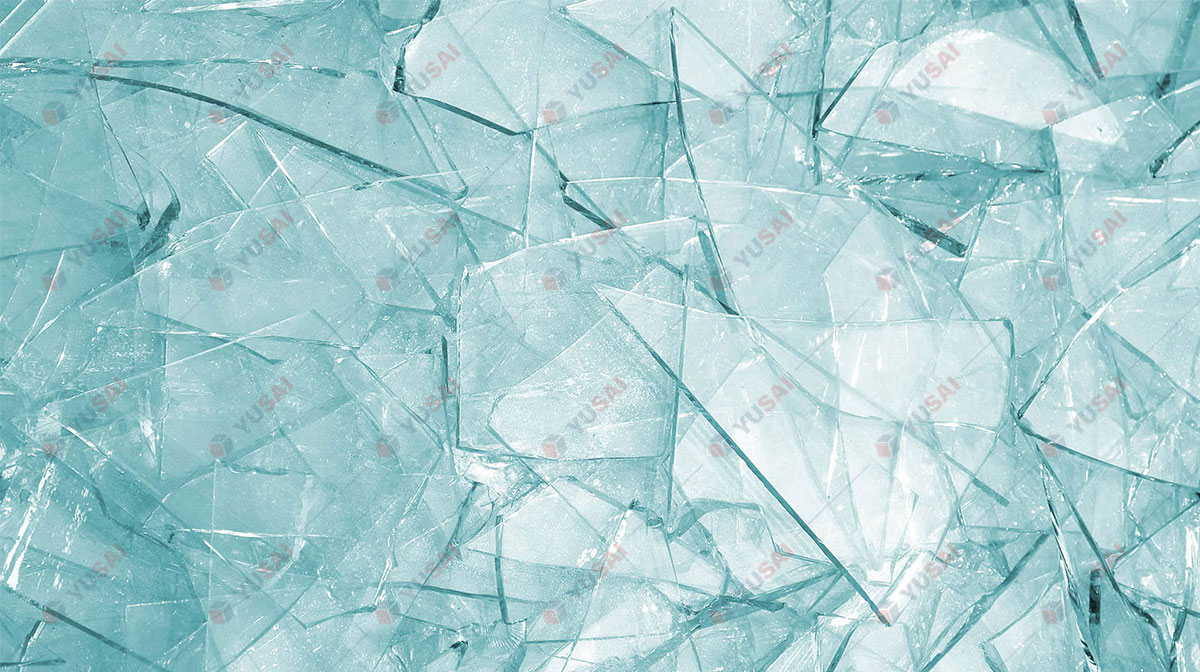
- Tempered glass (~70–75%) — recovered as clean glass cullet: a bulk-volume material with stable off-take in glass manufacturing.
- Aluminum frame (~8–10%) — recovered as aluminum scrap in a mature, liquid scrap market: the fastest direct payback item.
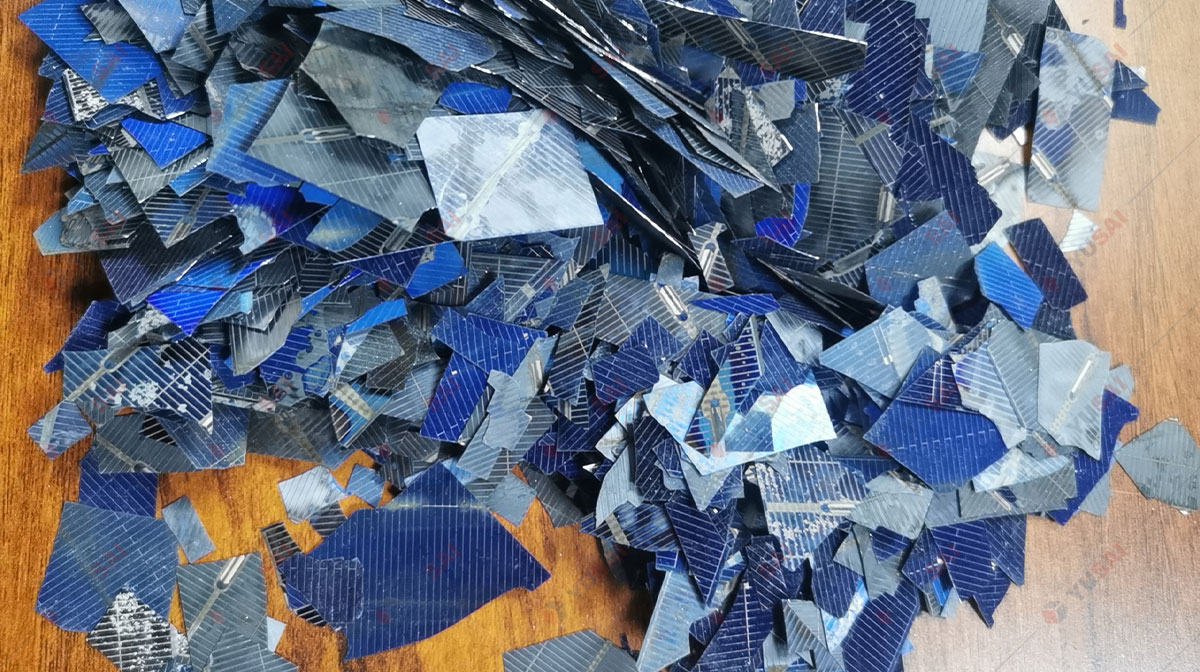
- Silicon cells (~4–5%) — recovered as silicon powder or whole wafers that feed back into industry; purification adds further value.
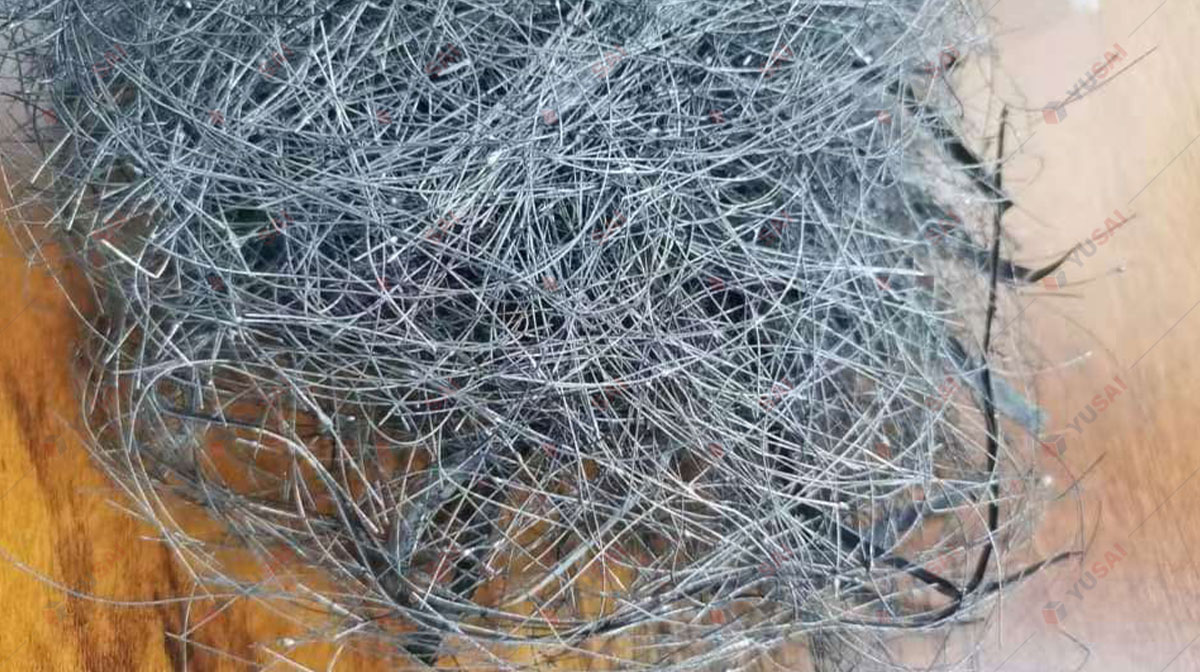
- Silver paste & copper ribbons (<1%) — recovered as silver and copper: the highest value per gram and the key profit driver of the line.
- EVA, backsheet & plastics (~5–8%) — recovered as plastic powder for use as secondary plastic feedstock.
Why The Economics Work:
- 95%+ material recovery rate — almost every component becomes a saleable product instead of landfill cost.
- Separation rate up to 99% — air classification plus high-voltage electrostatic separation delivers clean silicon powder, clean plastics and concentrated metals that command premium prices.
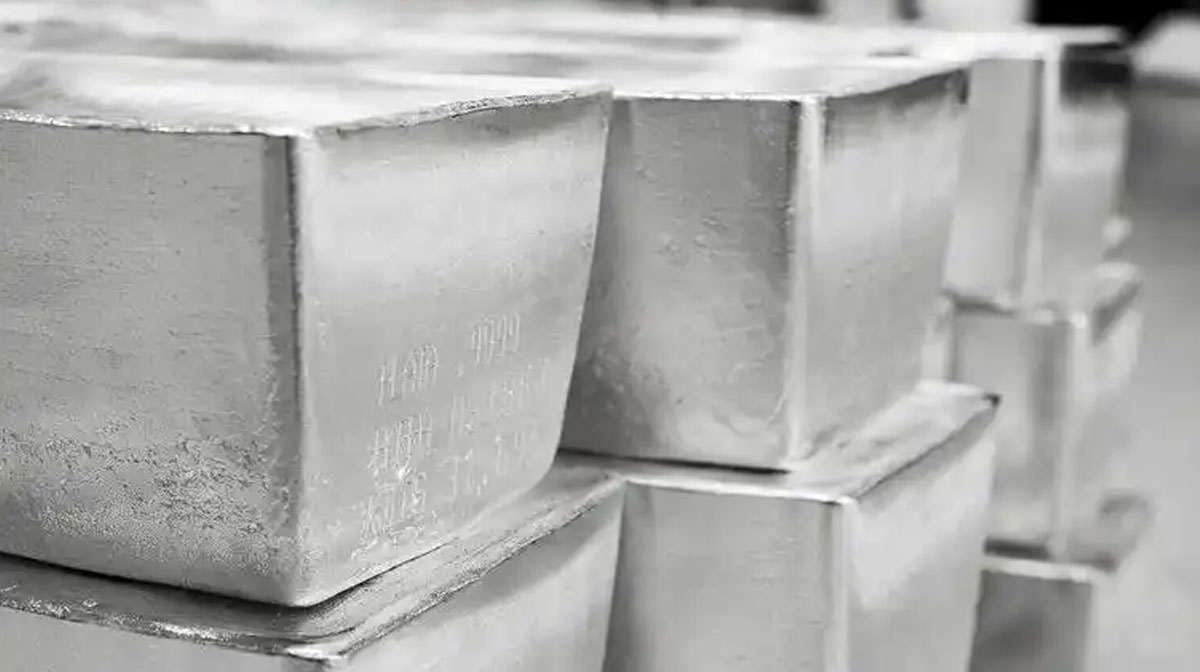
- Silver & copper premium — through the pyrolysis route and silver stripping / precious metal refining, high-purity silver is recovered from the cell busbars; despite its tiny weight share, silver can account for a significant share of revenue per tonne of panels.
- Regulatory tailwind — the EU WEEE Directive, expanding U.S. state laws and Asia-Pacific EPR schemes increasingly mandate or incentivize PV recycling, securing feedstock and justifying recycling fees.
- Clear payback logic — aluminum frames and silver are the fastest payback items; overall payback depends on local scrap prices, feedstock volume and recycling fees. Contact us for an ROI estimate tailored to your market.
Applicable Materials
- Monocrystalline (mono-Si) and polycrystalline (poly-Si) panels
- Single-glass (monofacial) modules — standard physical line
- Double-glass / bifacial modules — pyrolysis line (or dedicated double-glass pre-treatment)
- End-of-life panels from decommissioned plants and rooftops
- Damaged, broken, defective, warranty-return and warehouse-return panels
- Framed or frameless panels; with or without junction boxes (pre-treatment machines remove them first)
- Peripheral components: aluminum frames, junction boxes, copper ribbons, busbars
Note: Thin-film modules (CdTe) contain cadmium-telluride and require a dedicated recycling process; our standard crystalline-silicon lines are not intended for them. Please inform us of your material mix so we can configure the correct line.
Product Structure (Main Equipment)
1. Pre-Treatment Station (both lines)
Solar Panel Junction Box Removing Machine
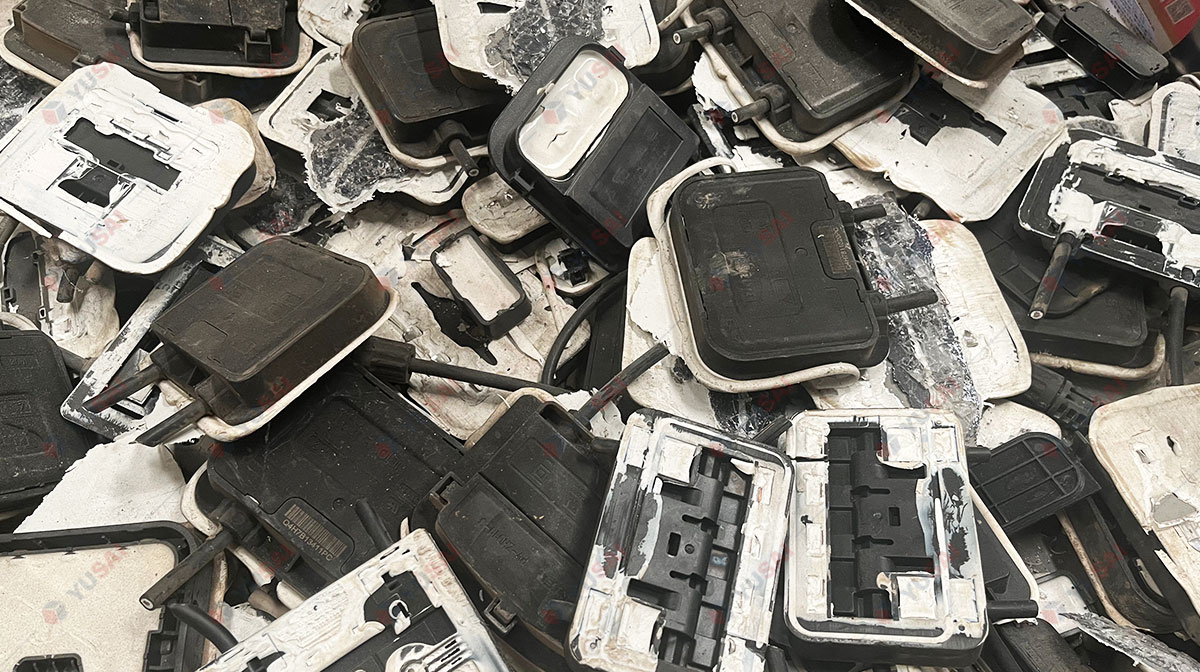
Detaches the junction box (and attached cables) from the back of the panel. Removing it first prevents plastic and copper from contaminating the downstream glass and silicon fractions, and keeps the feed to the crusher uniform.
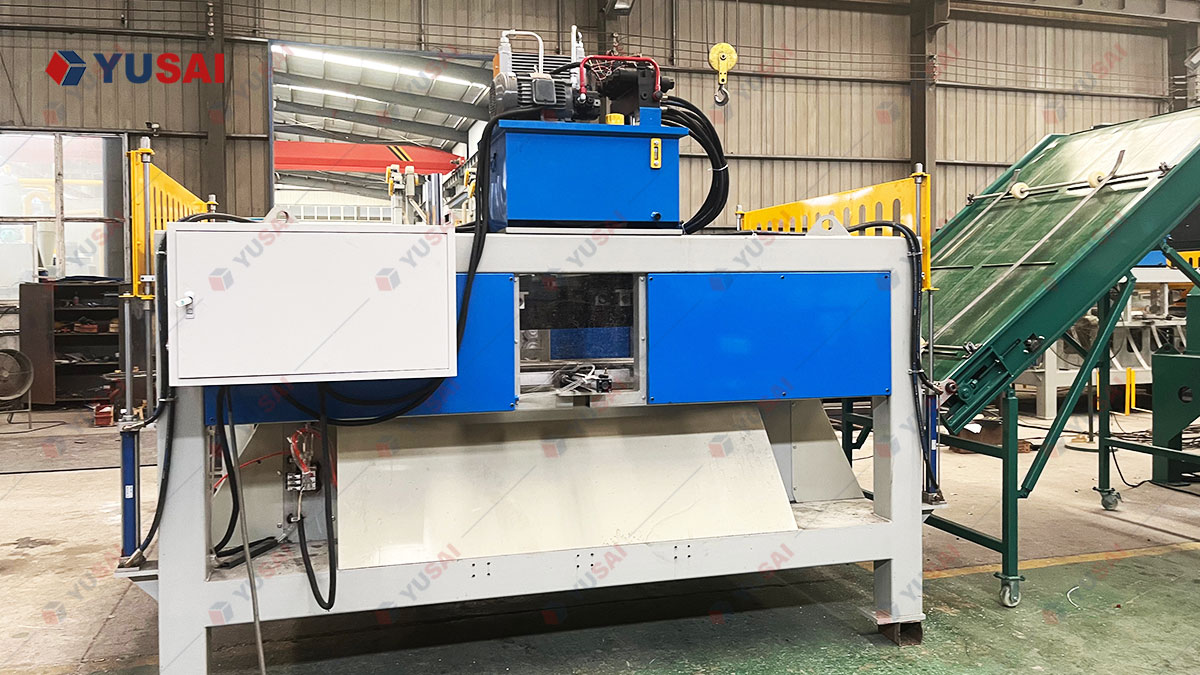
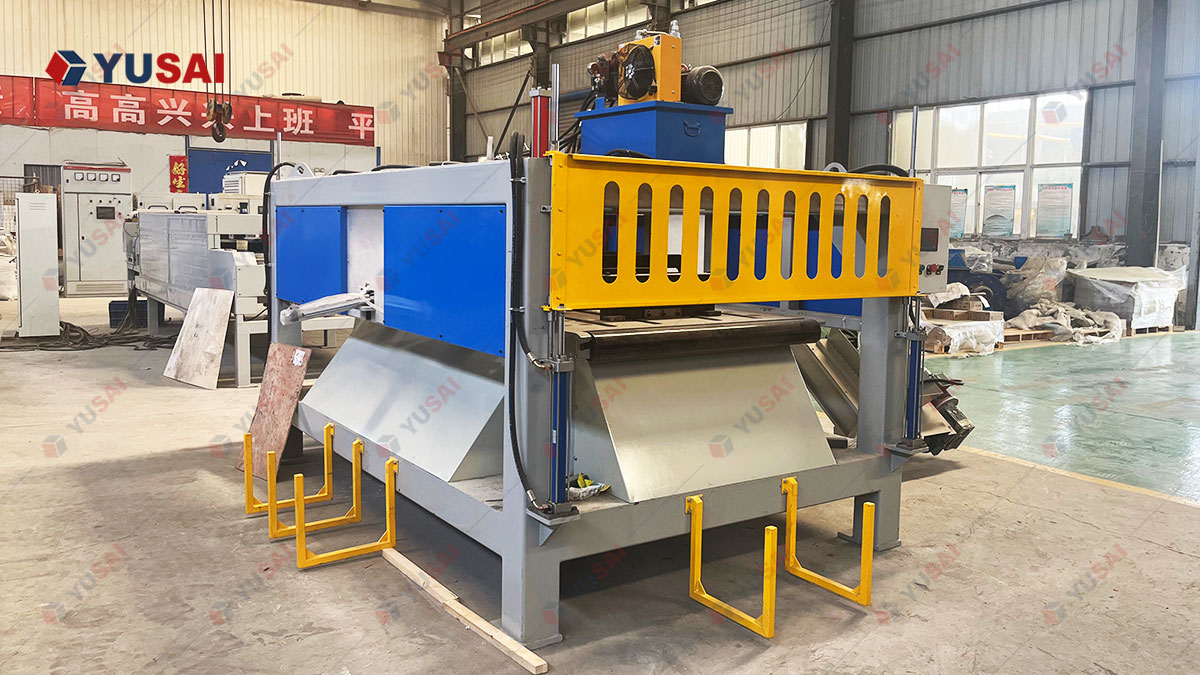
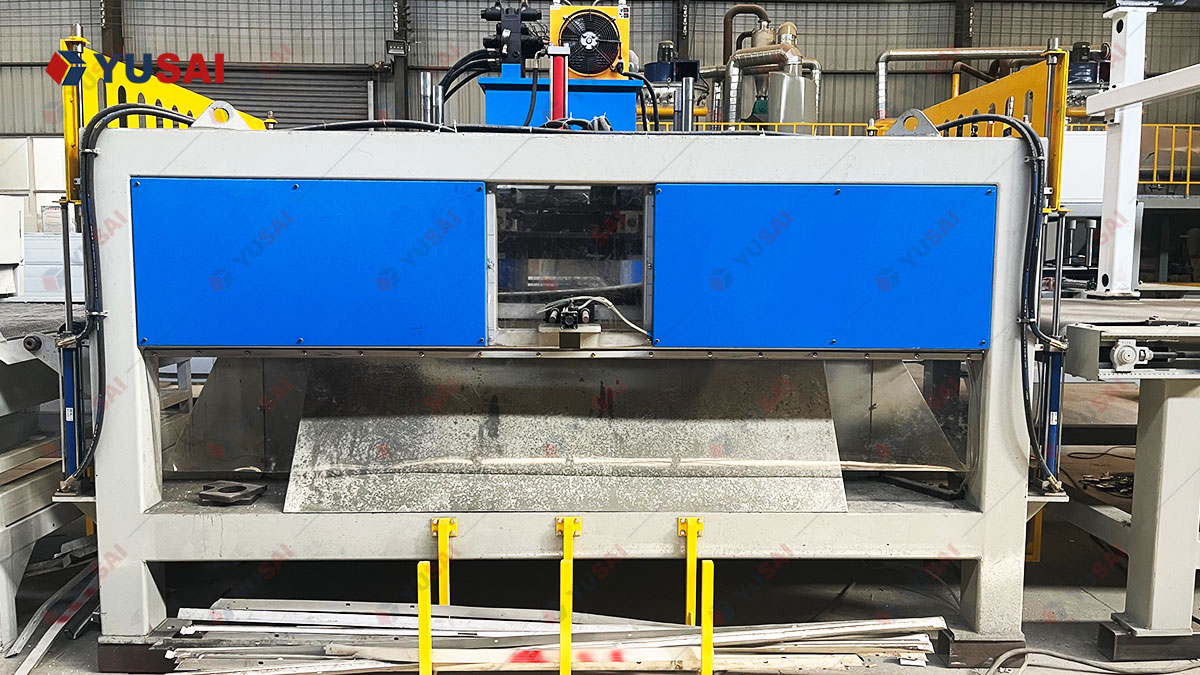
Solar Panel Aluminum Frame Removing Machine
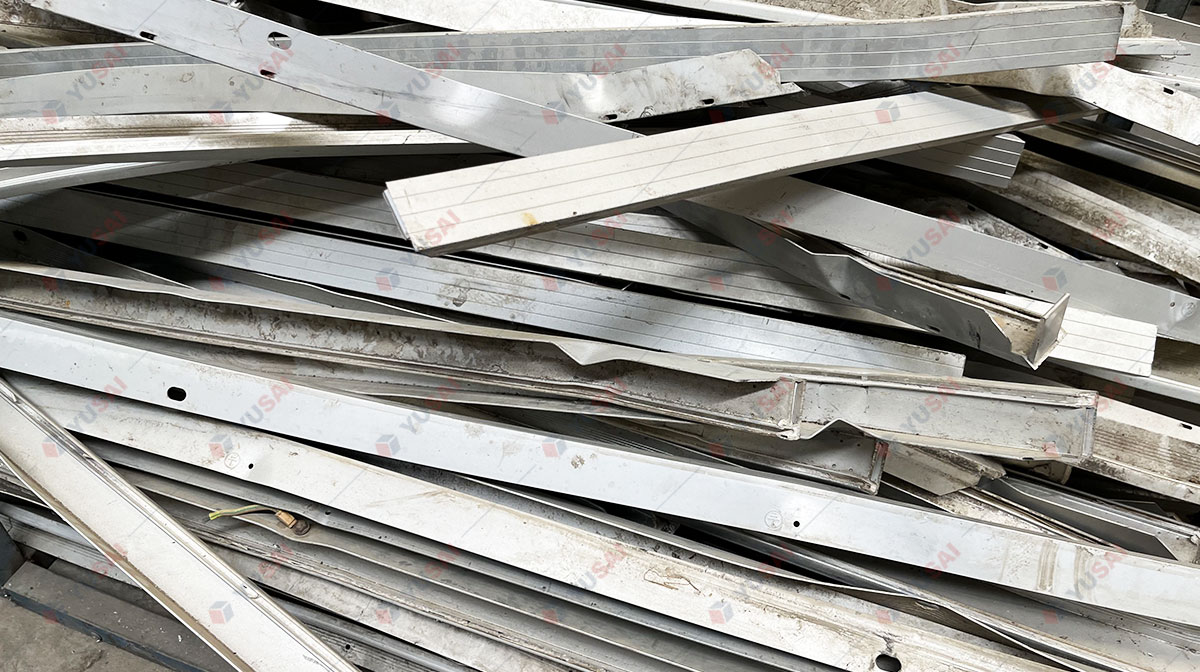
Automatically removes the aluminum frame from all four edges of the module. Available in semi-auto and fully-auto versions: the semi-auto model clamps and pulls the frame off after quick manual positioning, while the fully-auto version senses the panel size and completes the whole removal cycle without manual handling. The frame comes off cleanly and intact, so it can be sold directly as aluminum scrap with no further processing.
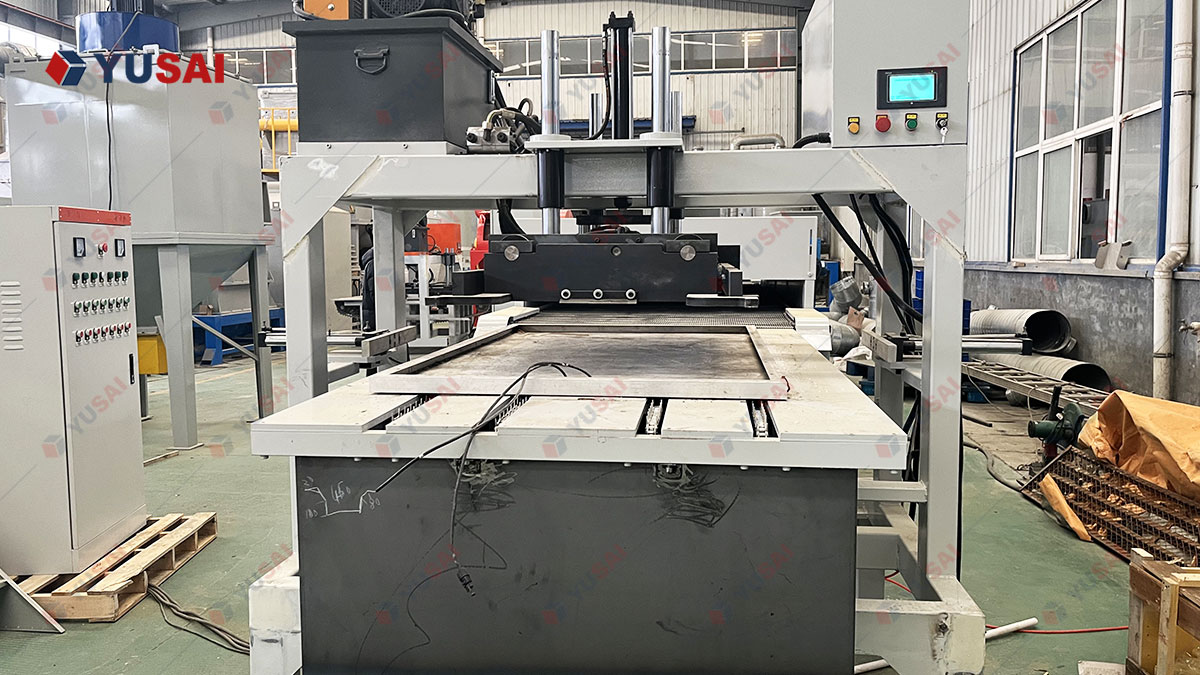
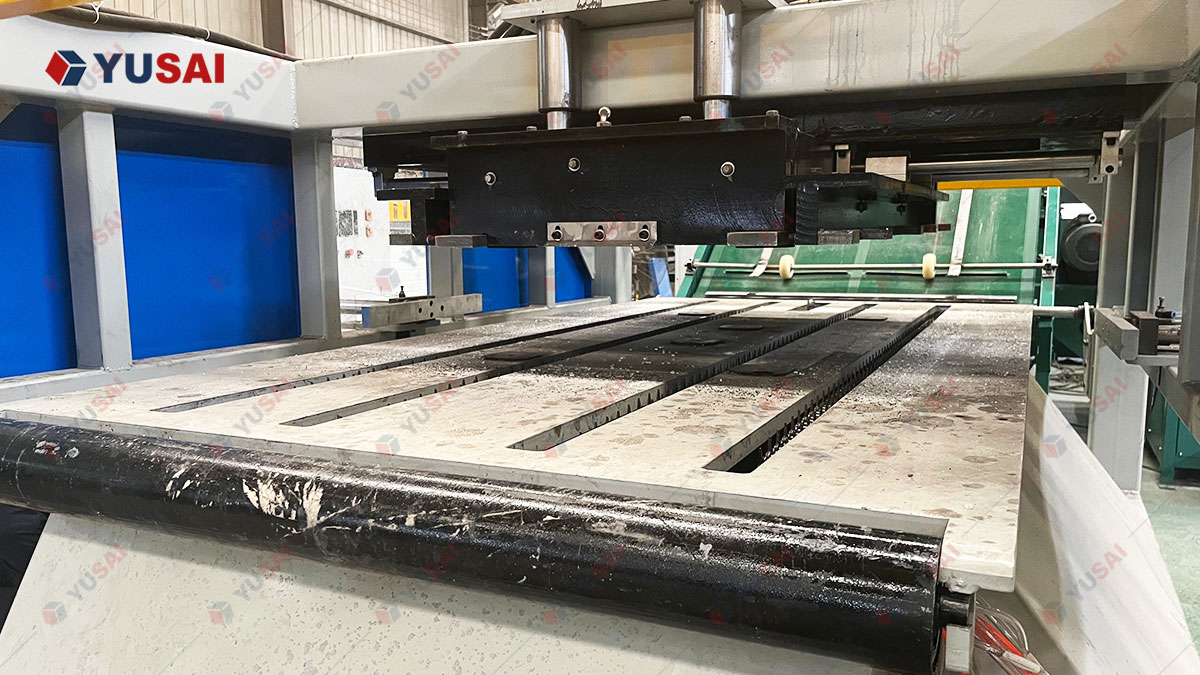
Solar Panel Glass Removing Machine
Automatically removes the aluminum frame from all four edges of the module. Available in semi-auto and fully-auto versions: the semi-auto model clamps and pulls the frame off after quick manual positioning, while the fully-auto version senses the panel size and completes the whole removal cycle without manual handling. The frame comes off cleanly and intact, so it can be sold directly as aluminum scrap with no further processing.
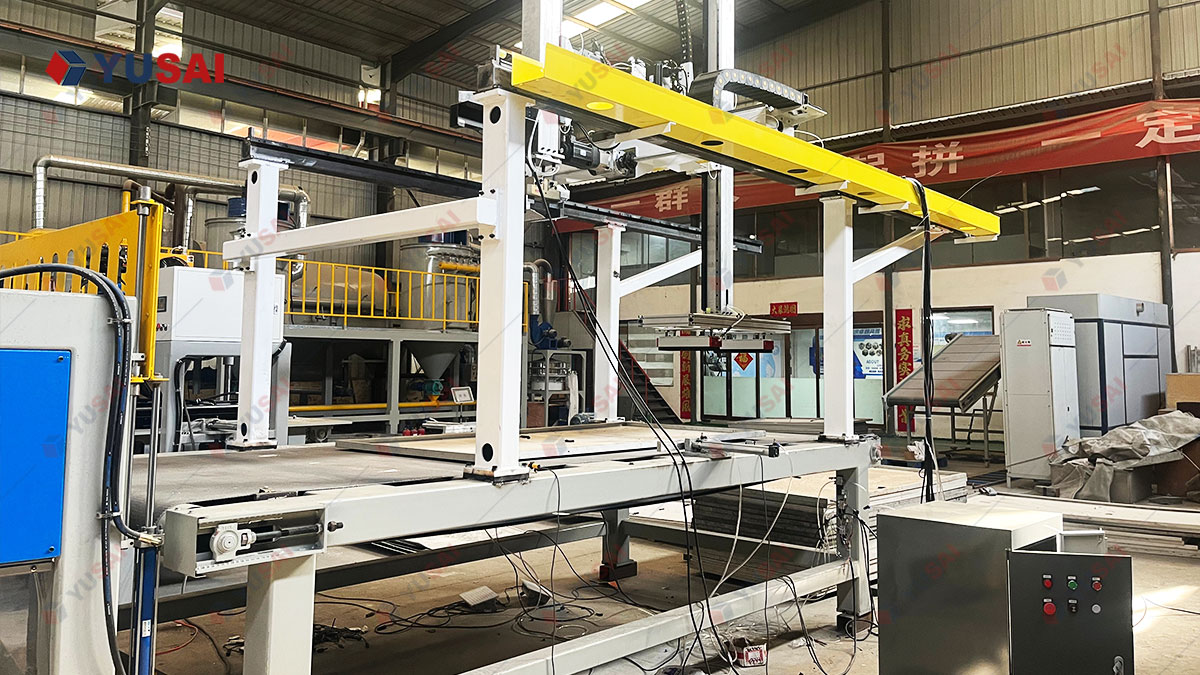
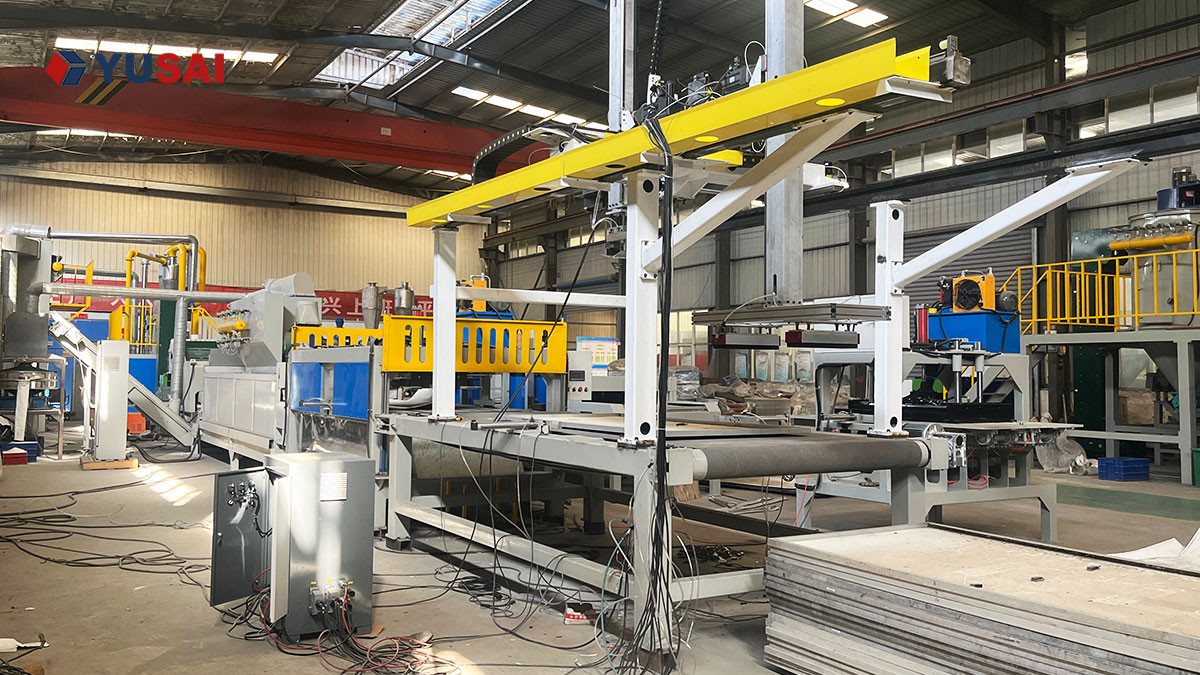
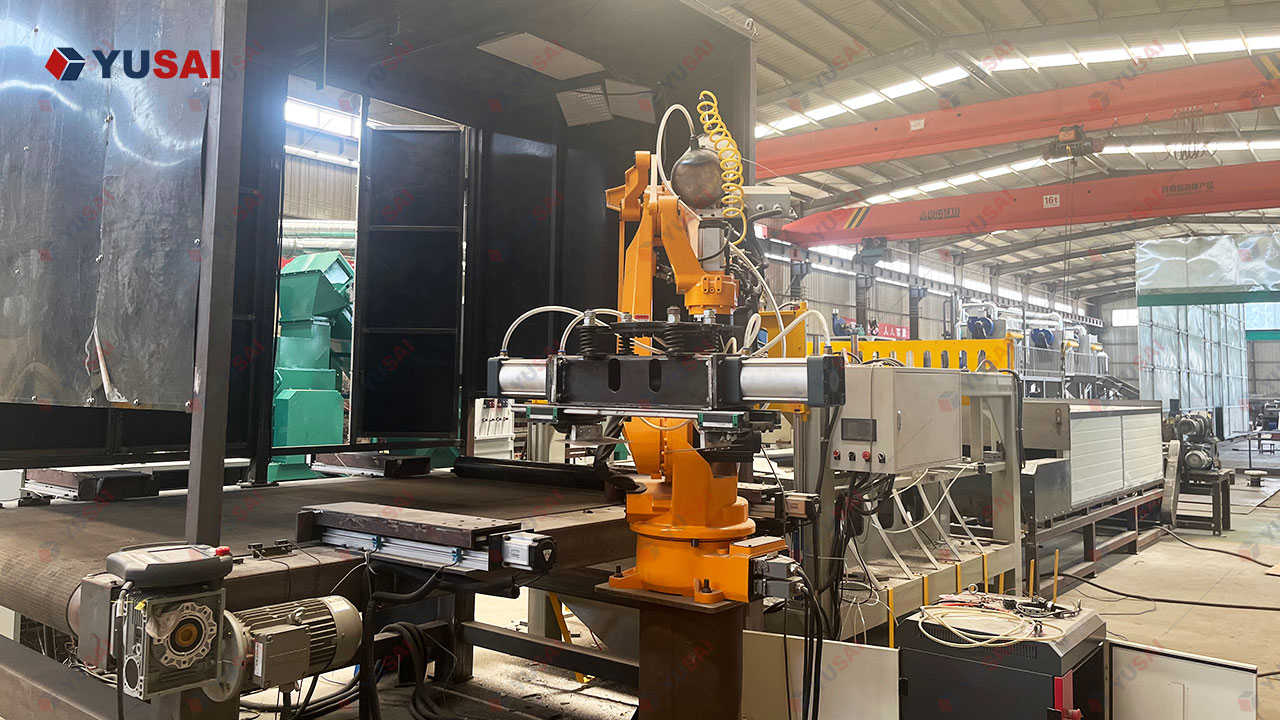
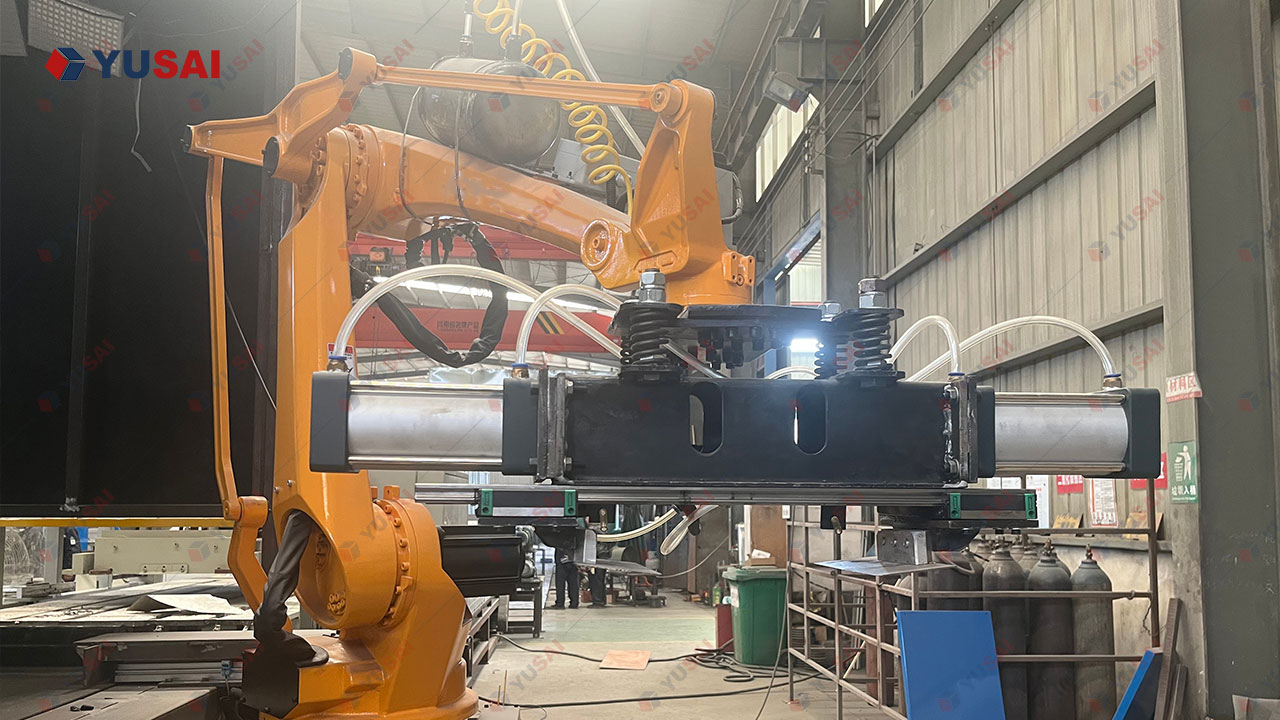
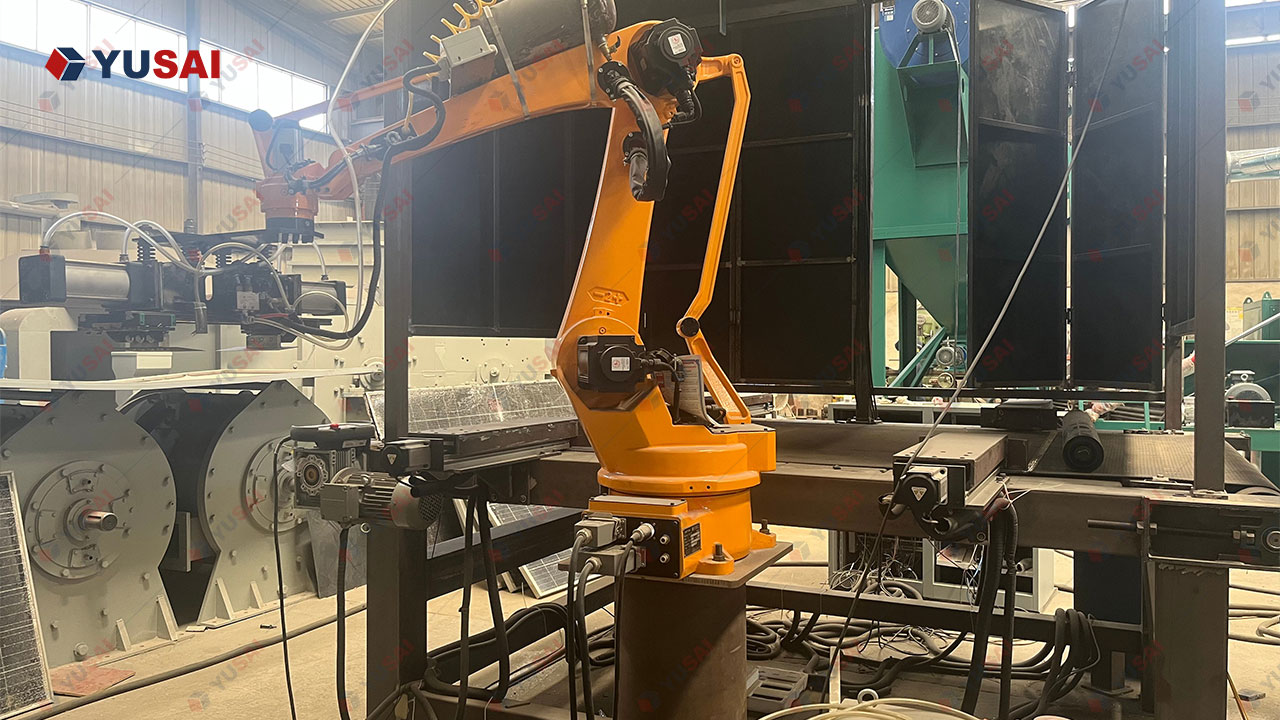
Robot-Arm Auto Loading(Optional)
An industrial robot arm automatically lifts each panel from the pallet and places it onto the feeding conveyor in the correct orientation, replacing manual panel handling. It keeps the line running at full rhythm, reduces labor requirements, and eliminates the risk of injury from lifting heavy, glass-edged panels by hand.
2. Solar Panel Crushing & Sorting System (physical line)
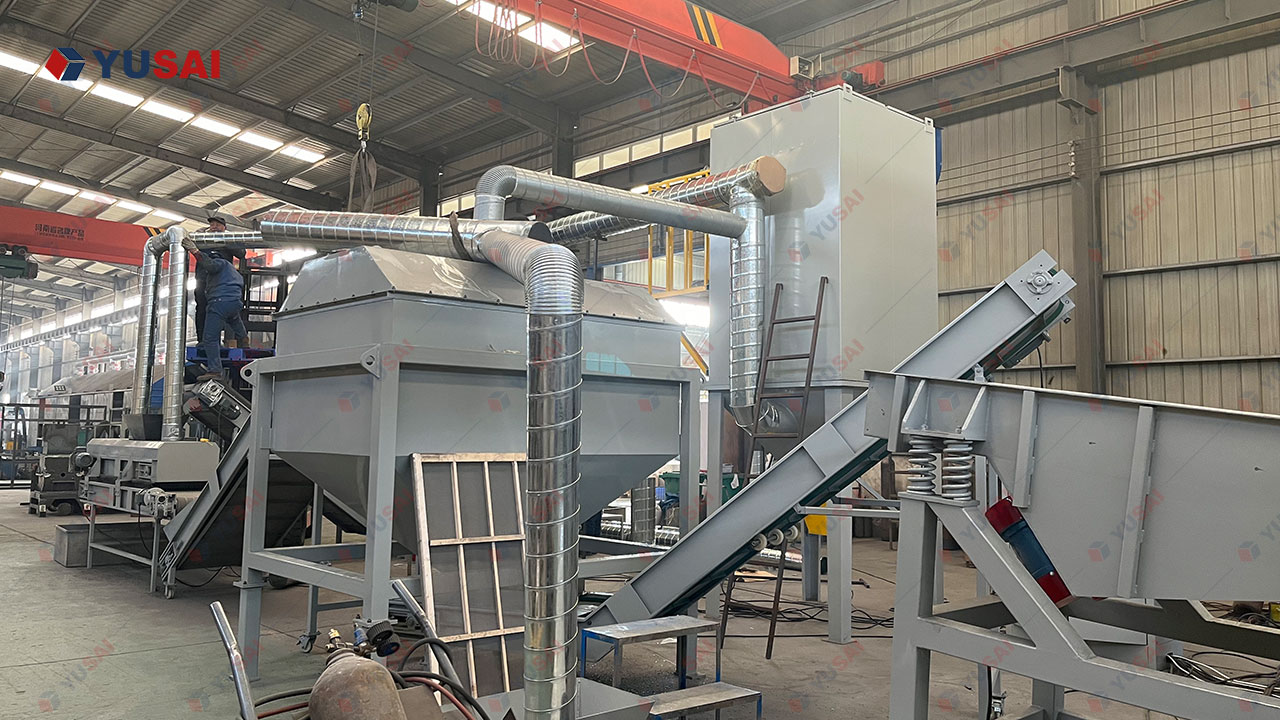
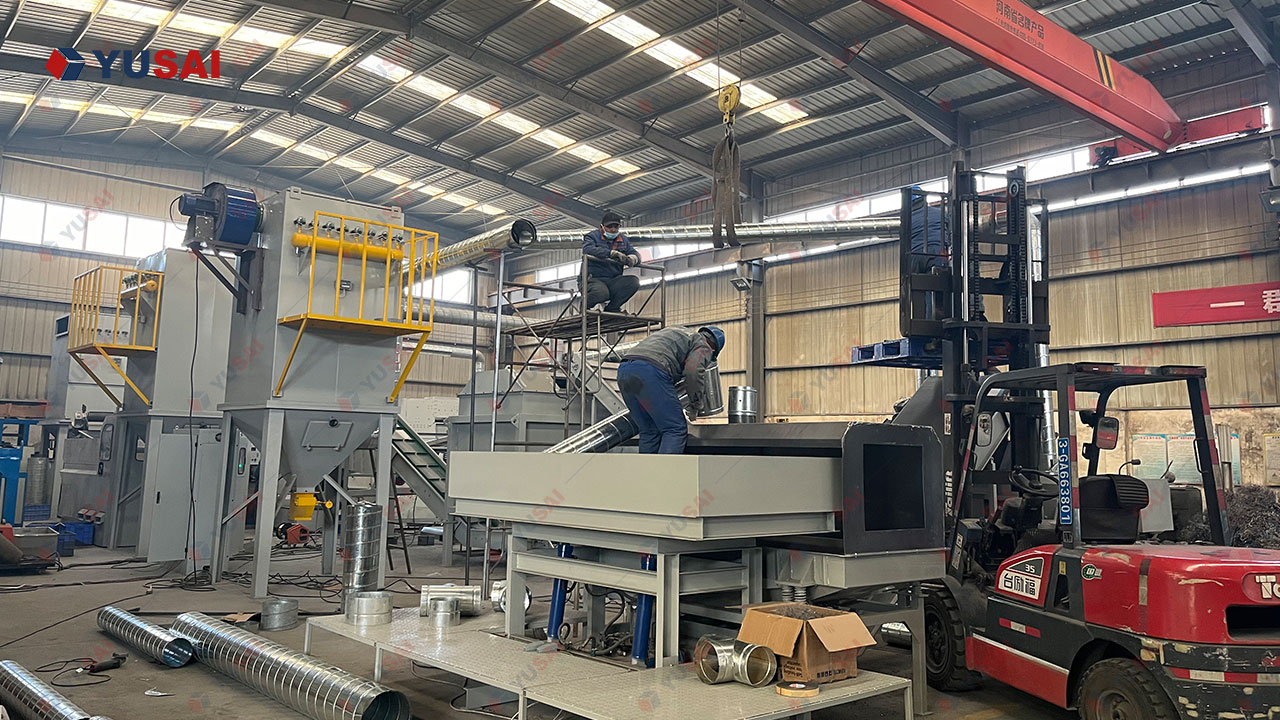
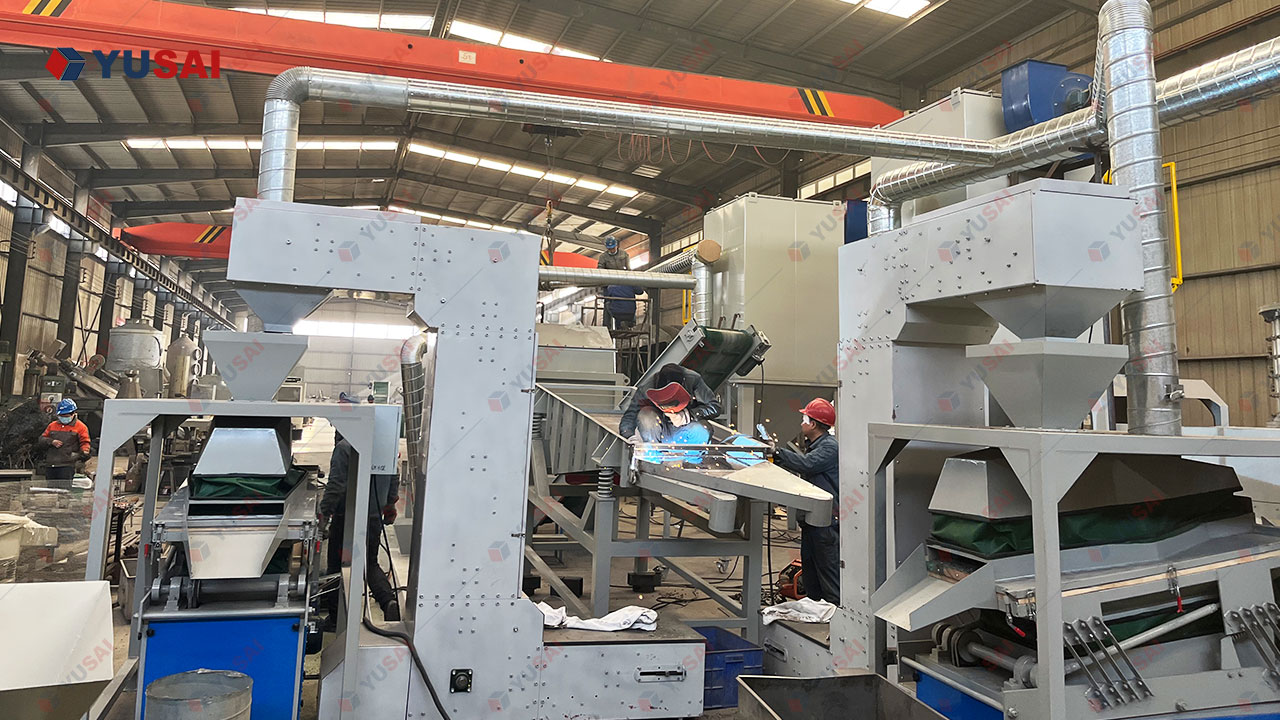
The solar panel crushing & sorting system is the core of the physical recycling line. After the frame, junction box and most of the glass have been removed in the pre-treatment station, the remaining EVA-bonded laminate enters this system and is progressively reduced — from strips to particles to fine powder — then separated by density and conductivity into clean, saleable fractions. The whole process runs under negative pressure, with no water and no chemicals, making it economical, safe and environmentally friendly. From the laminate it produces clean silicon powder, copper powder and plastic powder, delivering the value that makes PV panel recycling profitable.

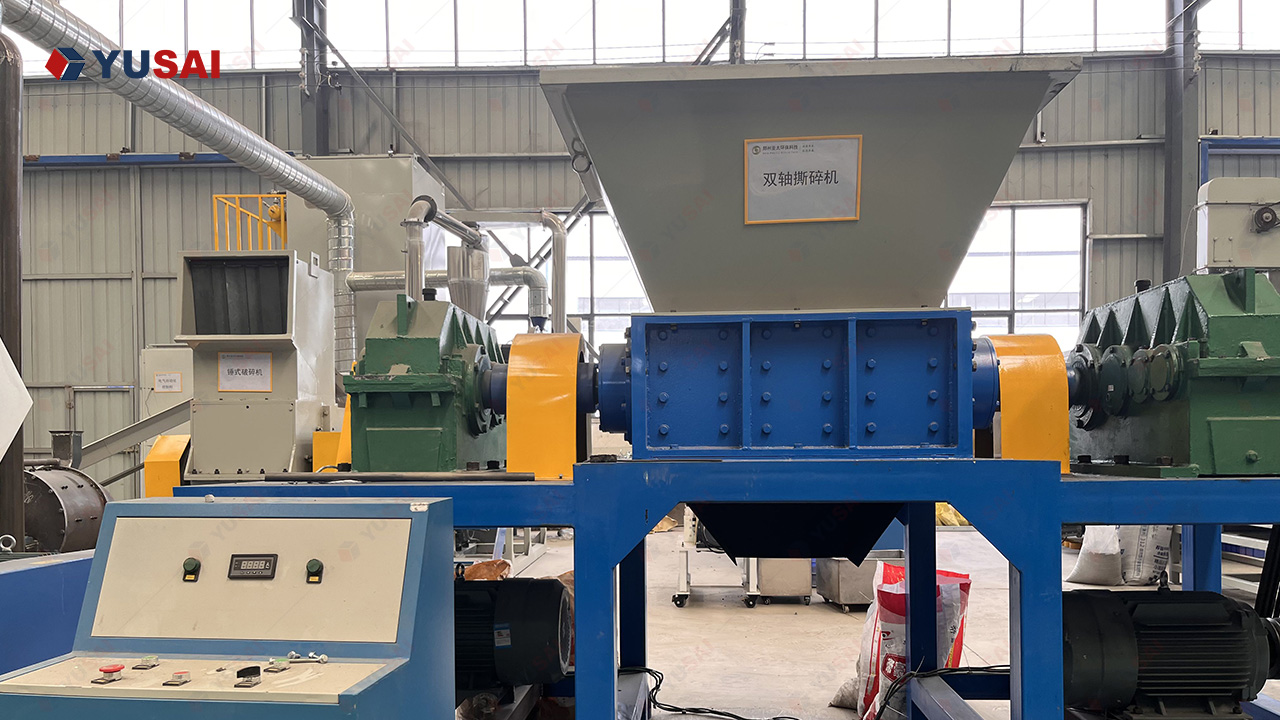
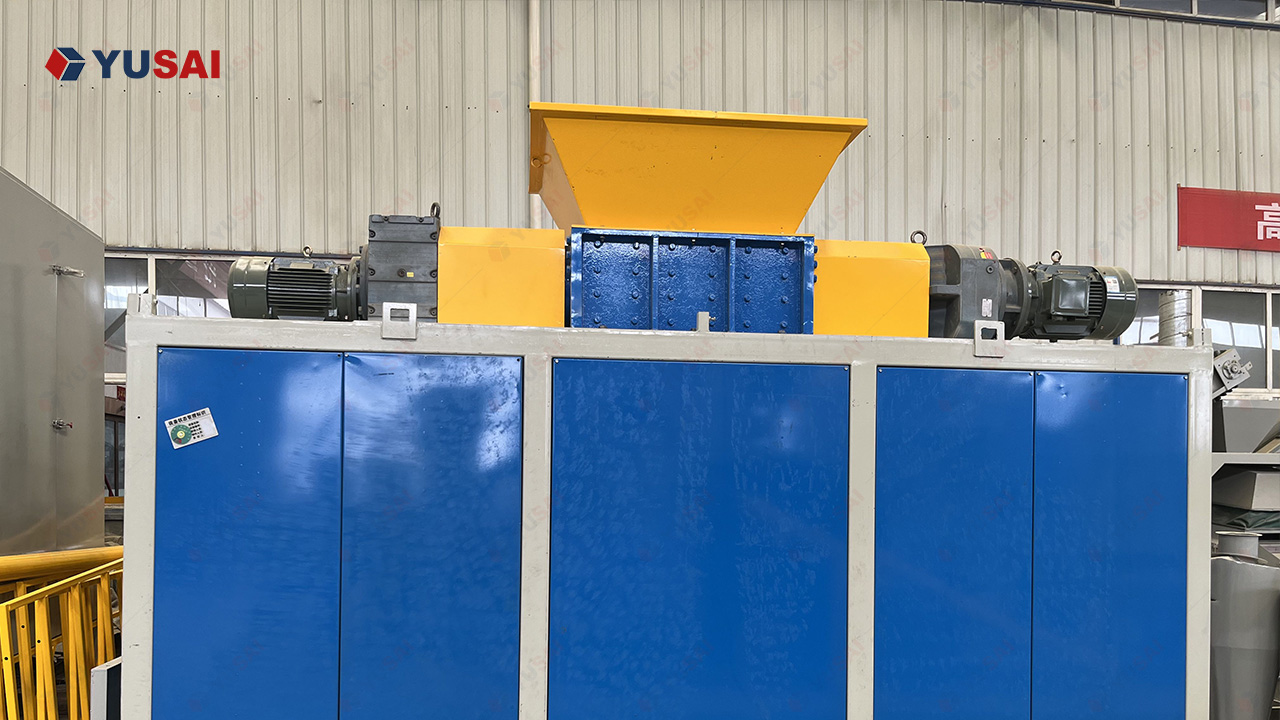
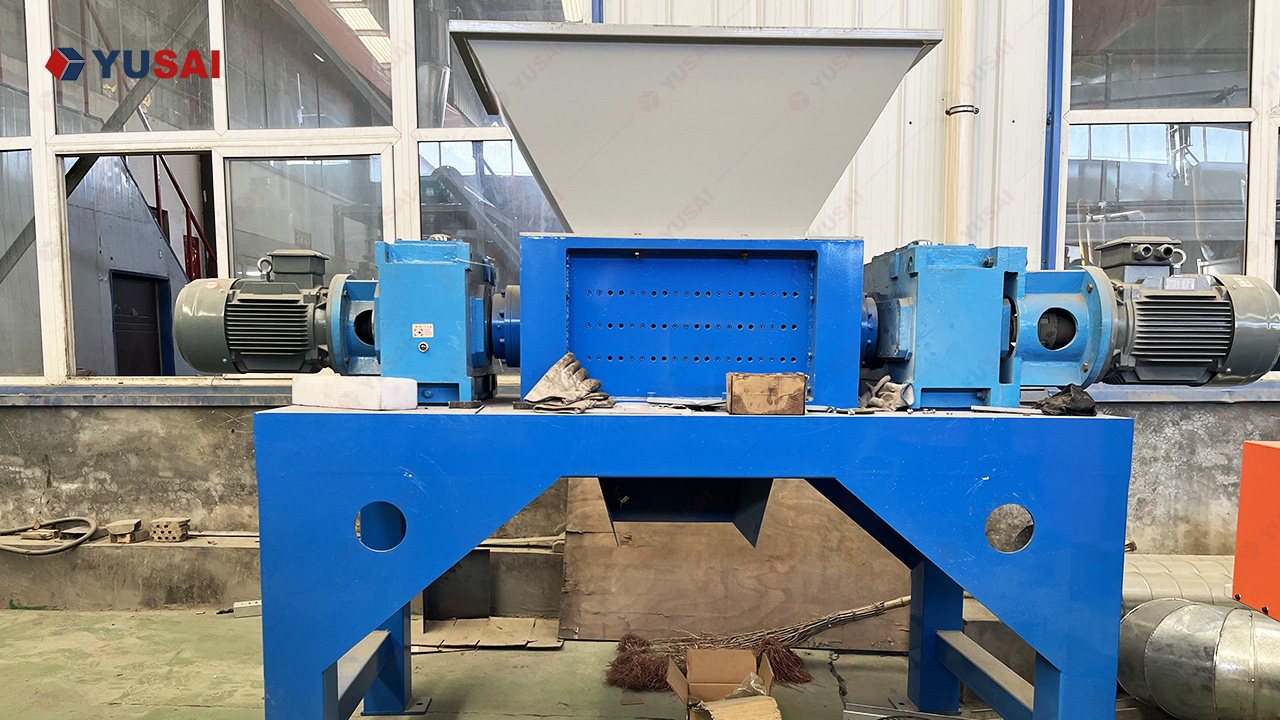
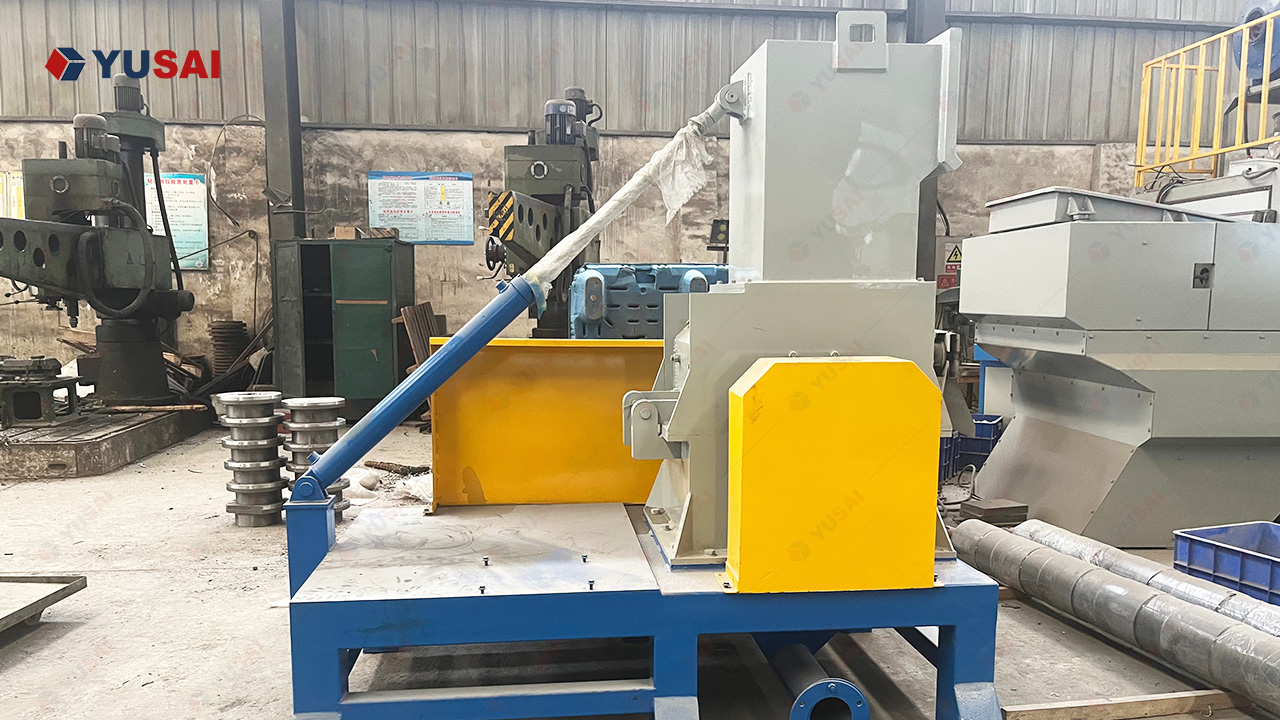
Double Shaft Shredder
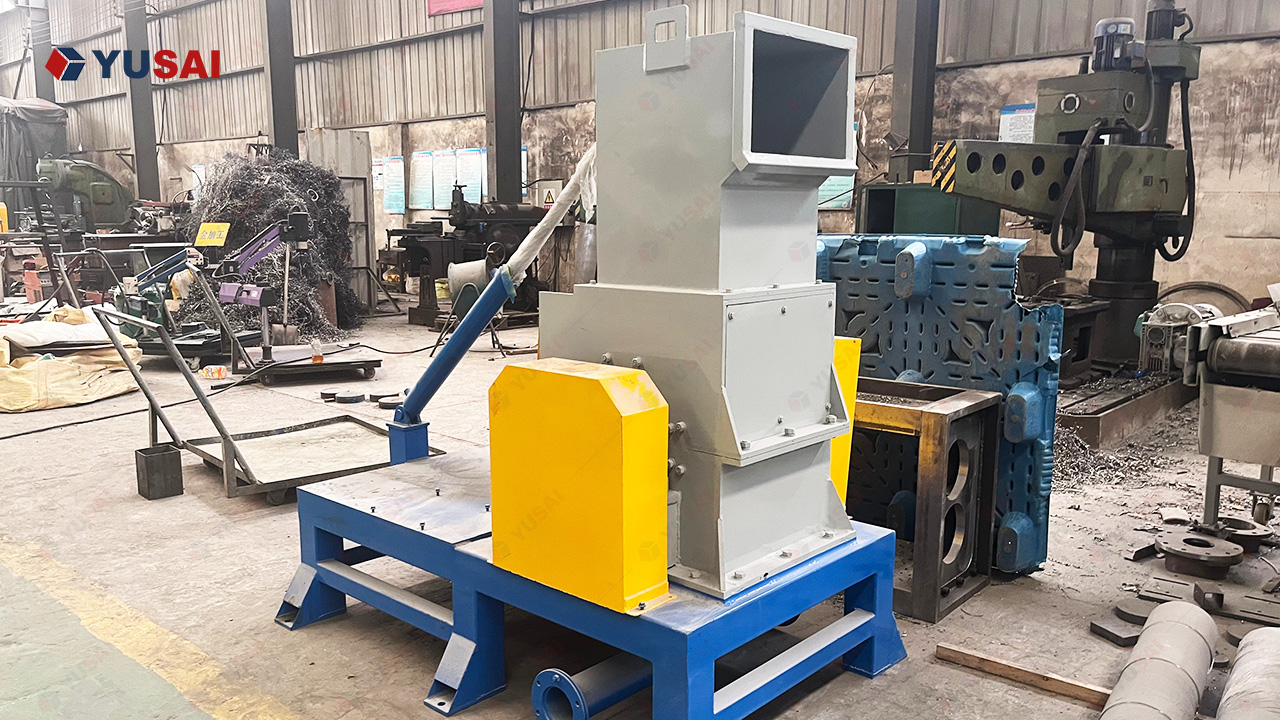
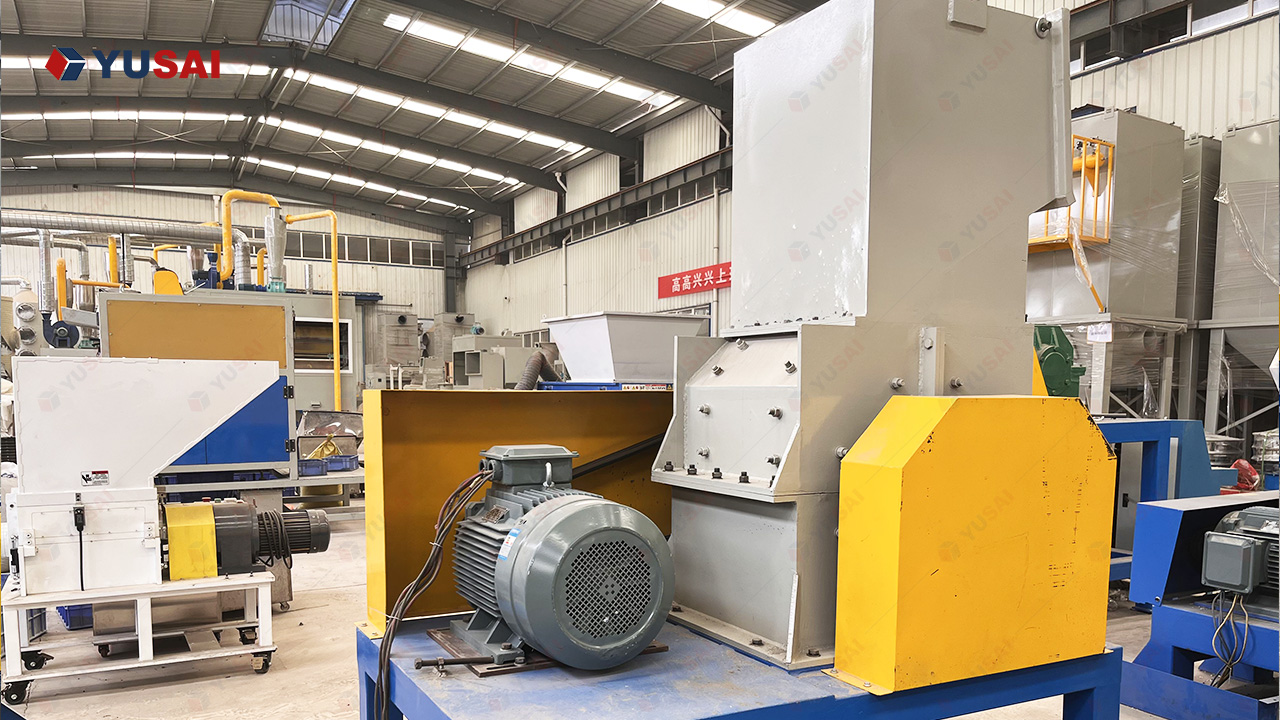
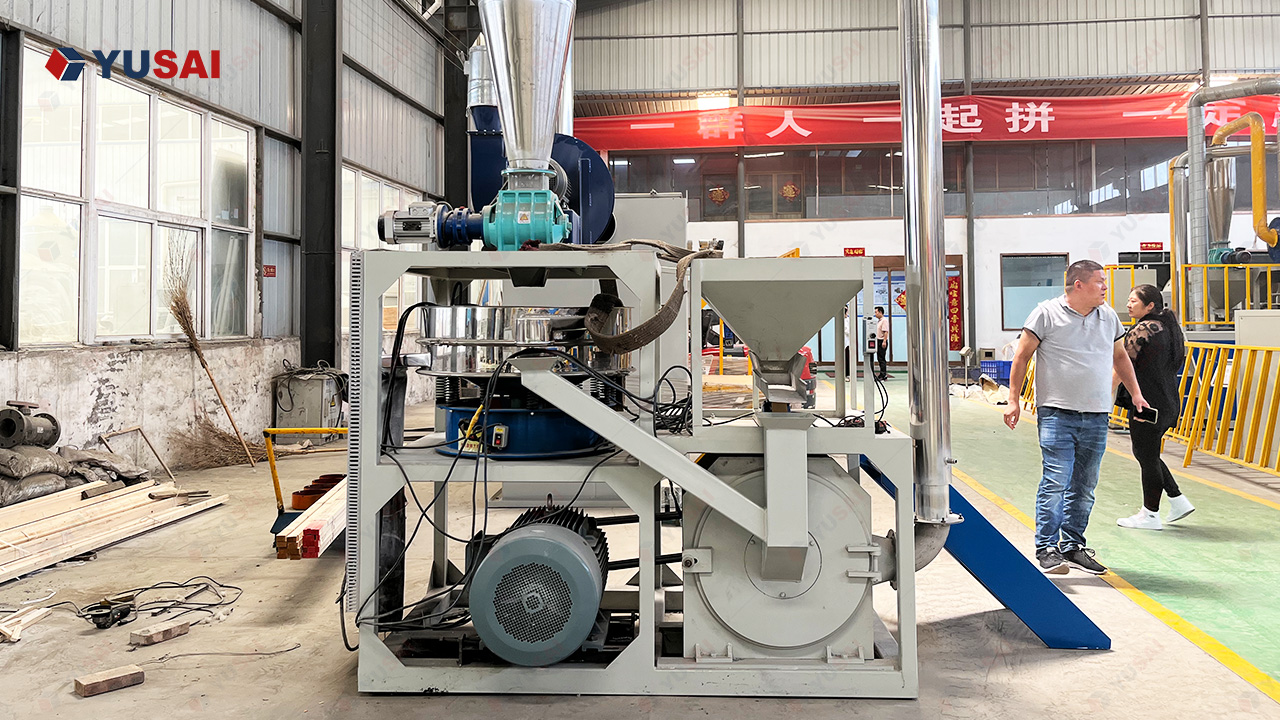
Hammer Crusher
The second size-reduction stage: reduces the shredded strips into small, uniform particles ready for fine grinding. The grid screen controls the discharge size, giving high throughput and consistent particle size.
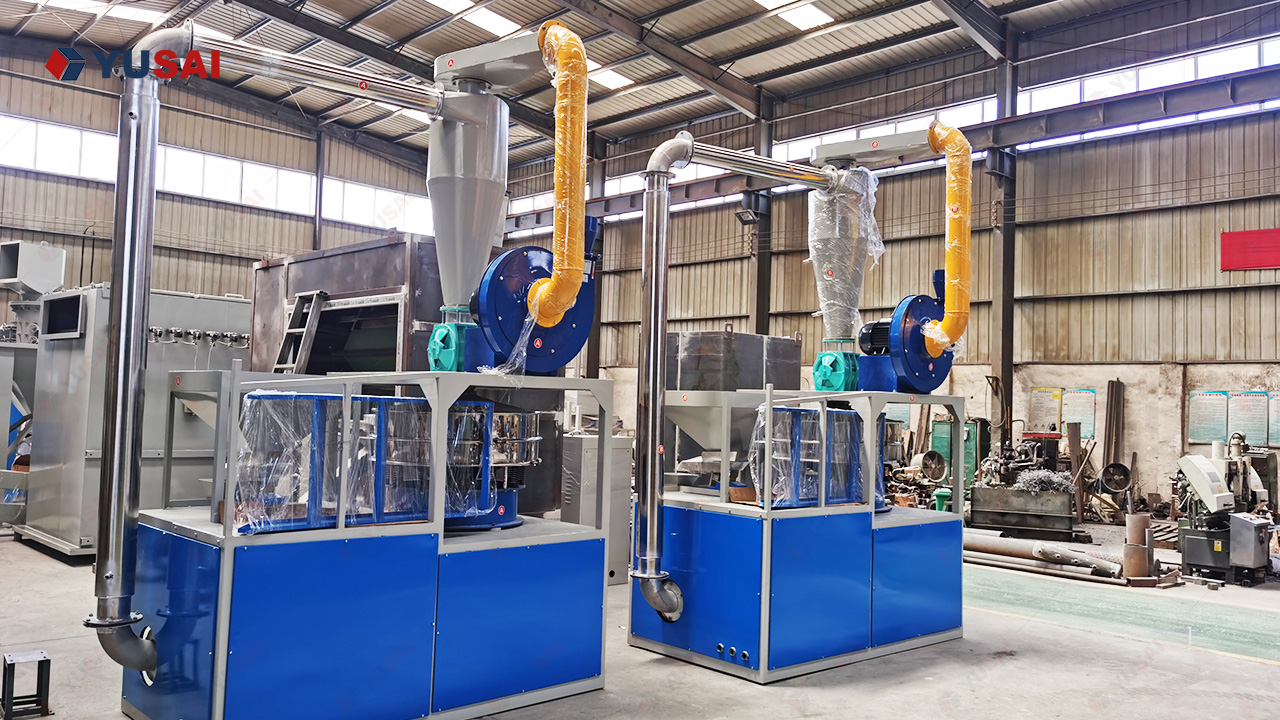
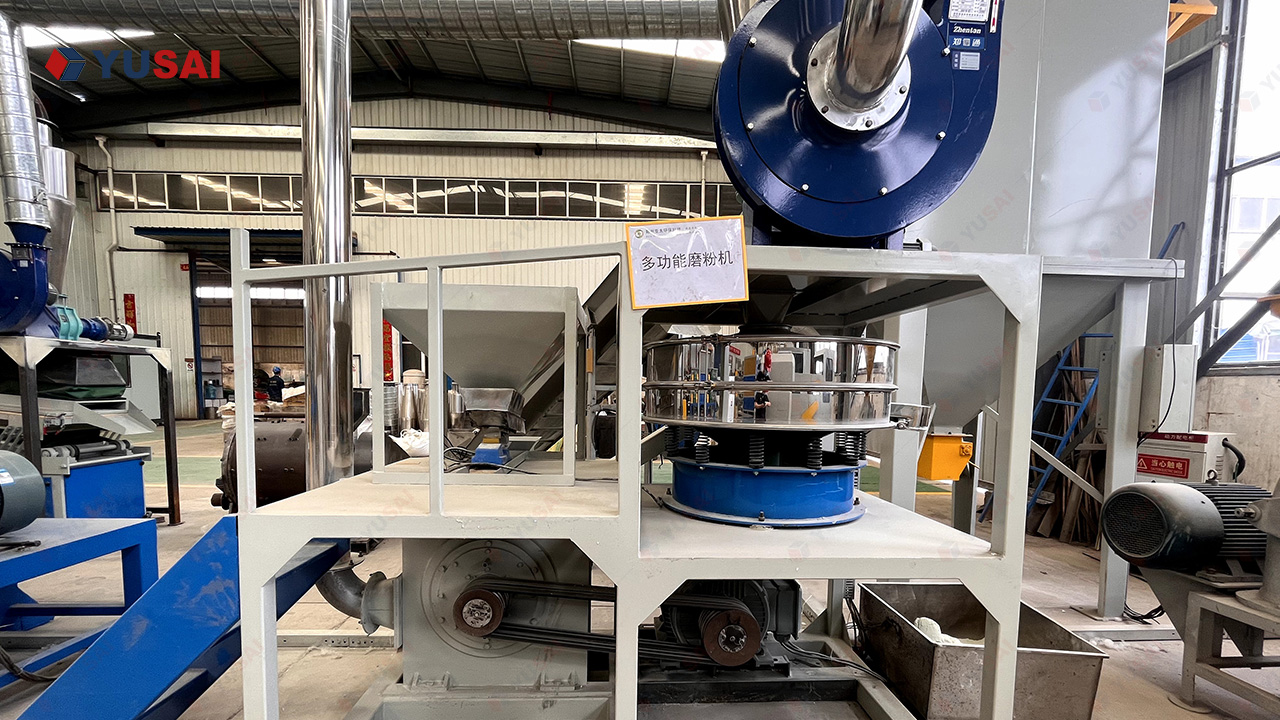
Fine Grinder (with return system)
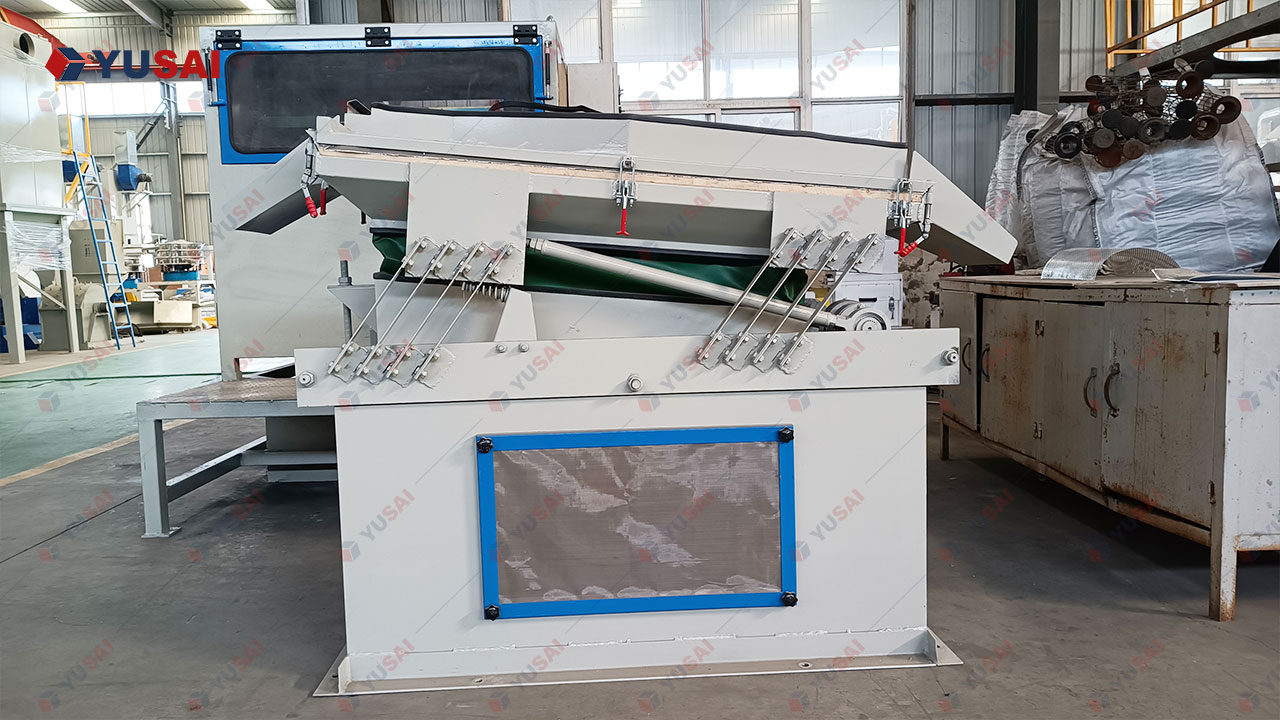
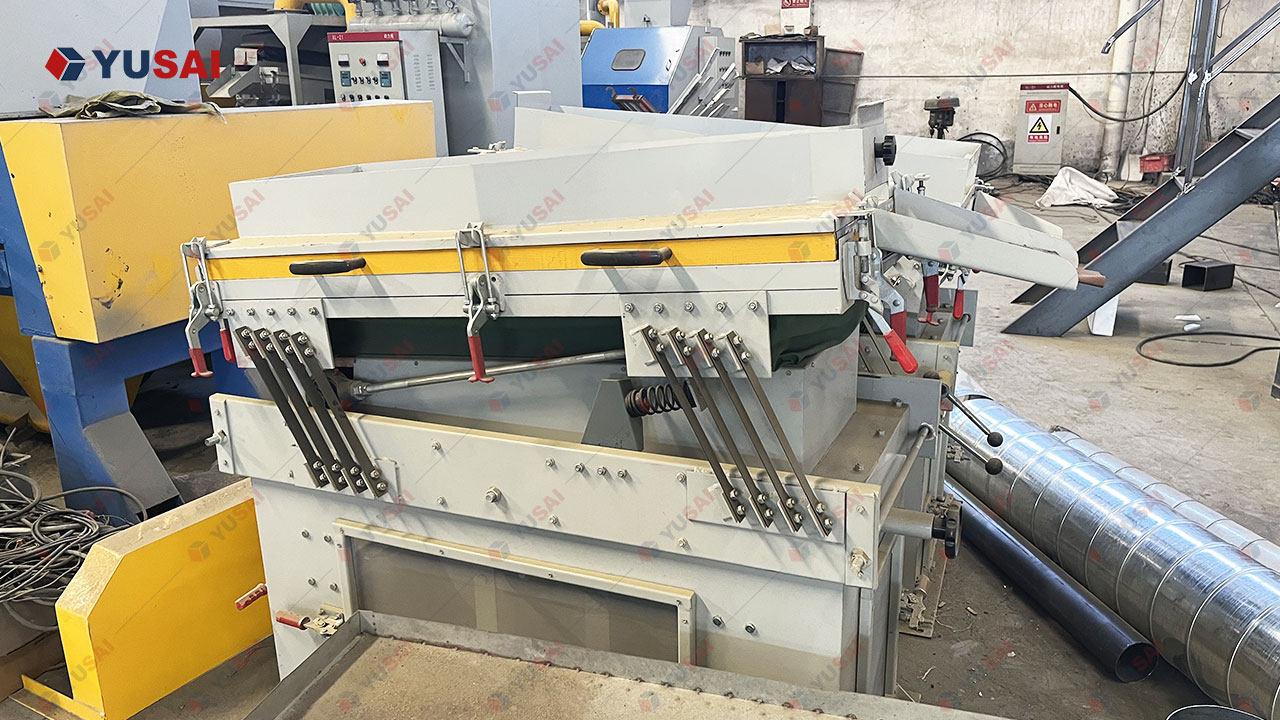
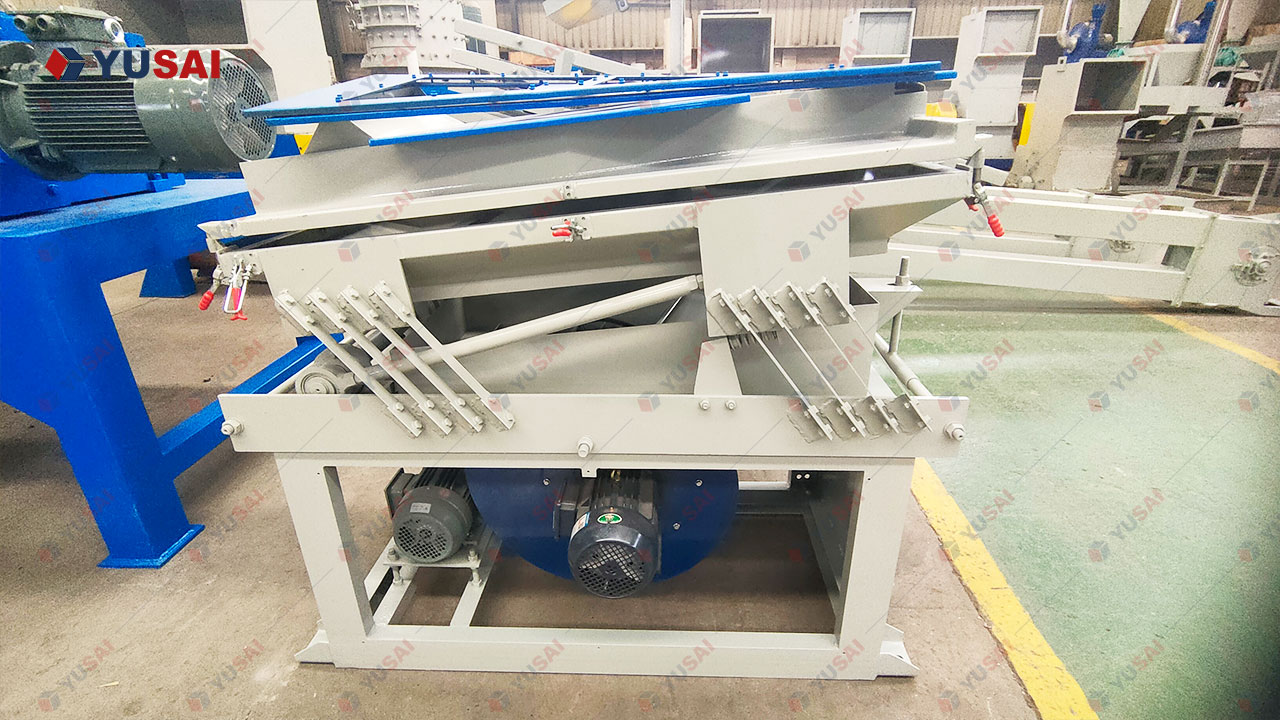
Air Classifier (Airflow Separator)
Separates lightweight plastics (EVA)from the heavier silicon and metal powder in an air stream, using the density difference between the fractions. With a separation rate up to 99%, the light fraction exits as clean plastic powder while the heavy fraction continues to electrostatic separation.
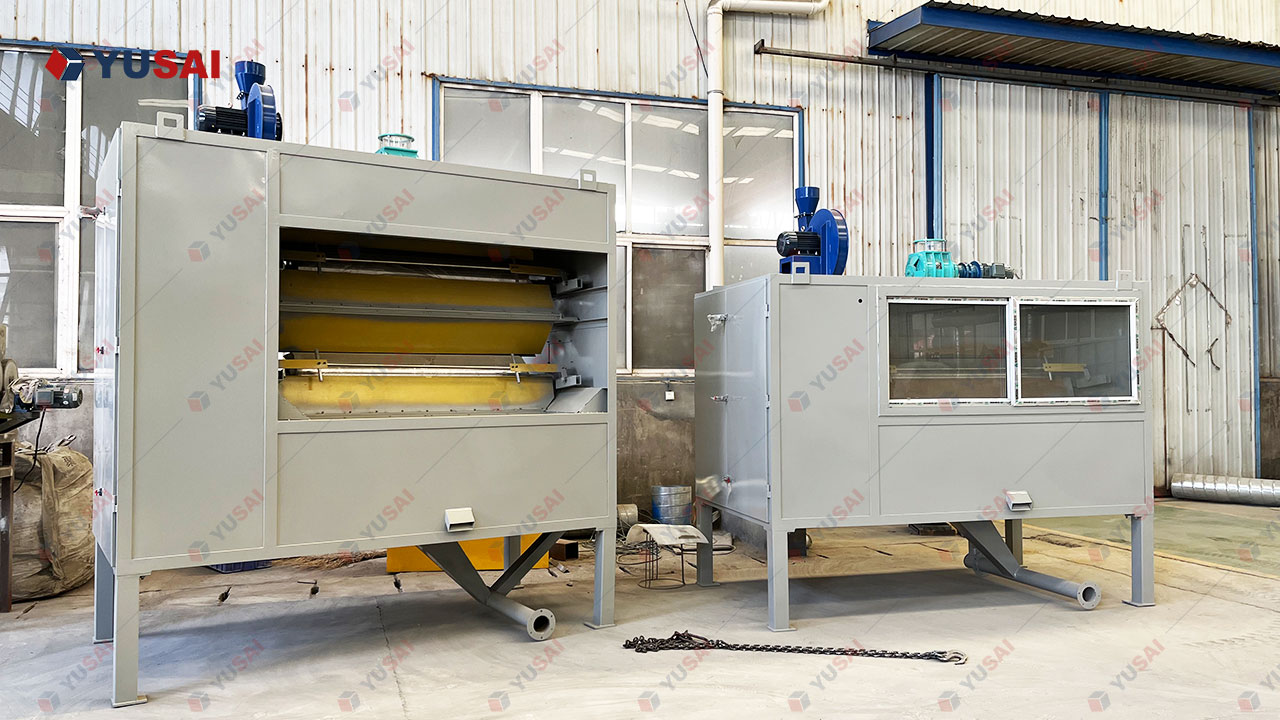
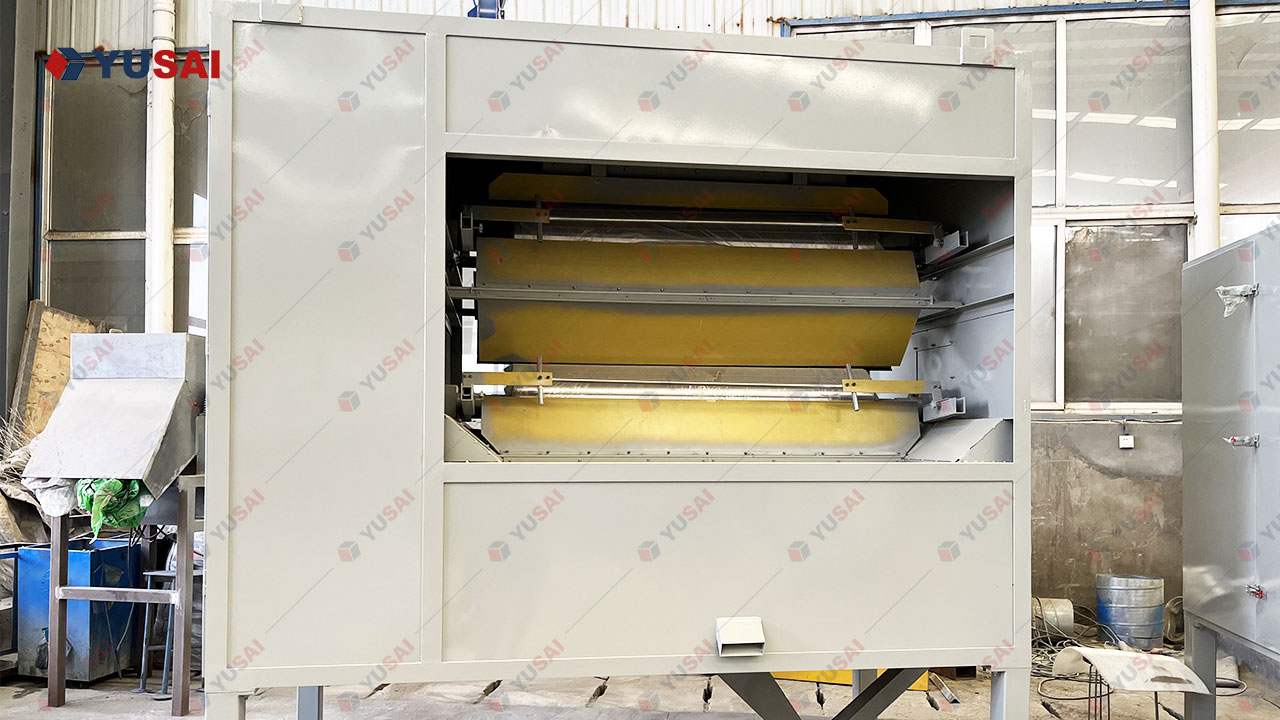
High-Voltage Electrostatic Separator
Separates metals from plastics by conductivity in a high-voltage field. Multi-stage separation minimizes non-ferrous metal loss (especially copper), maximizing the metal value recovered from each tonne of panels.
3. Solar Panel Pyrolysis Sorting System (pyrolysis line)
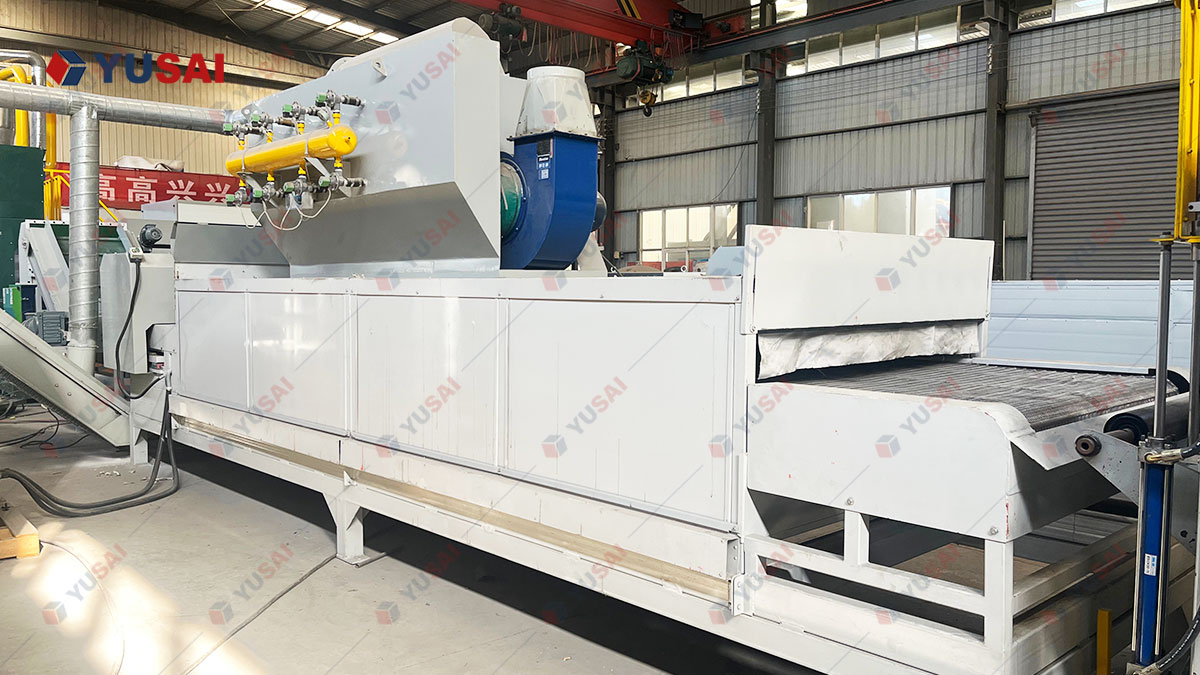
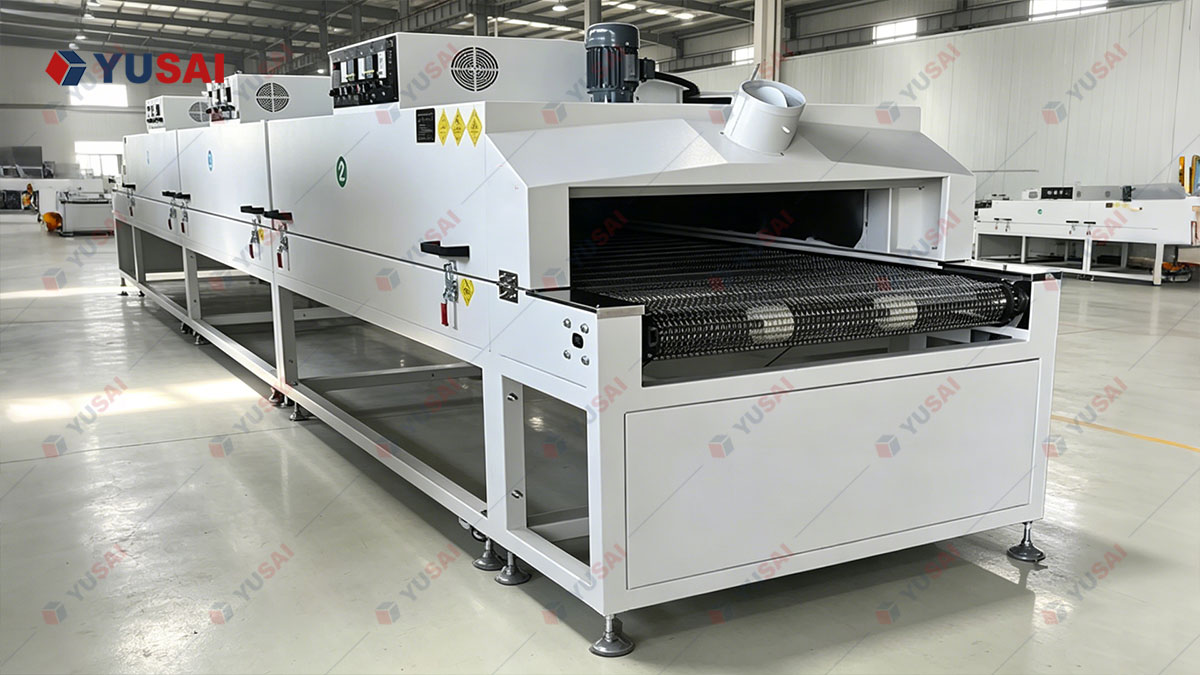
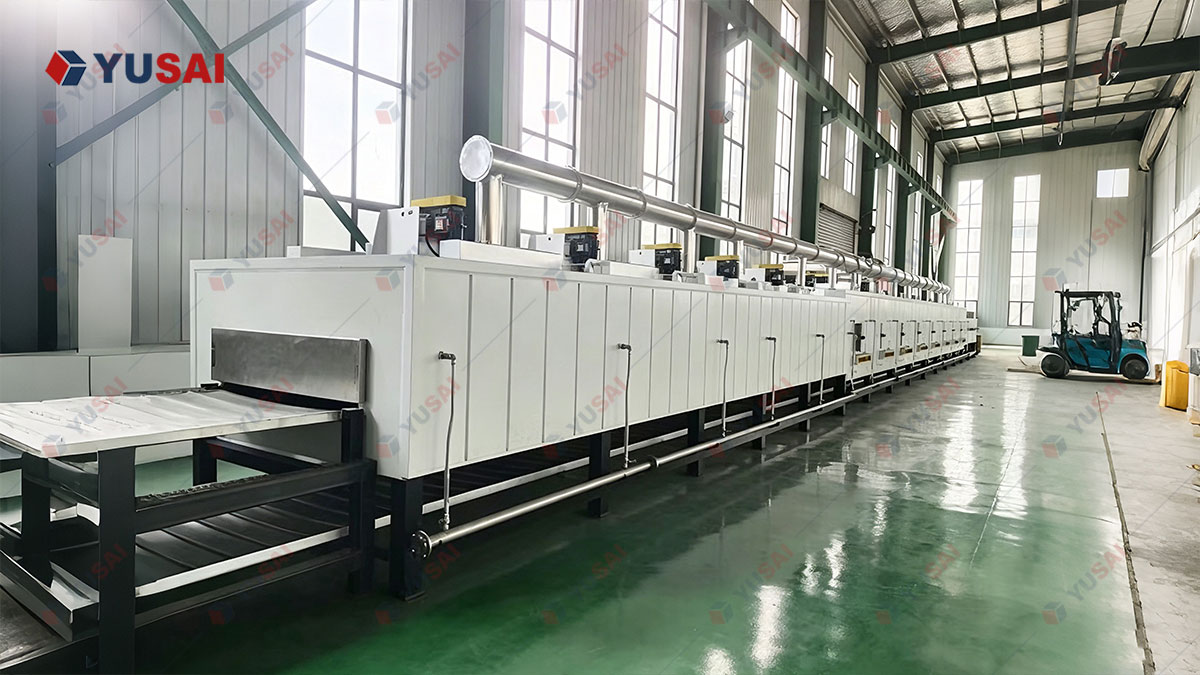
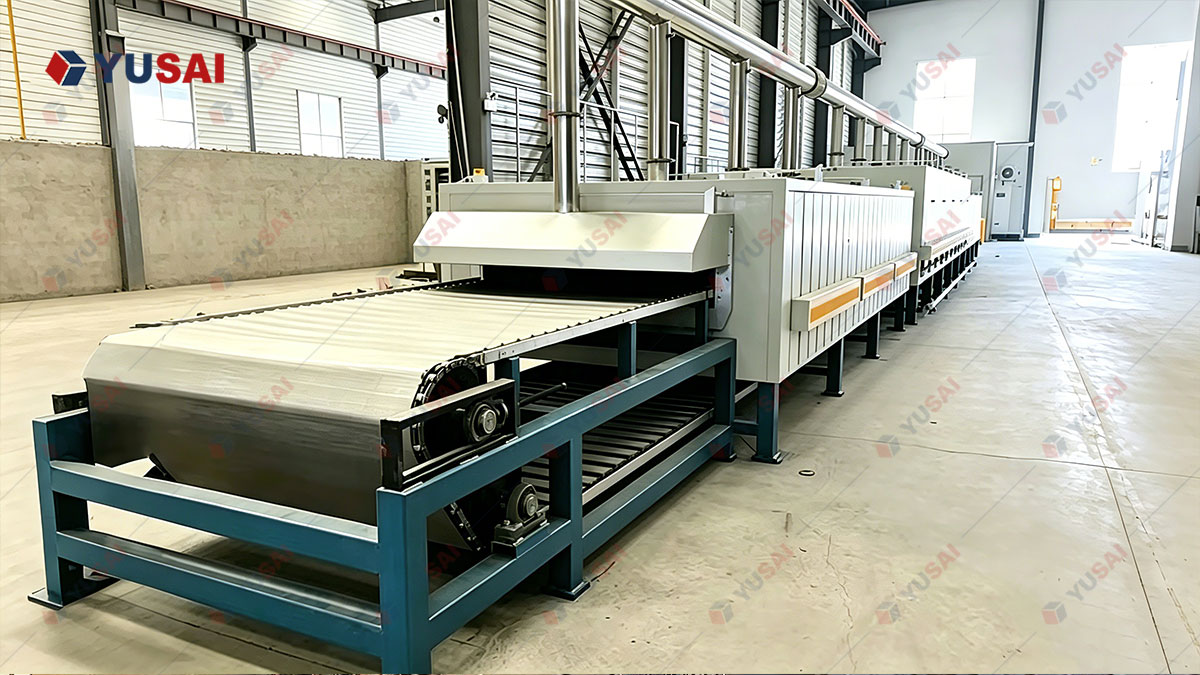
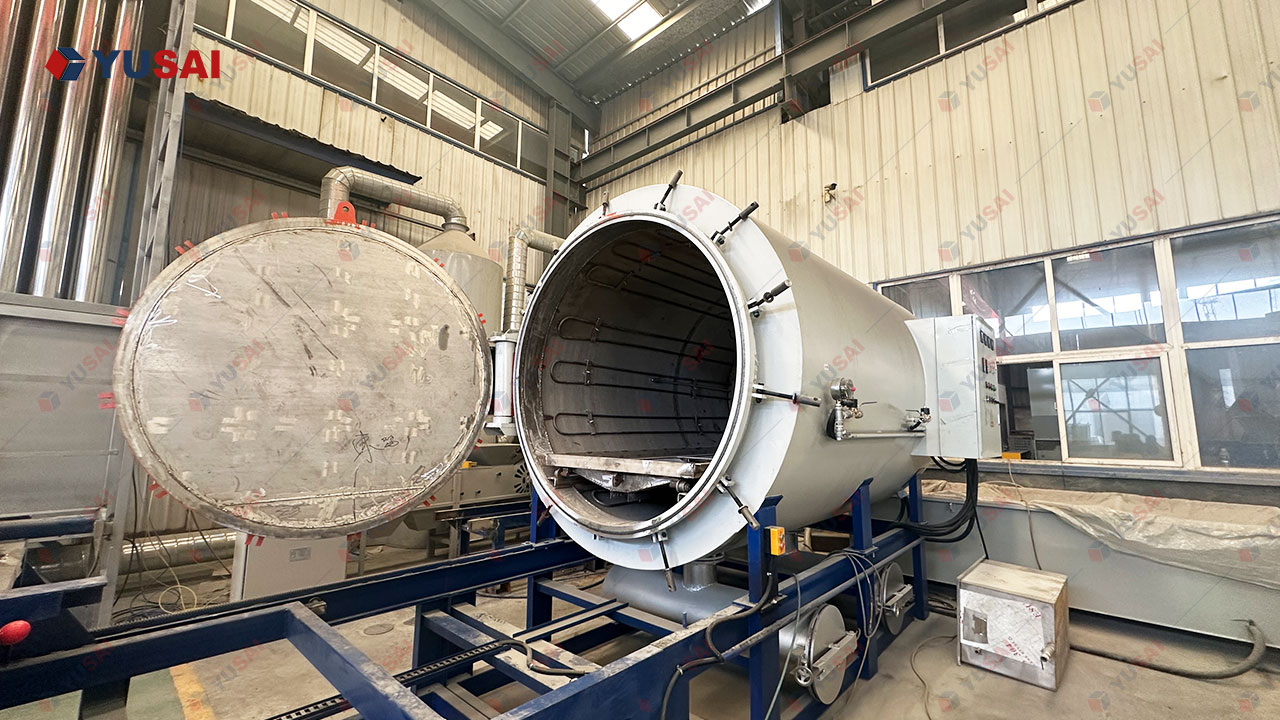
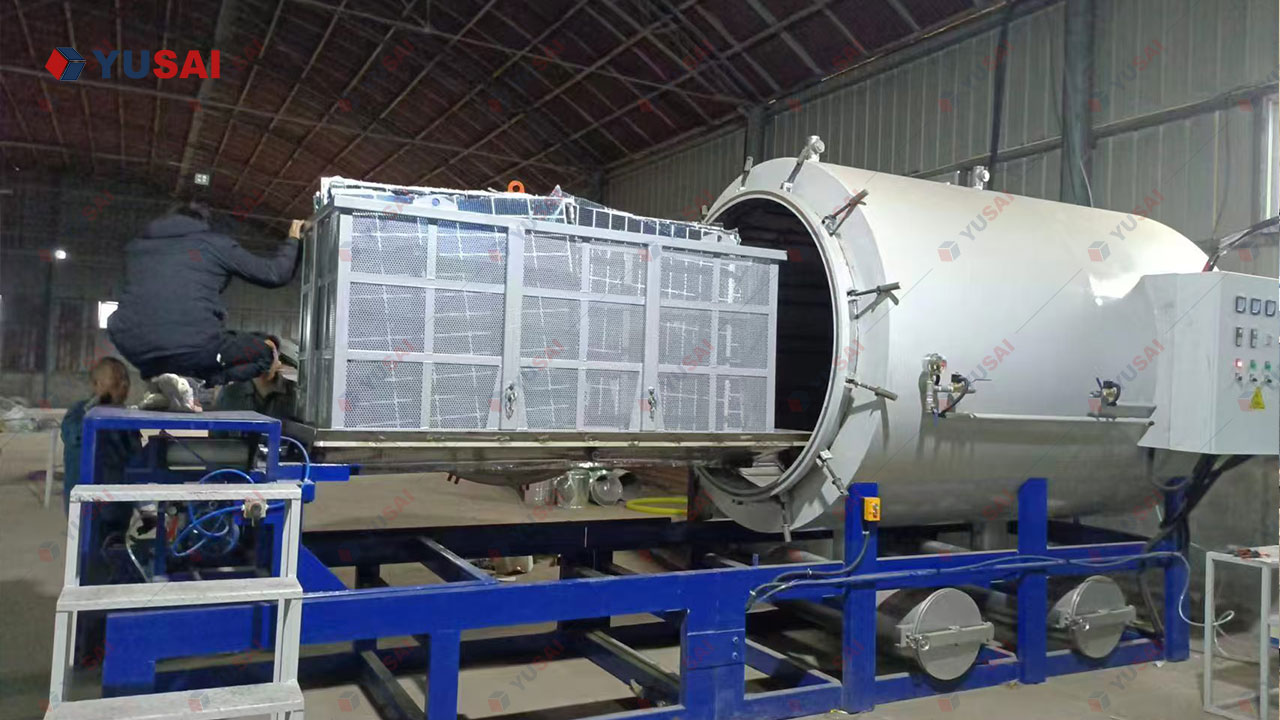
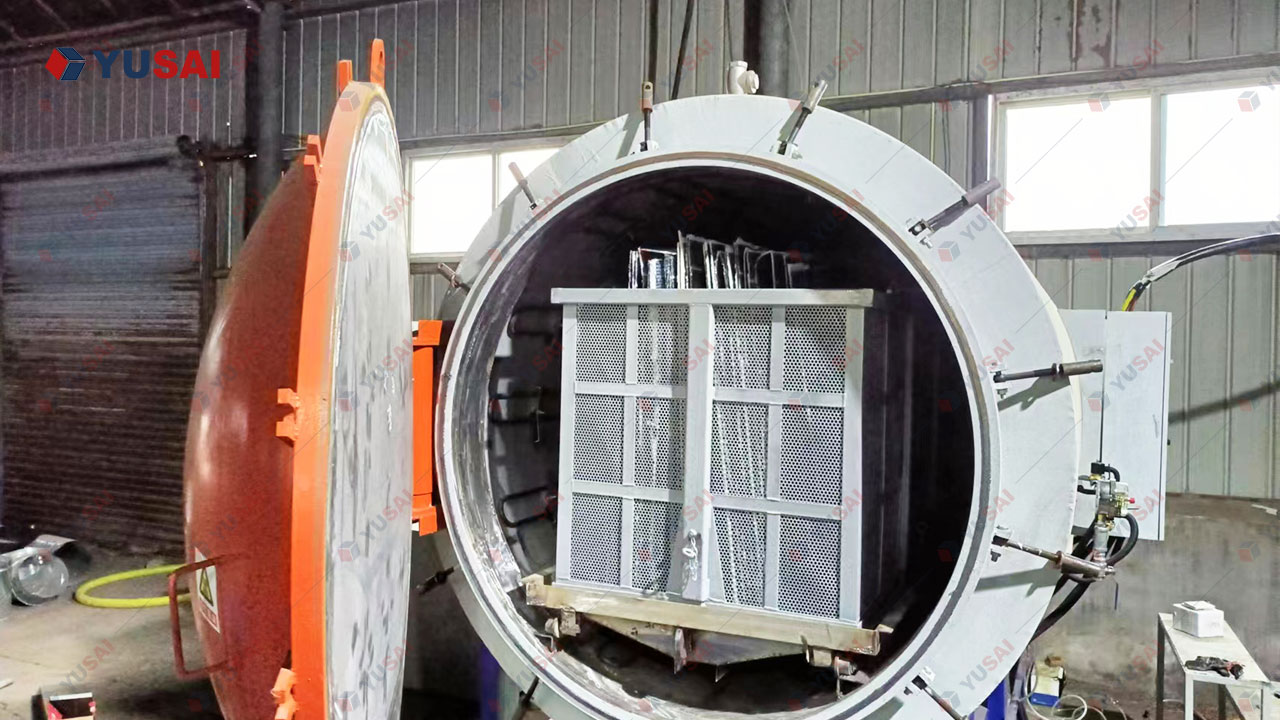
The solar panel pyrolysis sorting system is the core of the pyrolysis recycling line, designed for double-glass (bifacial) panels and cell-level recovery. After the frame and junction box are removed, the panels enter the oxygen-free tunnel furnace, where the EVA encapsulant and backsheet are thermally decomposed so the glass, silicon cells and copper ribbons are fully released from the laminate without being crushed. The released materials are then separated into whole silicon wafers, copper wire and clean glass, and the silver is stripped from the wafers to recover its full value. Because the cells come out intact rather than ground to powder, this route delivers the highest-quality silicon and the most complete silver recovery.

Solar Panel Tunnel Pyrolysis Furnace
Solar panel vacuum pyrolysis furnace
Solar Panel Post-pyrolysis Sorting System
Silver stripping machine
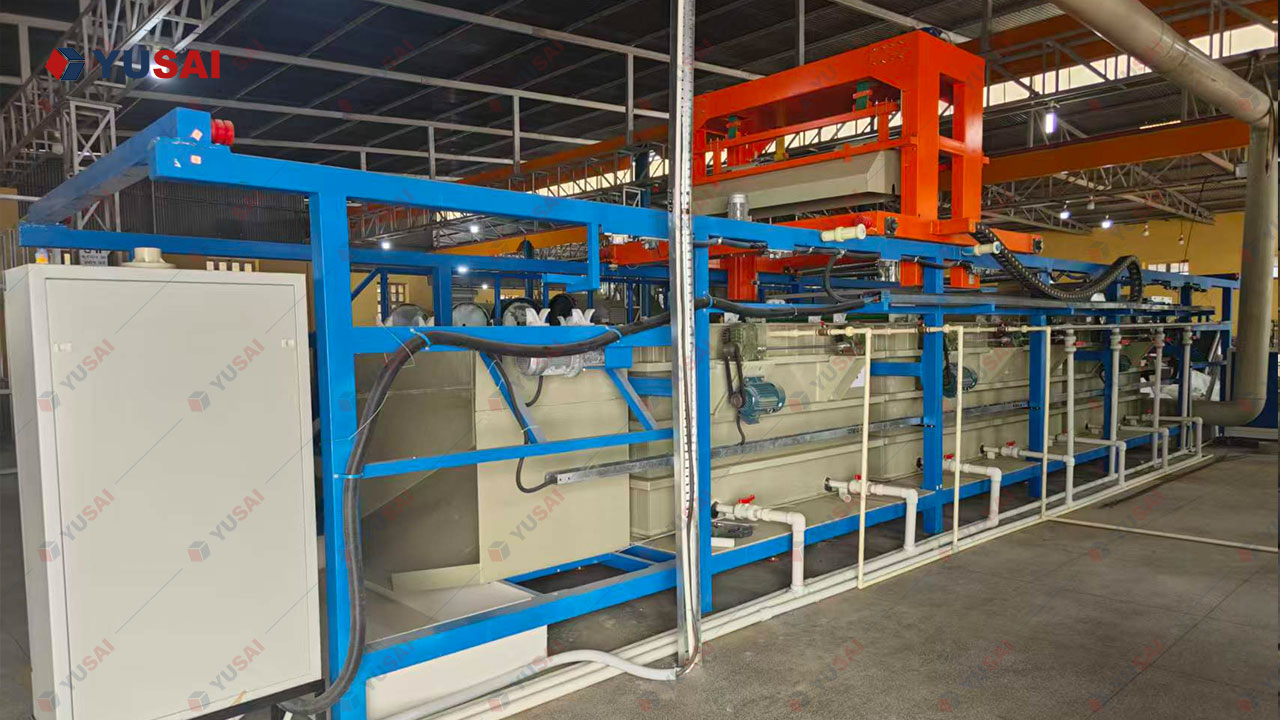
Strips silver from the silicon cells/wafers after pyrolysis, as part of YuSai’s precious metal refining series. It recovers silver at high purity for maximum value, completing the loop from scrap panel to saleable precious metal.
4. Common Auxiliary Systems
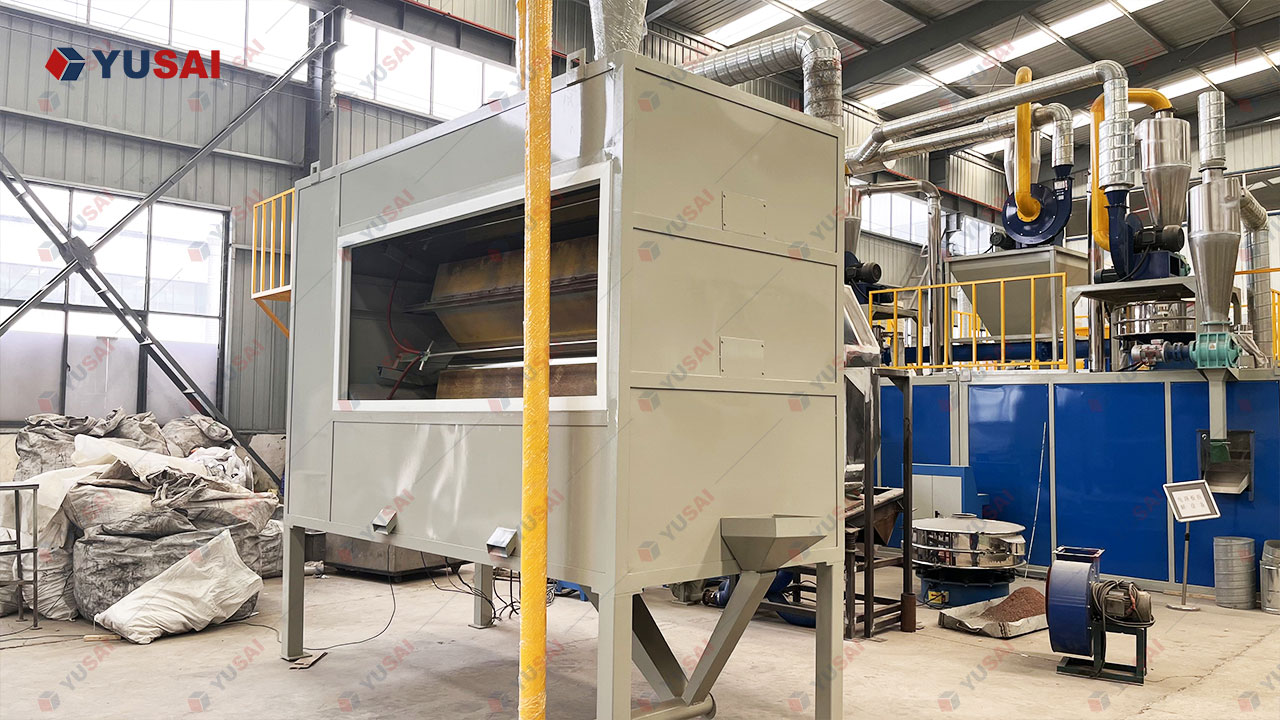
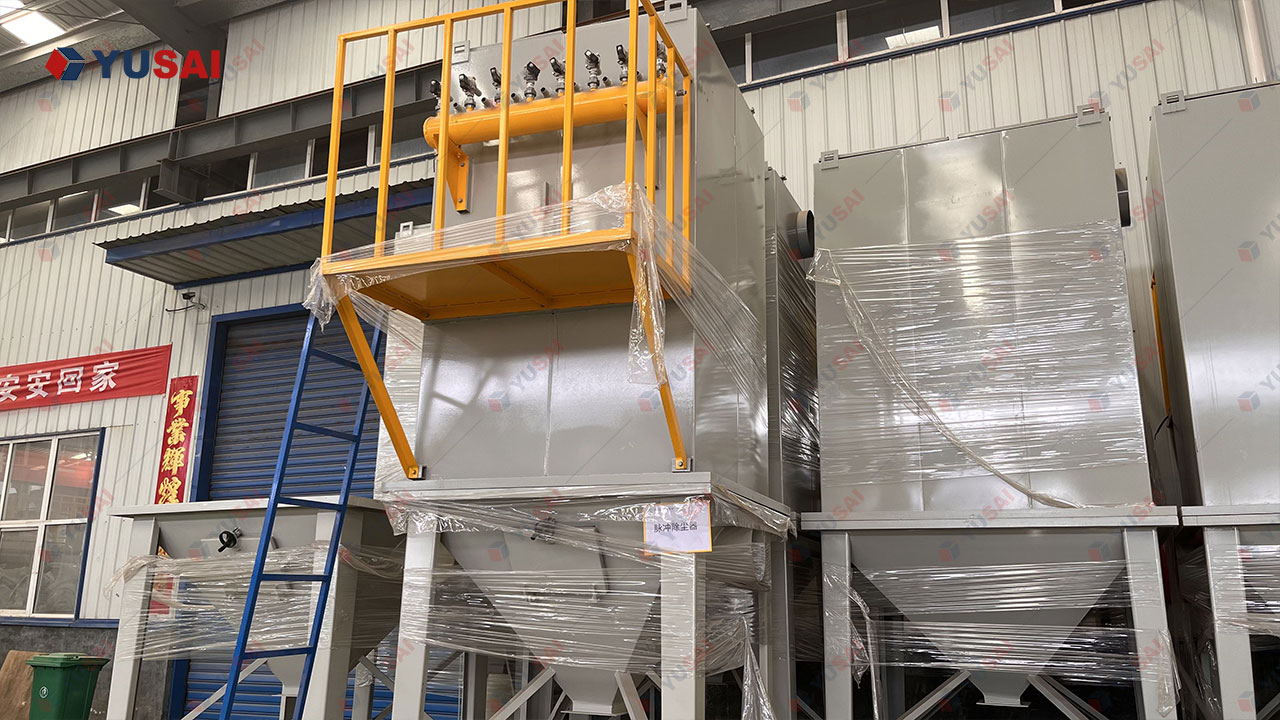
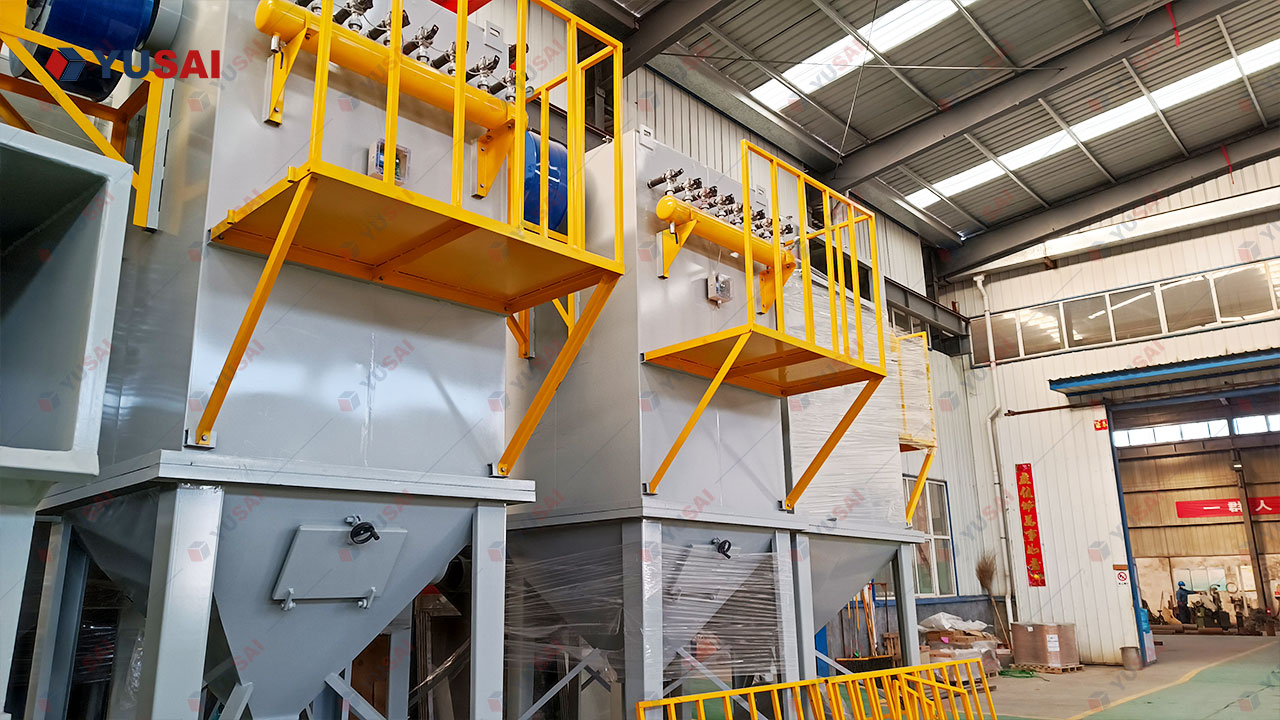
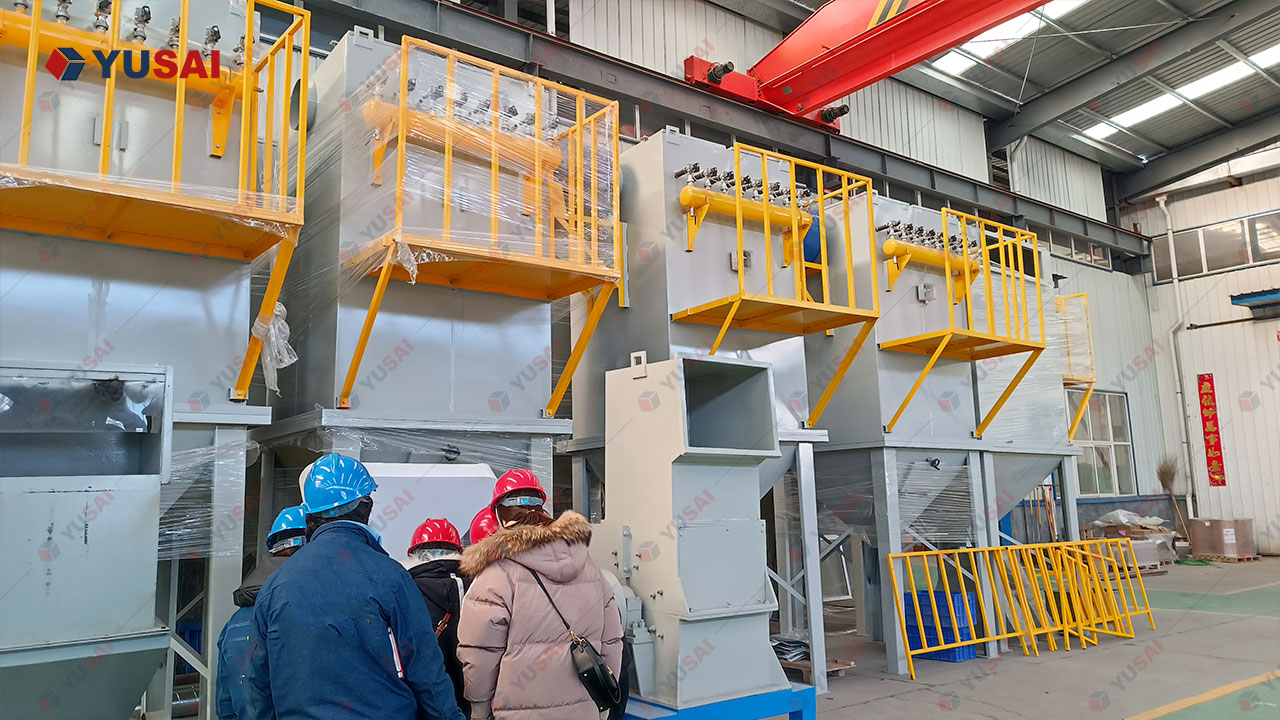
Pulse dust collector
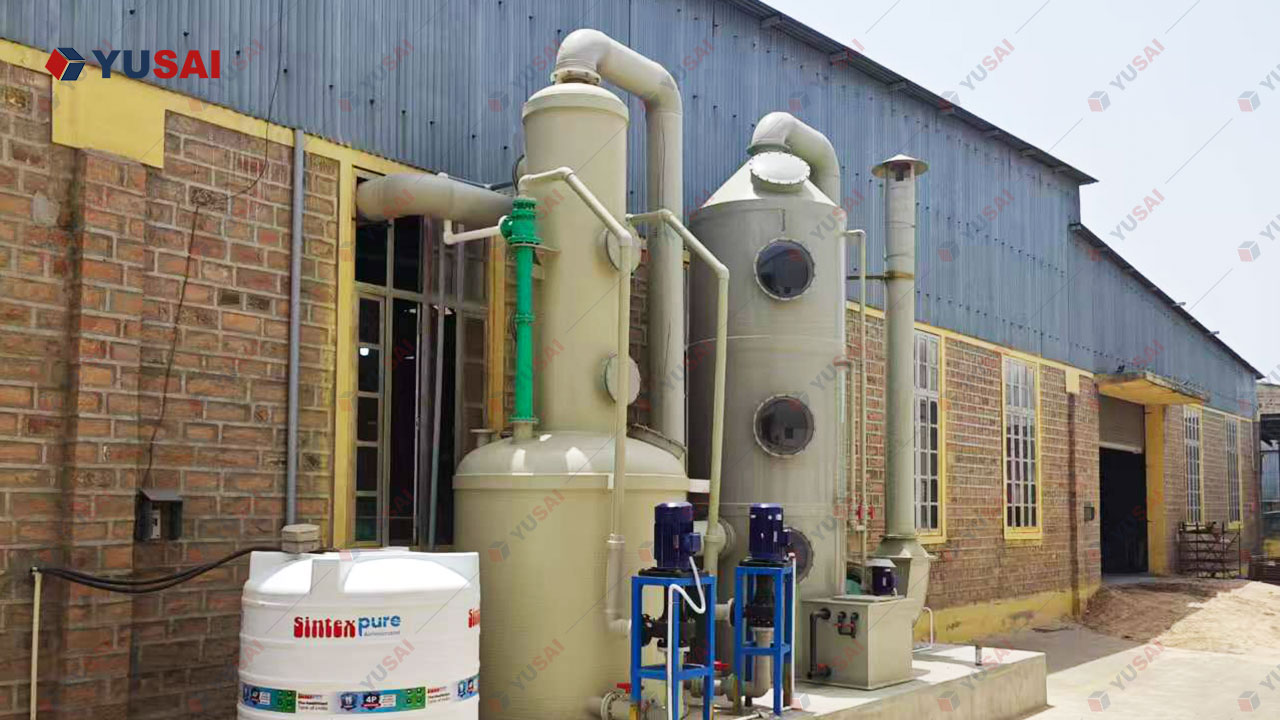
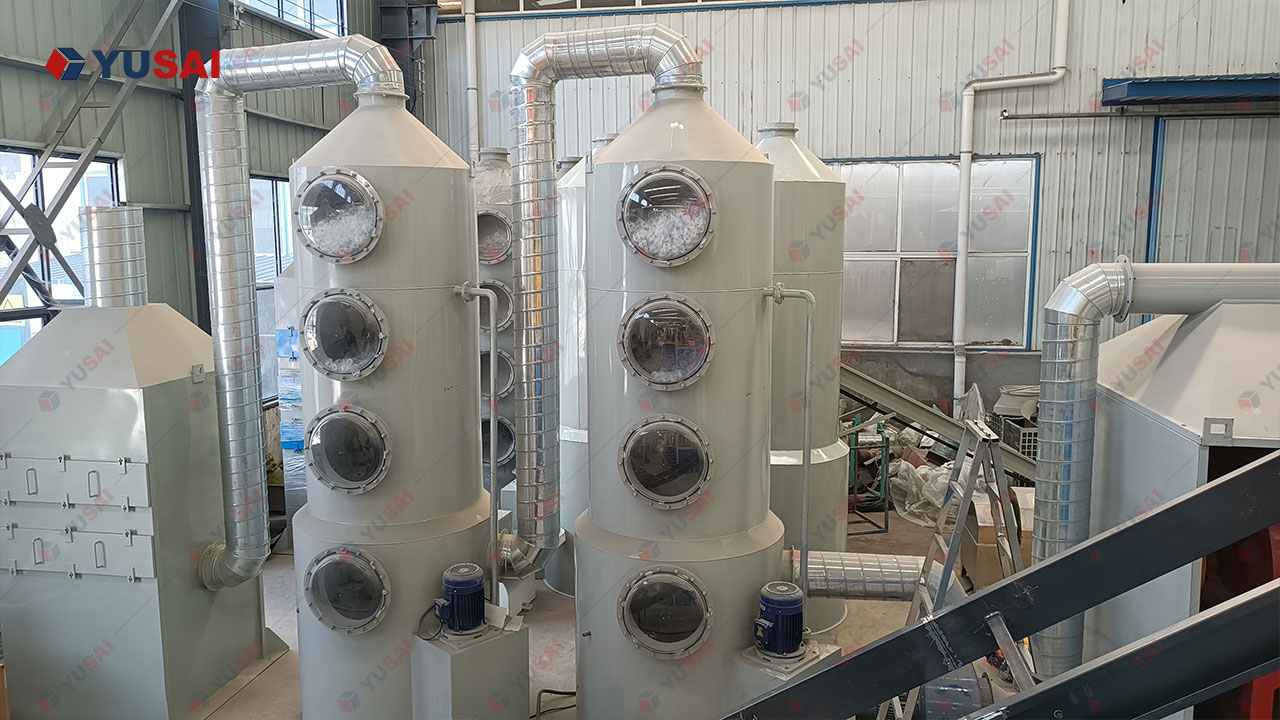
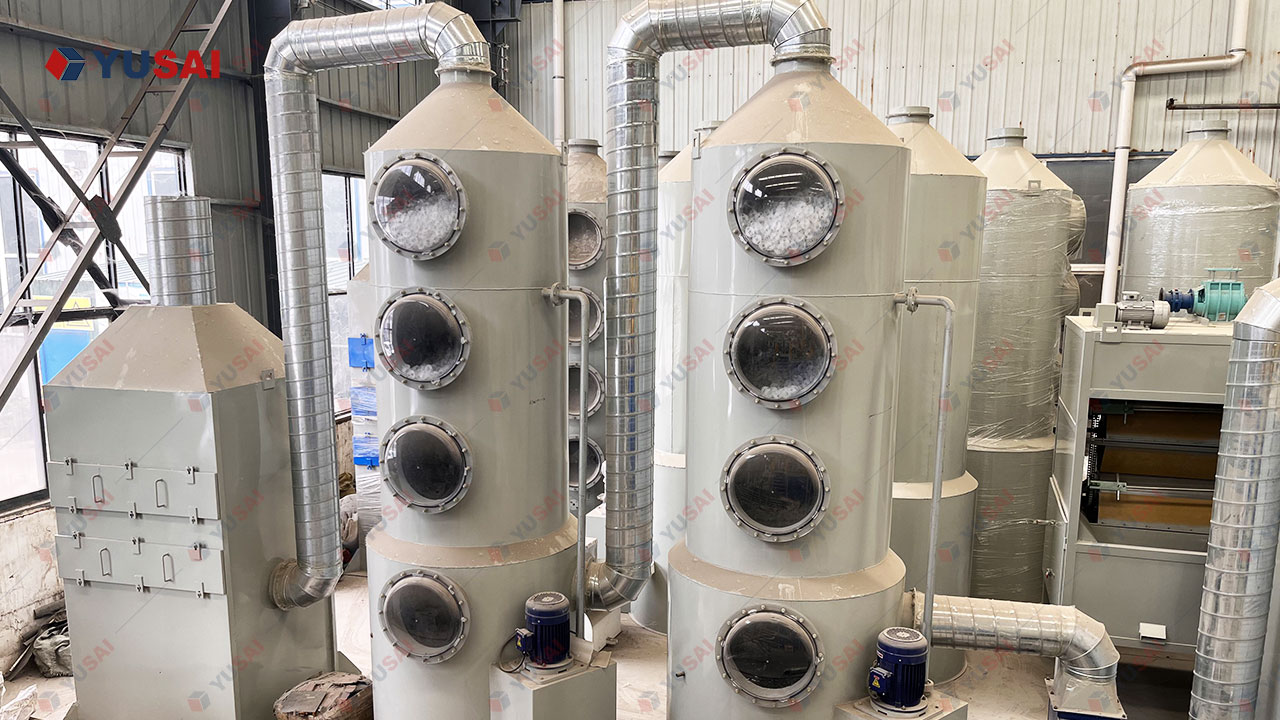
Exhaust gas spray tower (wet scrubber)
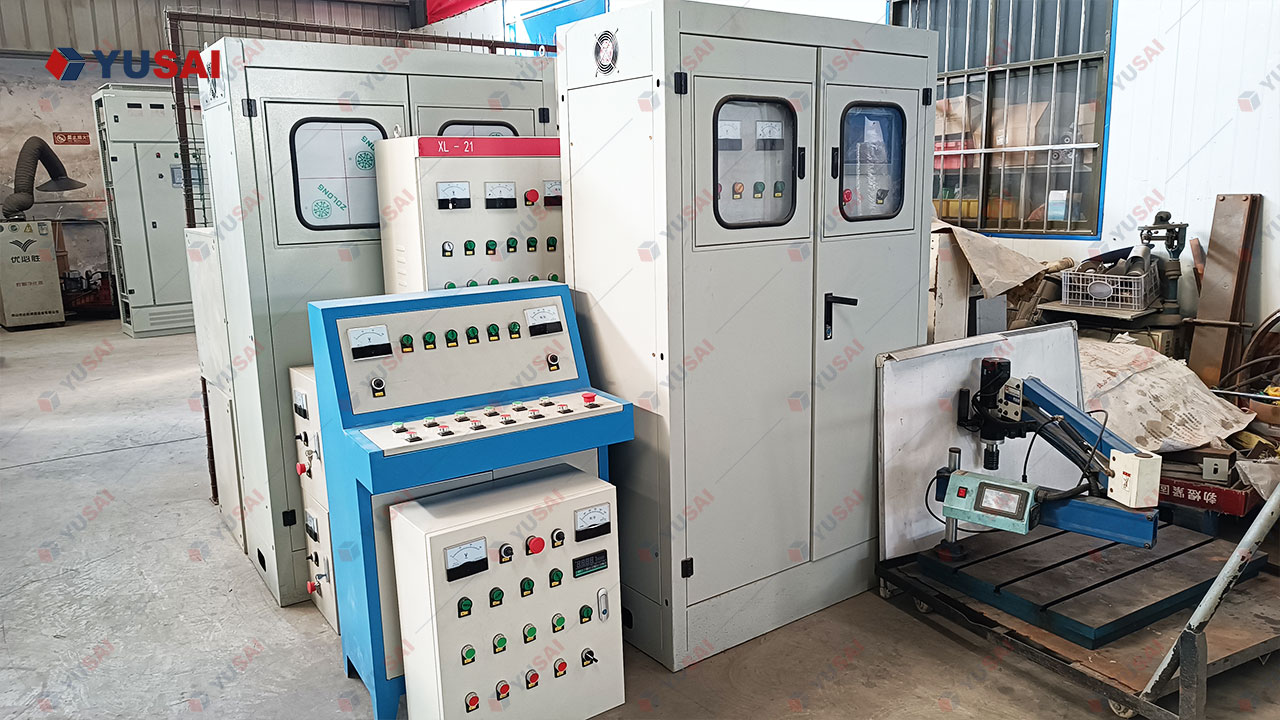
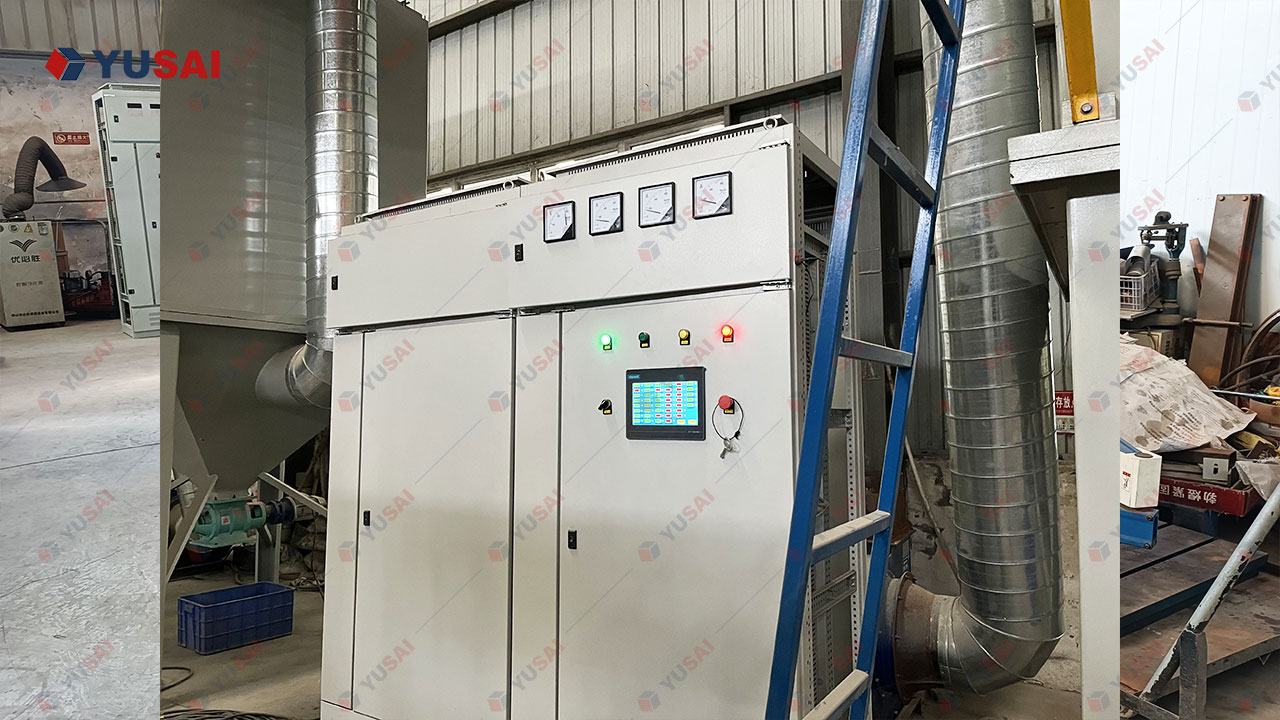
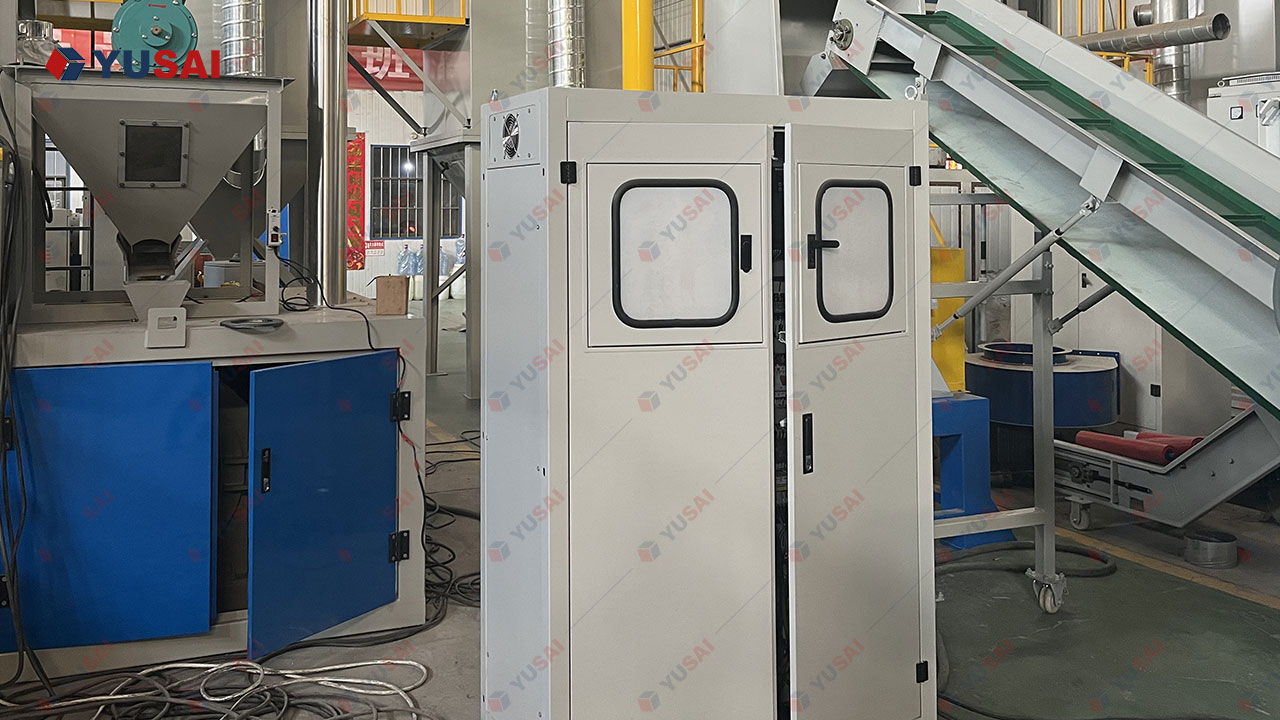
PLC control cabinet
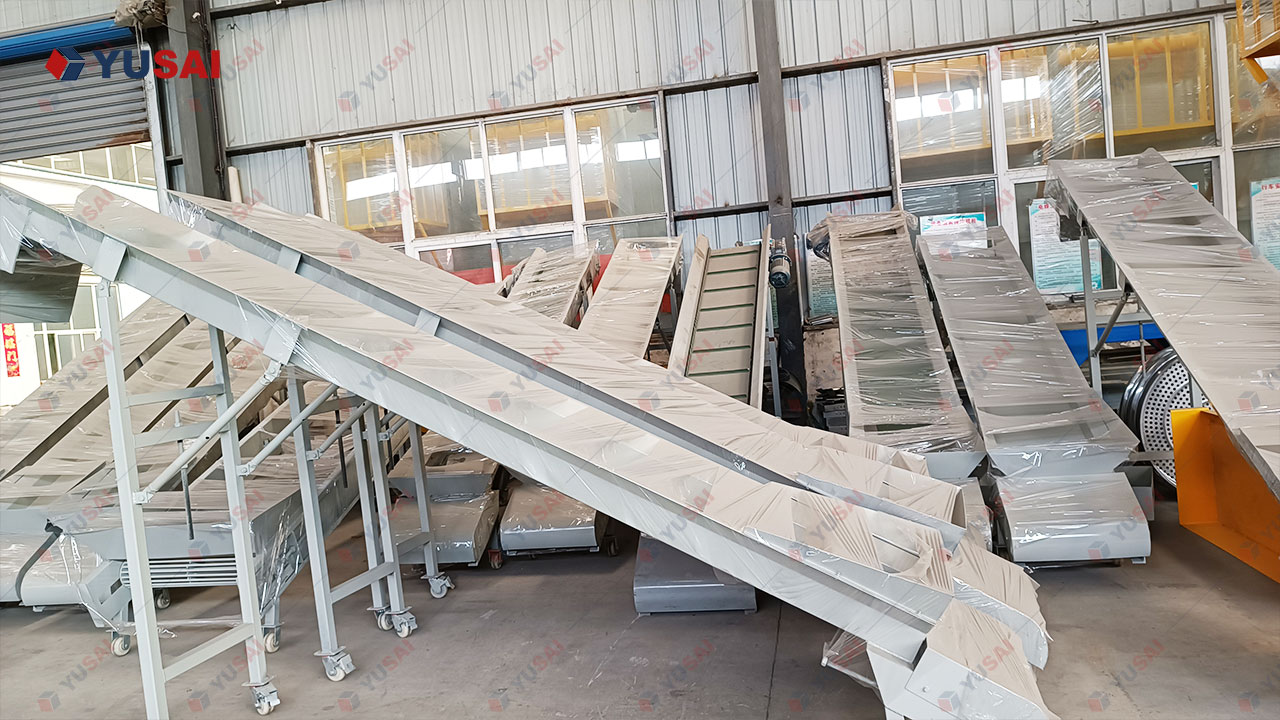
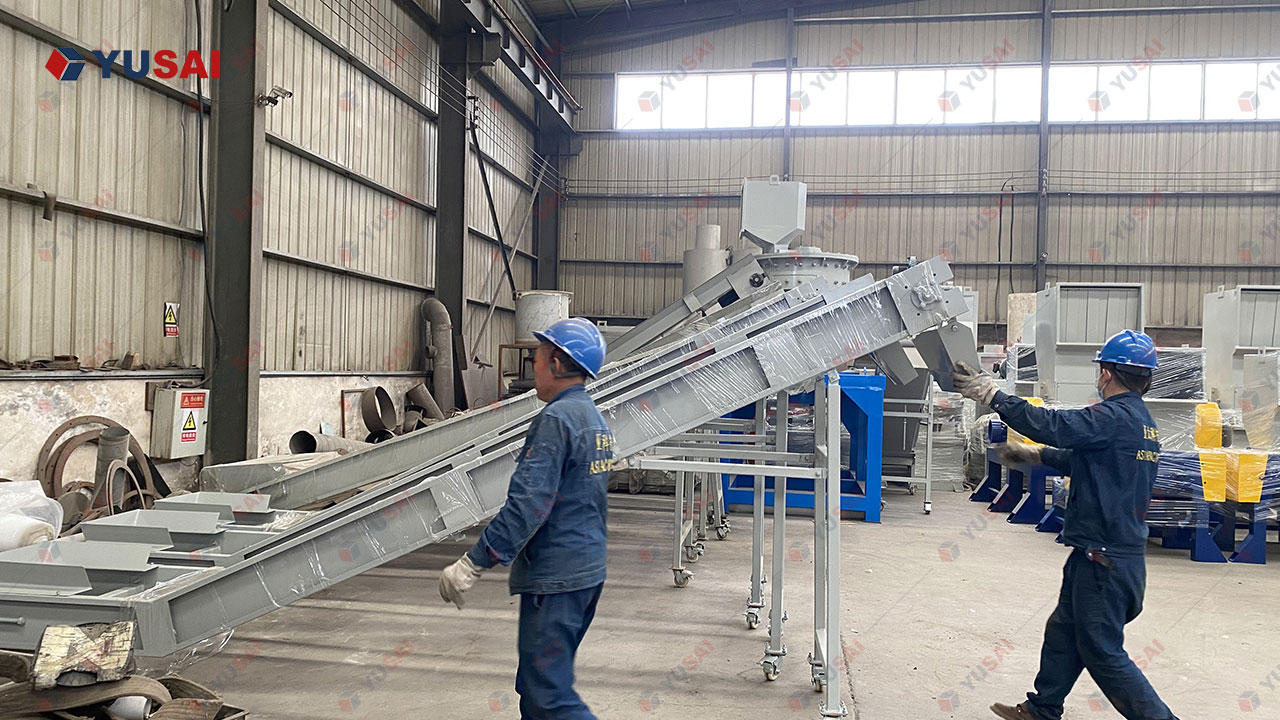
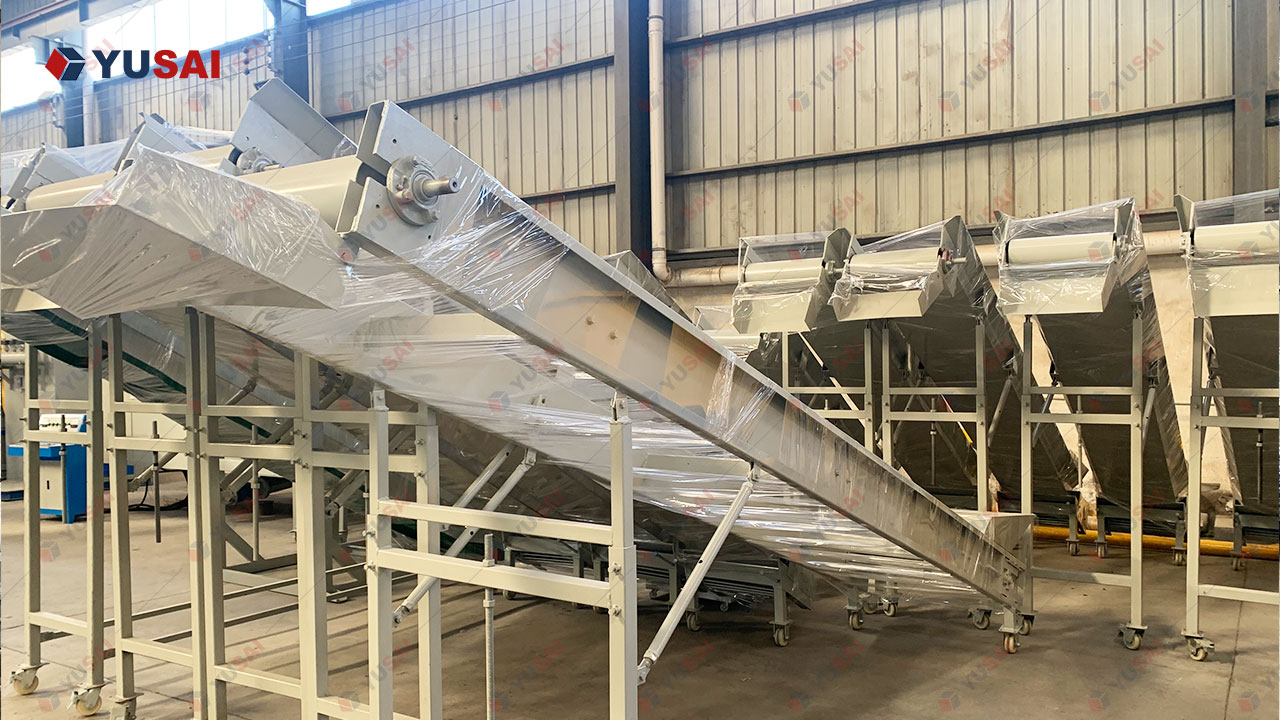
Belt conveyors & feed hoppers
Water cooling system (grinding chamber)
Controls grinding temperature to protect output quality and reduces noise. Circulating water carries heat away from the grinding chamber, preventing thermal damage to the material and extending the service life of the screens and grinding parts; the water is recycled in a closed loop with minimal consumption.
Process Flow
Solar Panel Physical Recycling Process (chemical-free, for single-glass panels)
- Pre-dismantling — remove the aluminum frame and junction box automatically.
- Glass peeling — peel most of the tempered glass from the panel surface.
- Shredding & crushing — the remaining laminate is torn into strips, then reduced to small pieces.
- Fine grinding — material is milled into powder under negative pressure; the return system re-grinds oversized particles.
- Air classification — lightweight EVA/backsheet plastics are separated from heavier silicon and metal powder.
- Electrostatic & magnetic separation — metals are separated from plastics with up to 99% efficiency, yielding clean silicon powder, copper powder, plastics, glass and aluminum.
- (Optional) Silver recovery — silver is extracted from the silicon powder concentrate using our precious metal refining equipment.

Final products: junction box, aluminum frame, cleanroom glass, silicon powder, copper powder, EVA plastic powder, silver.
Solar Panel Pyrolysis Recycling Process (for double-glass / cell-level recovery)
- Pre-dismantling — remove the aluminum frame and junction box.
- Pyrolysis — panels enter the PV tunnel furnace; in an oxygen-free atmosphere the EVA/backsheet decomposes, fully releasing glass, silicon cells and copper ribbons.
- Post-sorting — the cracked mixture is separated into copper wire, silicon wafers and glass.
- Silver stripping — silver is recovered from the silicon wafers with the silver stripping machine.

Product Features
- Fully automated operation — PLC-controlled from feeding to final sorting; minimal manual intervention.
- Robot-arm auto loading (optional) — an industrial robot loads panels onto the line, saving labor and improving consistency.
- Negative-pressure dust control — high-efficiency pulse dust collection keeps the workshop clean and compliant.
- Separation rate up to 99% — air classification plus high-voltage electrostatic separation delivers clean, high-purity fractions.
- Two-stage crushing + return grinding system — no material waste; uniform, consistent output.
- Water-cooled grinding chamber — controls grinding temperature and reduces noise.
- High-value outputs — consistent silicon and metal powders; silver refined to high purity for maximum value.
- Energy-efficient & low cost — optimized process design reduces power consumption per tonne processed.
- Modular & customizable — start from a single machine (frame remover, glass remover) and expand to a full plant; configured to your raw materials, capacity and site.
- CE-certified & safety-interlocked — emergency stops, guards and overload protection on all rotating equipment; voltages customized to your region.
Technical Parameters
Solar Panel Physical Crushing & Sorting Line
| Model | Capacity | Power (kW) | Weight (t) | L×W×H (m) |
| YS-PV300 | 300 kg/h | 102 | 15 | 20 × 5 × 5 |
| YS-PV500 | 500 kg/h | 134 | 20 | 25 × 6 × 5 |
| YS-PV1000 | 1,000 kg/h | 194 | 30 | 30 × 6 × 5 |
Solar Panel Pyrolysis Recycling Line
| Model | Capacity | Power (kW) | L×W×H (m) |
| YS-PVR60 | 50–60 pcs/h | 300 | 55 × 8 × 5 |
| YS-PVRF60 | 50–60 pcs/h | 240 | 108 × 11 × 6 |
Note: The tables above show standard configurations; capacity, power and layout are customized to your raw material (single-glass / double-glass, panel size, frame type) and site conditions. Voltage is customizable (220V / 380V / 415V / 440V / 480V, 50/60Hz). Optional add-ons include the silver stripping machine, precious metal refining line, eddy current separator, robot-arm loader and remote PLC access. Contact us with your material photos and samples for the full datasheet and a customized proposal.
Advantages
- Factory-direct manufacturer — design, R&D, production and export in one plant; factory price with no middleman; every machine tested with real material before delivery.
- Original recycling technology — in-house R&D covering pre-treatment, crushing, sorting and pyrolysis, with several national patents.
- Full value-chain capability — beyond crushing, YuSai also supplies silver stripping and precious metal refining equipment, our core specialty: one supplier covers the line from scrap panels to saleable silver and silicon.
- Two process routes under one roof — physical and pyrolysis lines both offered; we recommend the right route for your panel type instead of forcing a one-size-fits-all machine.
- Material testing before shipment — send waste panel samples; we run them through the line, record video, and confirm recovery and product quality before you pay the balance.
- Turnkey project service — plant layout design, manufacturing, container loading, overseas installation guidance, commissioning and operator training.
- Proven global deliveries — recycling equipment exported to Europe, the Americas, the Middle East, Southeast Asia and Africa for e-waste, precious metal refining and solar panel recycling projects.
- Compliance-ready — CE certification and ISO 9001 quality management; designed to support EU WEEE / EPR compliance for PV recyclers.
- Honest engineering — real technical parameters, real test data, clear contracts; no inflated capacities, no hidden costs.
Quality System
- ISO 9001:2015 quality management across design, procurement, fabrication, assembly and service.
- CE certification — electrical and machinery safety verified for the European market.
- Five-stage QC gate: incoming material inspection → structural welding inspection → machining tolerance check → assembly check → full-load trial run with customer material before delivery.
- Standardized components — motors, reducers, bearings, PLC and electrical parts from established international brands for long service life and easy local replacement.
- Complete documentation — operation manual, maintenance schedule, electrical drawings and spare-parts list in English with every line.
- Video acceptance — the final trial run is recorded processing your panels, so you verify quality remotely before shipment.
Service Process
- Inquiry & consultation — tell us your raw materials, target outputs and budget; we reply within 24 hours.
- Material analysis — send waste panel samples/photos; our engineers analyze and test feasibility on the actual line.
- Solution design & quotation — plant layout drawing, equipment list, technical parameters and a transparent quotation.
- Order & production — production typically takes 15–30 days; progress photos/videos shared regularly.
- Trial run & video acceptance — your material is processed on the finished line; videos and test data sent for remote acceptance.
- Shipping — professional export packing, LCL or FCL, sea/air freight; loading supervised, full shipping documents provided.
- Installation & commissioning — detailed video guidance, drawings and online support; engineers can be dispatched for large projects.
- Training & handover — operator training (on-site or video), operation manual, maintenance schedule and spare-parts list.
- Lifetime after-sales — regular follow-up, technical support, spare parts and process optimization for the life of the plant.
Warranty & After-Sales
- Warranty: 12 months on the complete machine (consumable wear parts excluded); quality-defective parts replaced free within warranty.
- Lifetime technical support: free remote consultation for as long as you operate the line.
- 24-hour response: our after-sales team responds within 24 hours (WhatsApp / email / video call); most issues are resolved remotely with live guidance.
- Spare parts: original spare parts at factory cost after warranty; a standard wear-part kit (knives, screens, filters, belts) is recommended.
- On-site service: engineer dispatch for installation, commissioning and training on turnkey projects; costs transparent in the quotation.
- Upgrades: process improvements and capacity upgrades as your business grows.
Frequently Asked Questions (FAQ)
Q1: What materials can be recovered from waste solar panels?
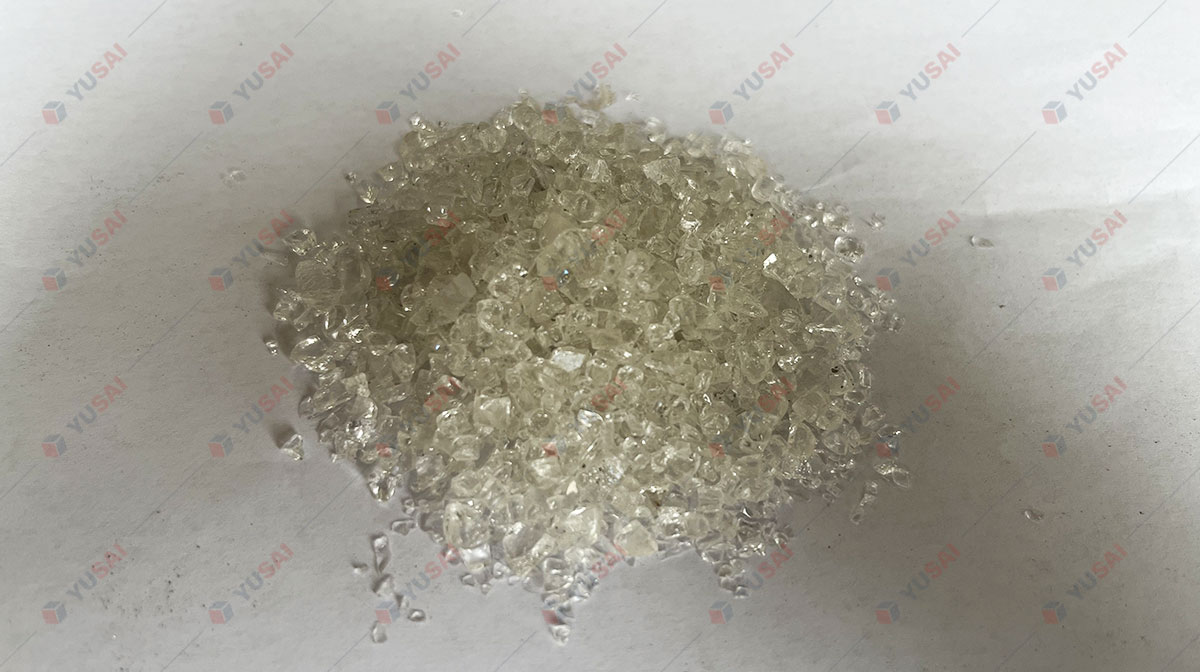
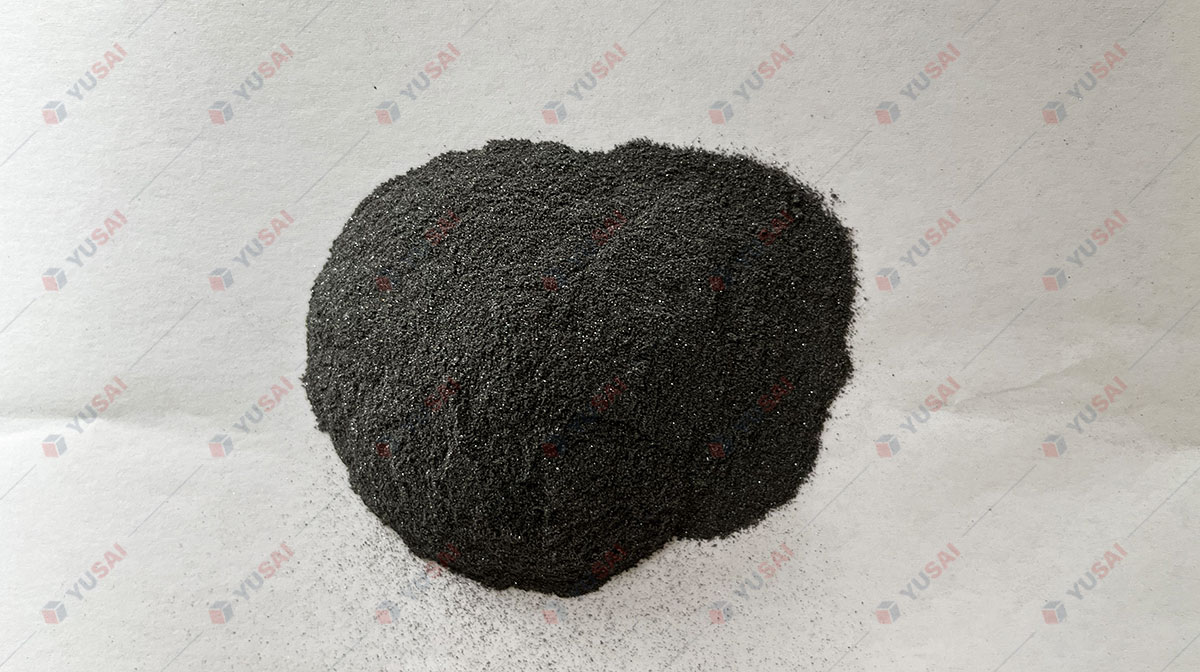
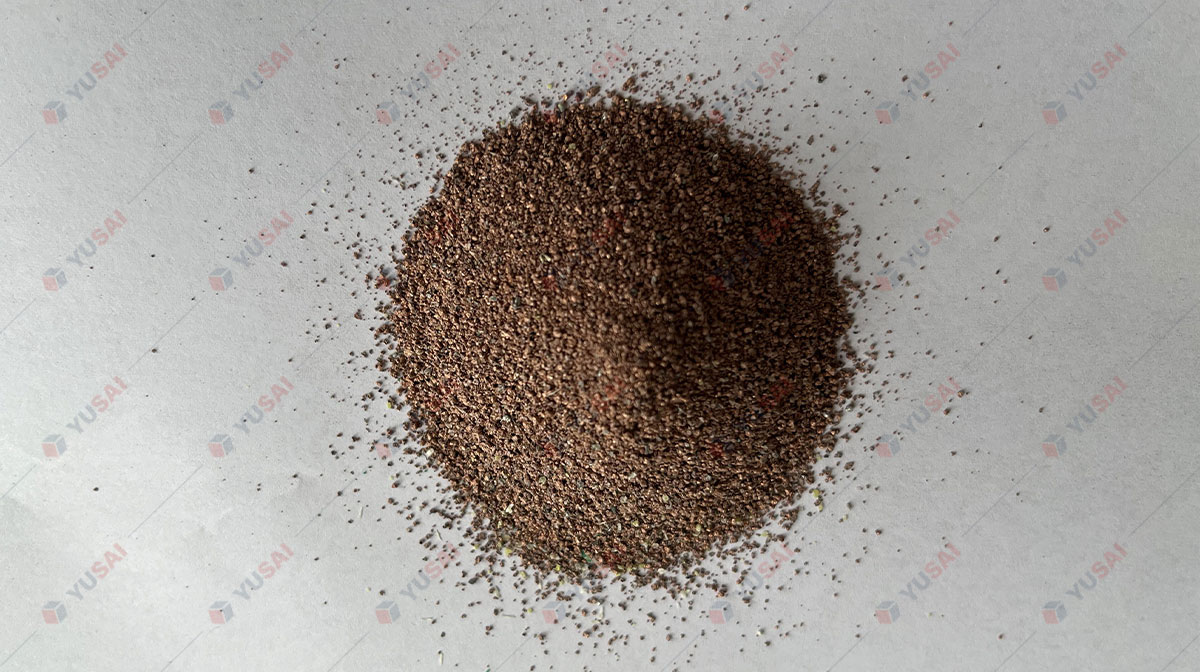
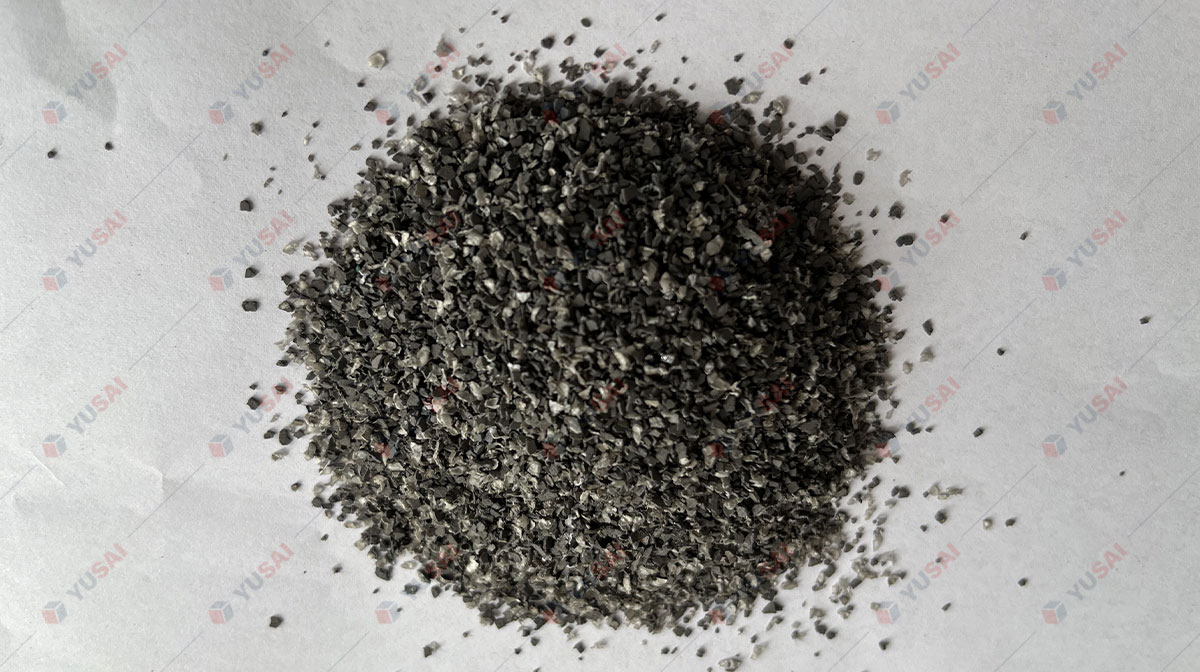
A: A complete line recovers aluminum frames, clean glass, silicon powder, copper, plastics (EVA/backsheet) and silver, with an overall material recovery rate above 95%.
Q2: What is the difference between the physical line and the pyrolysis line? Which do I need?
A: The physical line (crushing, grinding, dry sorting) is the economical standard choice for single-glass (monofacial) panels — no heat, no chemicals. The pyrolysis line (tunnel furnace) is recommended for double-glass / bifacial panels and when you want whole silicon wafers and maximum silver recovery. Many customers start with the physical line and add pyrolysis later; we recommend based on your actual panels.
Q3: What capacity should I choose? How much space does it need?
A: Standard models cover small-scale pilot to industrial capacity. Tell us your daily tonnage and site size and we will provide a layout drawing and capacity recommendation.
Q4: How long is production and delivery?
A: Production typically takes 15–30 days after order confirmation; sea freight to most ports takes 20–40 days depending on destination. Progress videos and shipping documents are provided throughout.
Q5: What is the price? What is the payback period?
A: Price depends on configuration (process route, capacity, optional silver refining). We quote transparently after you share your material and capacity. Aluminum frames and silver are the fastest payback items; contact us for an ROI estimate for your market.
Q6: Can I test with my own material before buying?
A: Yes. Send waste panel samples; we run them on the actual line, record video and report recovery and output quality before shipment.
Q7: Is the equipment certified and compliant?
A: Yes — CE certified and manufactured under ISO 9001:2015, designed to support EU WEEE and EPR compliance. Certificates and technical documentation are available for local permitting.
Q8: Can the line handle panels with frames still attached?
A: The automatic line includes frame removal and junction box removal as its first stations, so complete panels can be fed in directly.
Q9: How many workers are needed?
A: The fully automatic line typically needs only 2–3 operators per shift (feeding supervision, control panel, product bagging); a robot-arm loading option reduces this further.
Q10: What about installation and after-sales in my country?
A: Remote video-guided installation and commissioning, 12-month warranty, 24-hour response and lifetime technical support; engineers can be dispatched on-site for turnkey projects.
Q11: What output do I actually sell?
A: Aluminum frame (scrap aluminum), clean glass cullet, silicon powder, copper powder, plastic powder and silver — all standard, saleable commodities. We can advise on buyers and pricing in your region.
Q12: Do you supply single machines, or only full plants?
A: Both. Frame removing machine, glass removing machine, shredder, electrostatic separator, silver stripping machine and other single machines are available individually, as well as complete turnkey plants — start small and expand later.

Get A Free Quote
Fill in the form below and our service team will get back to you within 24 hours with a recommended process flow and quotation.
- +86 18339216321
- info@yusaipreciousmetals.com
- Zhengzhou.Henan.China
- Solar Panel Recycling Plant
- Solar Panel Pyrolysis Recycling Plant
- Solar Panel Junction Box Removing Machine
- Solar Panel Aluminum Frame Removing Machine
- Solar Panel Glass Removing Machine
- Solar Panel Pyrolysis Tunnel Furnace
- Solar Panel Pyrolysis Sorting System
- Solar Panel Crushing Sorting System
- Silver Stripping Machine
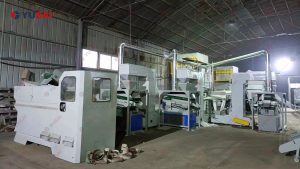
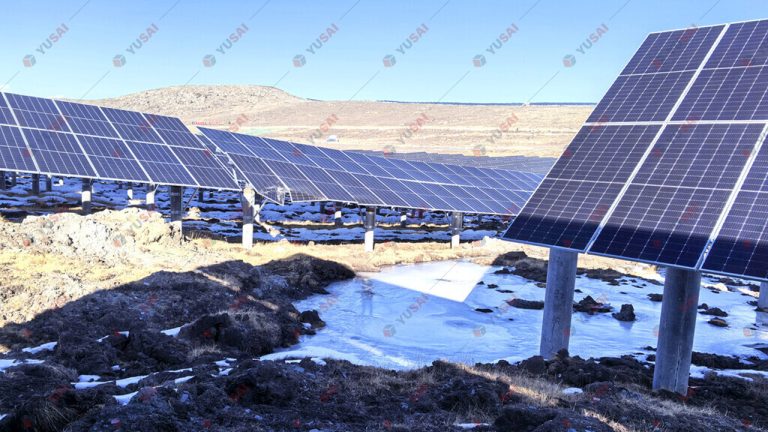
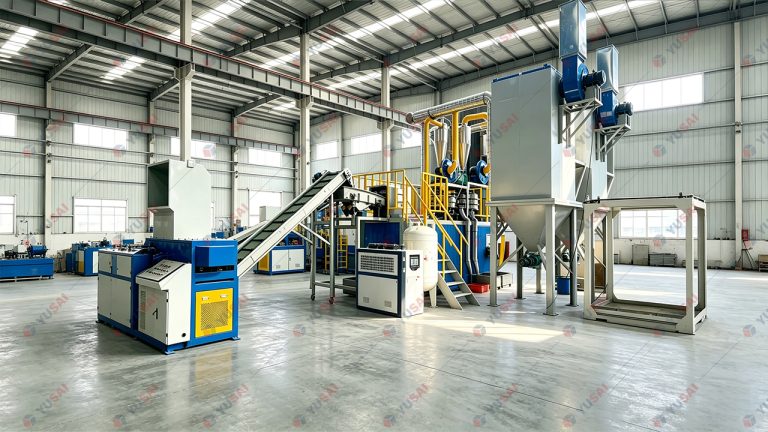
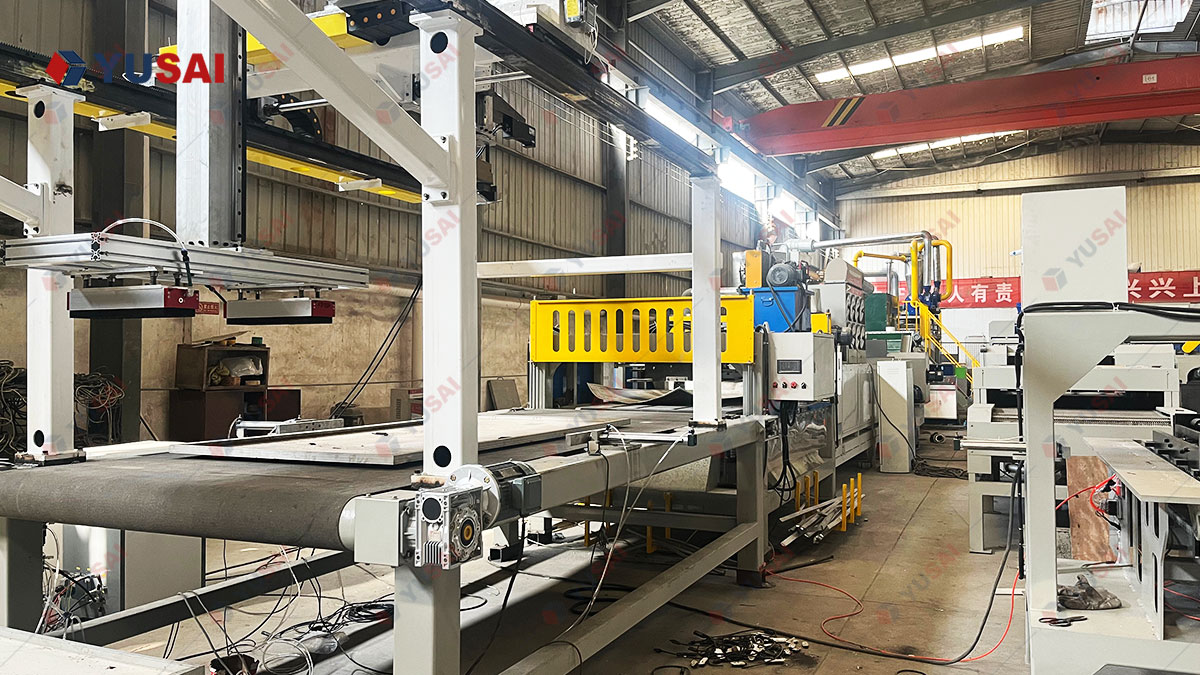
If you be interested in our equipment and solutions, please to contact us.
- +86 18339216321
- info@yusaipreciousmetals.com
- zhengzhou.henan.china