
Silver Stripping Machine
— Turnkey Silver Stripping Machine
The Silver Stripping Machine (silver extraction line for silicon wafers) is a complete hydrometallurgical system that selectively strips the silver layer from end-of-life, broken and off-spec PV silicon wafers, recovering 99.9%+ pure silver at a ≥99% recovery rate while keeping the silicon wafers intact and reusable.
The standard configuration processes 500 kg of silicon wafers per day with a remarkably low environmental footprint: about 200 liters of water per day and roughly 300 liters of wastewater per month. It is the profit core of any solar panel recycling or precious metal refining operation.
Product Overview
In solar panel recycling, the industry has traditionally focused on recovering silicon and base materials, while silver — used in the conductive layers and electrical contacts of every cell — is often undervalued because it is difficult to extract from silicon-rich waste streams. Conventional high-temperature methods generate significant pollution and struggle to recover silver efficiently.
The Silver Stripping Machine solves this with a selective chemical process. A specially formulated silver-dissolving solution (silver lixiviant) is applied to the wafer surface, dissolving the printed silver paste (silver powder + glass frit + organic binder) through a controlled oxidation reaction. The silver-bearing solution is then carried through a complete closed-loop refining route — acid leaching → precipitation → ammonia purification → reduction → smelting — and comes out as fine silver (≥99.9%) ingots, while the silicon wafer itself is left undamaged for reuse or resale.
The machine is engineered as a compact, skid-mounted line that can run standalone or integrate with a solar panel recycling plant. It accepts silicon wafers, broken cells and silver-bearing silicon powder from panel crushing. Raw material goes in — fine silver and clean silicon come out — with process water recycled and only a few hundred liters of wastewater requiring treatment each month.
Recycling Value Analysis
- Silver content of feedstock: 0.5%–1.2% of silicon wafer weight (varies with cell technology — PERC, TOPCon, HJT — and manufacturer).
- Recovery rate: ≥ 99% of the contained silver is recovered under normal operation.
- Output purity: ≥ 99.9% fine silver ingots (up to 99.99% with an optional electrolytic refining module).
- Daily output value example (standard 500 kg/day line): 500 kg of wafers at 0.5%–1.2% silver content contains roughly 2.5–6 kg of silver per day (≈80–193 troy oz). At a spot price of about USD 68/oz, that equals approximately USD 5,500–13,300 of silver value per day — before counting the reusable silicon. (Silver prices are volatile; use your local live quotation for payback calculations.)
- Silicon upside: because stripping is selective, cleaned silicon wafers/powder can be sold or reused — a second revenue stream from the same input.
- Market driver: the first large wave of PV panel retirements is arriving; recyclers who capture the silver fraction turn a disposal cost into a commodity-grade revenue stream.
Applied Materials
Feedstock (raw materials):
- Silicon wafers containing silver components — whole, broken or cut (silver paste on surface: silver powder, glass frit, organic binder)
- Off-spec / rejected solar cells from PV manufacturing
- Silver-containing silicon powder — a byproduct of PV panel crushing and recycling lines
- Silver-bearing sludge and paste residues
Output products:
- Silver ingots, ≥99.9% purity (standard bar sizes; 99.99% available with electrolytic refining)
- Silver powder (optional)
- Clean silicon wafers / silicon powder — reusable or sellable
- Recycled process water (the silver removal solution is recyclable; only ~300 L/month of wastewater requires treatment)
Product Structure (Main Equipment & Standard Configuration)
The standard 500 kg/day line is delivered as an integrated system comprising the following main units:
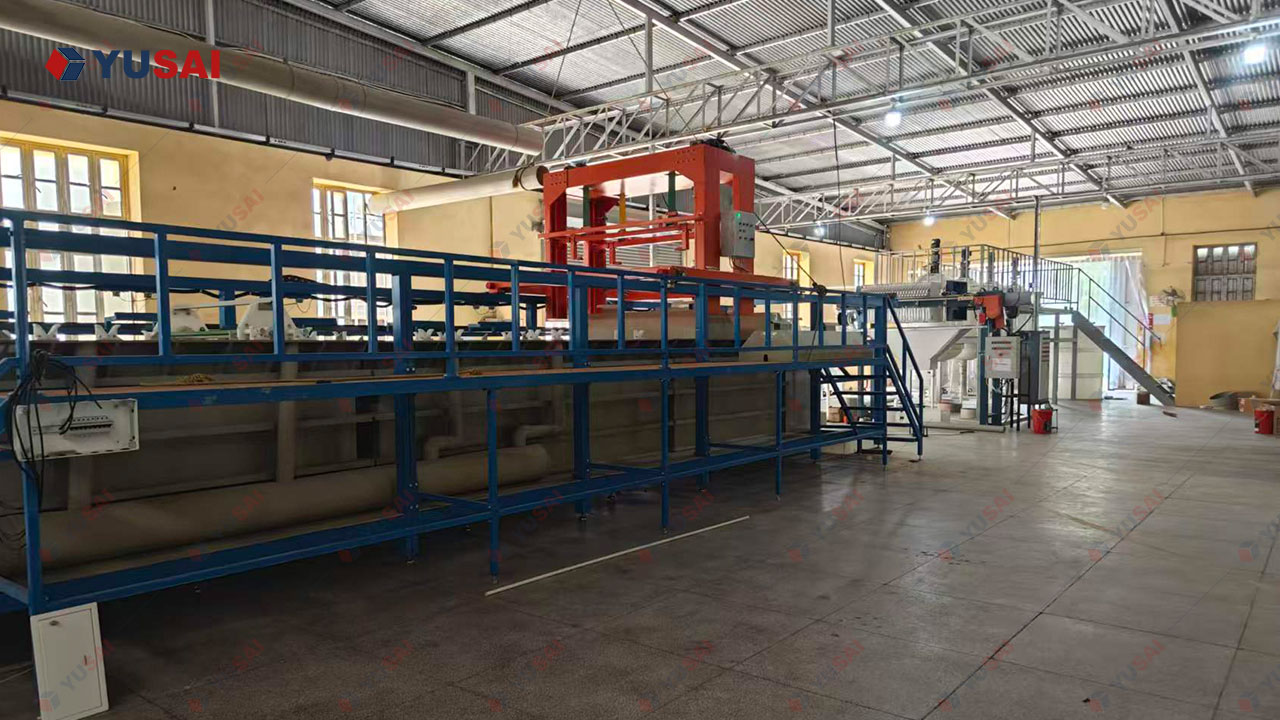
- Silver stripping unit ×1 — 14 kW; PP/steel construction; equipped with 2 loading/unloading stations, 4 stripping stations, a control cabinet and 2 roller conveyors. It is the dedicated station where silver is stripped from silicon wafers by chemical immersion.
- Chemical reactor ×1 — 1.5 kW, 2000 L, PP. Prepares and stores the silver-dissolving solution (lixiviant).
- Reduction reactor ×2 — 1.1 kW, 1000 L each, PP. Core vessels where silver precipitation and reduction reactions take place.
- Neutralization reactor ×1 — 1.1 kW, 1000 L, PP. Neutralizes waste acid/alkali and conditions process water.
- Bag filter ×2 — Ø400 mm, PP, each with 6 filter bags. Removes fine particles to produce a cleaner silver-bearing solution.
- Filter press ×1 — 20 m². Separates solid impurities from silver-compound liquids.
- Vacuum pump unit ×1 — 5.5 kW, PP. Circulates liquids; assists filtration and material transfer.
- Vacuum storage tank ×2 — 1000 L each, PP. Stores silver-bearing solutions under vacuum to prevent oxidation and contamination.
- Liquid storage tank ×2 — 2000 L each, PE. Stores raw, intermediate and final liquids.
- Transfer pump ×7 — 0.37 kW each, acid & alkali resistant. Transfers liquids between process units.
- Silver reduction kettle ×1 — 30 L, high-borosilicate glass, electric heating. Performs the final reduction step that converts silver compounds into elemental silver.
- Acid gas scrubber ×1 — one 5.5 kW fan plus one 3 kW circulation pump. Absorbs acidic gases (NOx/acid mist) from exhaust streams.
- Acid gas exhaust hood ×1 — captures acid fumes at the source and directs them into the scrubbing system.
- Steam boiler ×1 — 72 kW. Supplies steam heat for the process heating requirements.
- Working platform ×1 — provides a safe platform for operation, maintenance and sampling.
- Piping, valves & installation tools ×1 set — interconnects all process units into one working line.
Note: the line can be customized to customer requirements — capacities, layout and single-machine configurations are adjustable. Line footprint (standard): approx. 22 m × 5 m × 7 m (L×W×H).
Main process chemicals (standard configuration):
- Silver-dissolving solution (silver lixiviant, nitric acid based)
- Silver precipitant — saturated sodium chloride solution
- Ammonia (ammonia leaching purification)
- Hydrochloric acid (pH adjustment in purification)
- Reducing / cementation agent — hydrazine hydrate
- Cationic polyacrylamide (rapid settling/coagulation aid)
- Borax (smelting flux)
- Sodium hydroxide / sodium carbonate (neutralization)
Silver Stripping Machine Working Process
Process at a glance — three core stages:
- Acid leaching and reduction
- Ammonia leaching and reduction (purification)
- Ingot casting
Detailed operation steps:
- Silicon wafer pretreatment — classify, crush or cut waste silicon wafers to increase the contact area for subsequent reactions.
- Chemical preparation — prepare the silver-dissolving solution; it flows into the stripping tank through a pipeline.
- Acid leaching and cleaning — load pretreated wafers into the drum and immerse in the acidic solution for rolling immersion, dissolving the silver components to form a silver-bearing solution. (If the stripped solution appears turbid, allow it to stand for ~1 hour until clear before filtering.) After leaching and rinsing, unload the cleaned silicon wafers.
- Collection of silver-containing solution — once the acid solution is saturated, pump it through the filter to separate solid residue; the clean silver-bearing solution flows into a vacuum storage tank.
- Silver precipitation — pump the clean solution into the precipitation kettle; add the precipitating agent (saturated sodium chloride solution) with stirring so silver ions precipitate out as silver chloride (AgCl). Add a rapid coagulant (cationic) until the liquid clears, then filter and rinse the AgCl to neutral.
- Ammonia leaching purification — dissolve the cleaned silver chloride in ammonia solution with stirring until fully dissolved into a colorless clear solution; filter, then adjust pH with hydrochloric acid to re-precipitate high-purity silver chloride; rinse to neutral. This step removes copper, iron, glass and organic impurities.
- Silver reduction — place the purified silver chloride in the reduction kettle and add the reducing/cementation solution (hydrazine hydrate) under controlled heating and stirring to obtain metallic silver powder.
- Silver powder collection — wash and dry the reduced silver powder to obtain pure silver powder.
- Smelting — melt the dried silver powder at high temperature with borax flux to remove impurities and cast into silver ingots.
Quality control points (per documented SOP):
- Control pH value and leaching rate during the acid leaching stage
- Monitor precipitation completeness during the silver precipitation stage
- Test the purity of silver powder and final silver ingots
Record keeping and reporting:
- Record key data for each step: material usage, operation time, temperature, output
- Prepare regular silver extraction process operation reports to optimize the process
Product Features
- Selective stripping, wafer-safe — removes the silver layer without damaging the silicon substrate; silicon remains reusable
- High recovery & purity — recovery ≥ 99%; output ≥ 99.9% fine silver (99.99% optional)
- Extremely low water footprint — total water use ~200 L/day (purified/deionized water ~185 L/day); only ~300 L/month of wastewater requires treatment
- Recyclable process solution — the silver removal solution is reused in the loop, cutting both reagent and water costs
- Complete closed-loop environmental design — acid gas scrubber and exhaust hood capture NOx/acid fumes; neutralization reactor conditions waste streams to emission standards
- Automated & safe — PLC control with temperature/pH monitoring and interlocks; minimized operator contact with chemicals
- Corrosion-resistant build — PP / PE / acid-grade materials throughout the wet section; high-borosilicate glass reduction kettle
- Turnkey, documented operation — standard operating procedure, two-stage operator training, and batch traceability records
Technical Parameters
| Parameter | Specification (standard configuration) |
|---|---|
| Model / configuration | 500 kg/day standard line (custom capacities available) |
| Processing volume | 500 kg silicon wafers per day |
| Silver recovery rate | ≥ 99% |
| Silver output purity | ≥ 99.9% (up to 99.99% with optional electrolytic refining) |
| Feedstock | Silver-containing silicon wafers, broken/off-spec cells, silicon powder, silver-bearing sludge |
| Output forms | Silver ingots / silver powder + clean reusable silicon |
| Water consumption | ~200 L/day total; ~185 L/day purified or deionized water |
| Wastewater generation | ~300 L/month (after in-line neutralization; solution recycled) |
| Installed power | ~107 kW (incl. 72 kW steam boiler) |
| Line dimension (L×W×H) | Approx. 22 m × 5 m × 7 m |
| Control system | PLC + control cabinet; batch data logging |
| Process chemicals | Nitric acid-based lixiviant, NaCl, ammonia, HCl, hydrazine hydrate, borax, NaOH/Na₂CO₃ |
| Environmental system | Acid gas scrubber + exhaust hood; neutralization reactor; recyclable process water |
| Electrical supply | 380V / 415V / 440V, 50/60 Hz (optional) |
Advantages
- Real production-proven design — engineered around an operating 500 kg/day line with documented water, effluent and chemical data
- One responsible supplier — full system scope: stripping unit, reactors, filtration, scrubber, boiler, platform and piping under a single contract
- Precious metal process know-how — the leaching → precipitation → ammonia purification → reduction route is matched to your wafer chemistry
- Two revenue streams from one input — fine silver plus reusable silicon
- Environmental ready — fume scrubbing, waste neutralization and a ~300 L/month effluent level make environmental permitting straightforward
- Low operating cost — recyclable silver removal solution, ~200 L/day water use, and modest reagent consumption
- Proven exports — complete lines supplied and installed internationally, including on-site commissioning and two-stage operator training
Quality System
- Process control follows a documented standard operating procedure (SOP) — pH and leaching rate, precipitation completeness, and purity testing of silver powder and ingots
- Batch record keeping: material usage, operation time, temperature and output for every step, enabling full traceability and regular process optimization reports
- Factory assembly and test under controlled conditions before shipment; final drawings and parameters are confirmed after commissioning with the customer’s actual material
- Third-party inspection welcome at the factory prior to delivery
- Documentation package: operation process plan, equipment list, layout, and training records
- Certificates and compliance documents (quality system, CE where applicable) available on request
Service Process
- Consultation & feedstock assay — send raw material samples or an analysis report; we confirm silver content and process design
- Solution design & quotation — process plan, equipment configuration, layout and quotation per your capacity and site
- Manufacturing — standard production lead time 50–60 working days after contract; progress reporting available
- Pre-shipment training (Stage 1) — your technicians can attend in-plant training at our factory during assembly: operation principle, demonstration, tooling change, maintenance, common fault analysis, safety and emergency handling
- Shipping — export-standard packing and full shipping documentation
- Installation & on-site training (Stage 2) — our engineers supervise installation, commissioning and operation training at your site
- After-sales — lifetime support with remote diagnosis and on-site service options
Warranty & After-Sales
- Quality warranty: the manufacturer is responsible for problems arising from the quality of the machine itself (per contract terms); issues caused by improper operation, man-made damage or natural conditions are the buyer’s responsibility
- Lifetime after-sales: if a problem occurs during production, contact us any time — remote after-sales service or on-site technician dispatch is available
- Installation service: professional installation engineers are sent to site for installation and operation training; standard terms cover engineer round-trip airfare, room & board and a daily engineer fee
- Spare parts & consumables: long-term supply of spare parts and process chemicals guidance
- Process support: free consultation when feedstock changes; operation reports help optimize your process
Precautions
- Fume protection: yellow fumes (NOx) and acid mists are produced during leaching — always wear protective masks and operate in a well-ventilated area with the exhaust hood and scrubber running
- PPE: wear acid-proof gloves, goggles, face shield and apron; avoid all contact with acid and alkaline solutions; emergency shower and eyewash must be nearby
- Chemical handling: store acids, alkali and reducing agents separately with secondary containment; follow the MSDS for hydrazine hydrate (reducing agent) and all reagents
- Dosing discipline: follow the documented procedure — never add water to concentrated acid; add precipitant/reducer in small portions with stirring as specified
- Electrical safety: lock-out/tag-out before maintenance; only trained personnel access the control cabinet
- Waste disposal: treat waste liquid and gas according to regulations to meet environmental emission standards; hazardous waste must be handled by qualified third parties
- Training: only trained operators run the machine; keep batch and maintenance records
FAQ (Frequently Asked Questions)
Q1. What is a silver stripping machine?
It is a hydrometallurgical line that selectively strips and recovers the silver layer from silicon wafers and solar cells, producing ≥99.9% fine silver (≥99% recovery) while keeping the silicon wafer intact and reusable.
Q2. How much silver is in a silicon wafer?
Typically 0.5%–1.2% of the wafer’s weight, depending on cell technology (PERC, TOPCon, HJT) and manufacturer.
Q3. What is the processing capacity?
The standard configuration processes 500 kg of silicon wafers per day. Larger and smaller capacities can be customized.
Q4. What purity can the machine produce?
The standard line produces ≥99.9% fine silver ingots; an optional electrolytic refining module upgrades output to 99.99%.
Q5. How much water and wastewater does it use?
Total water use is about 200 L/day (185 L/day purified or deionized water). The silver removal solution is recycled, so only about 300 L of wastewater per month requires treatment.
Q6. What is the recovery rate?
≥ 99% under normal operation with correct feedstock assay and process control.
Q7. Does the process damage the silicon wafers?
No — stripping is selective, so the silicon substrate remains intact and can be sold or reused as a second revenue stream.
Q8. What chemicals does the process use?
Nitric acid-based silver lixiviant, sodium chloride (precipitant), ammonia, hydrochloric acid, hydrazine hydrate (reducing agent), borax, sodium hydroxide/sodium carbonate, and cationic polyacrylamide as a settling aid.
Q9. Is the process environmentally compliant?
Yes — an acid gas scrubber and exhaust hood capture NOx/acid fumes, a neutralization reactor conditions waste streams, and wastewater output is only ~300 L/month, greatly simplifying environmental permitting.
Q10. What is the delivery and installation lead time?
Manufacturing takes 50–60 working days after contract. Two-stage training is included: in-plant training at our factory before shipment, then on-site installation and operation training by our engineers.
Q11. How do I start a project?
Send your raw material samples or analysis report, target capacity and site conditions. We reply within 24 hours with a process proposal, layout and quotation.

Get A Free Quote
Fill in the form below and our service team will get back to you within 24 hours with a recommended process flow and quotation.
- +86 18339216321
- info@yusaipreciousmetals.com
- Zhengzhou.Henan.China
- Solar Panel Recycling Plant
- Solar Panel Pyrolysis Recycling Plant
- Solar Panel Junction Box Removing Machine
- Solar Panel Aluminum Frame Removing Machine
- Solar Panel Glass Removing Machine
- Solar Panel Pyrolysis Tunnel Furnace
- Solar Panel Pyrolysis Sorting System
- Solar Panel Crushing Sorting System
- Silver Stripping Machine
If you be interested in our equipment and solutions, please to contact us.
- +86 18339216321
- info@yusaipreciousmetals.com
- zhengzhou.henan.china