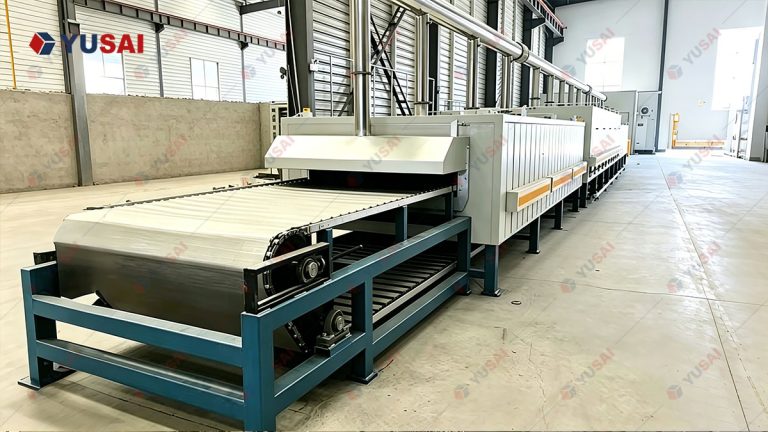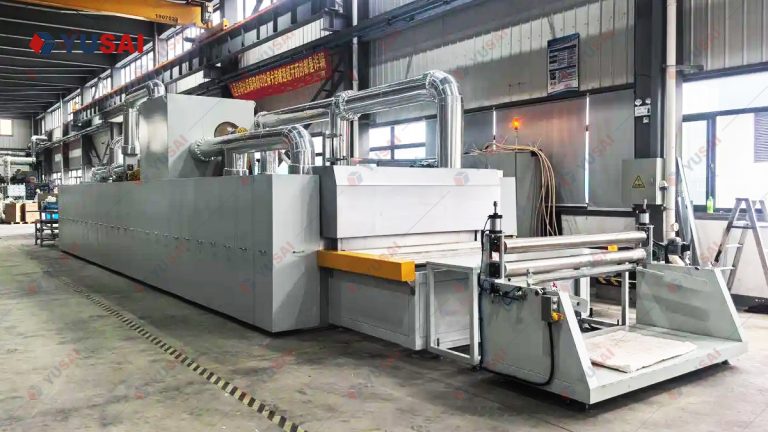
A solar photovoltaic (PV) panel tunnel furnace is an industrial device designed for continuous heat treatment during the manufacturing or recycling of PV panels. Its core operating principle involves precise heat treatment of materials through zoned temperature control and continuous conveyance, utilizing heat conduction, radiation, and convection.
Depending on the application scenario, it operates primarily in one of two modes:
1. PV Manufacturing (Module Curing/Baking)
Used primarily for preheating PV modules prior to lamination, curing EVA/POE encapsulant films, or baking silicon wafers.
Continuous Conveyance Mechanism: Materials are placed on a steel or mesh belt and driven by a motor at a constant speed through the furnace chamber, enabling uninterrupted production.
Multi-Zone Precise Temperature Control: The furnace is divided into multiple independent heating zones (e.g., 8–10 zones); each zone allows for independent temperature profile settings, ensuring materials undergo the standard “ramp-up, constant temperature, cool-down” process.
Heat Transfer Method: Heat is transferred uniformly to the PV panels via radiation and convection using electric heating elements or hot-air circulation systems. This facilitates the cross-linking/curing of encapsulant films or moisture removal, with temperature uniformity typically maintained within ±1.5°C to ±2°C.
Environmental Control: Some high-end units feature nitrogen protection or vacuum environments to prevent material oxidation at high temperatures and preserve solar cell efficiency.
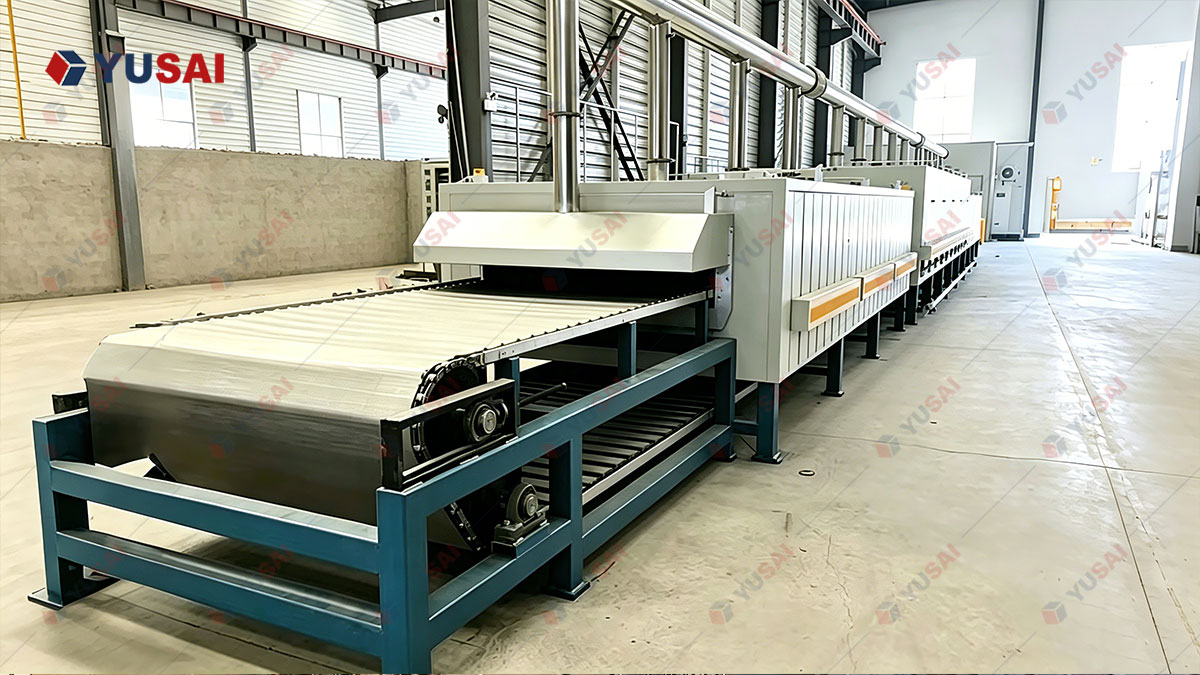
2. PV Recycling (High-Temperature Pyrolysis Separation)
Used primarily for dismantling end-of-life PV panels, utilizing an oxygen-free pyrolysis process.
Oxygen-Free Heating Environment: The furnace maintains a low-oxygen or oxygen-free atmosphere while heating PV modules to between 300°C and 500°C, preventing the combustion or damage of glass and silicon wafers.
Organic Film Decomposition: High temperatures trigger the thermal decomposition of encapsulant materials (EVA/POE films), converting them into gases and minor residues, thereby eliminating their adhesive properties.
Physical Separation: Once the encapsulant film loses its bonding capability, mechanical vibration or drop-based separation mechanisms are used to automatically separate the glass, silicon wafers, and metal frames, achieving recovery rates exceeding 95%. Core System Components
Heating System: Electric heating elements or gas burners that provide the heat source.
Conveying System: High-temperature resistant chains, mesh belts, or steel belts that transport materials at a constant speed.
Control System: PLC-based intelligent control that monitors temperatures across various zones in real time and automatically adjusts power output to ensure a stable process profile.
Thermal Insulation and Exhaust: Refractory insulation layers minimize energy consumption, while an exhaust system removes pyrolysis gases or volatile substances.
In short, the equipment is essentially a precision, high-temperature moving tunnel; it achieves the curing/forming or harmless separation of photovoltaic materials through the precise coordination of time and temperature.