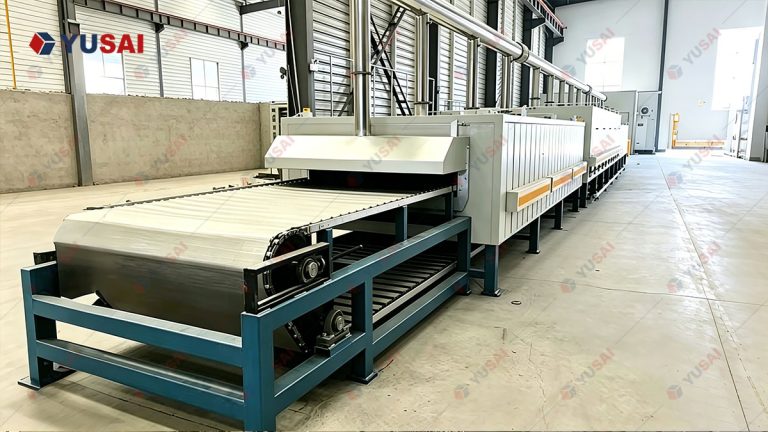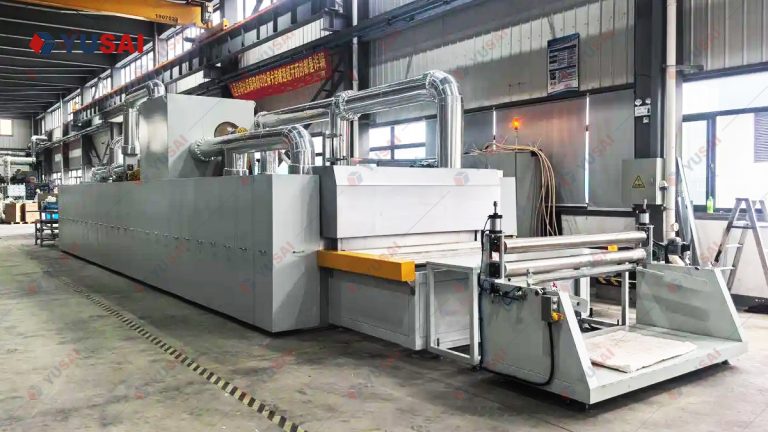
A solar PV panel tunnel furnace is not a component of the PV panel itself but rather an industrial heat treatment device used for the lamination and curing of PV modules or the pyrolysis of decommissioned modules during recycling. Its core structure comprises the following five major systems:
1. Furnace Structure System
Casing/Frame: Typically constructed from stamped and welded steel plate or stainless steel, offering high strength and resistance to deformation.
Thermal Insulation Layer: Internally lined with high-temperature resistant materials such as rock wool or aluminum silicate fiber (thickness ranging from 20mm to 100mm) to minimize heat loss and maintain a low external surface temperature.
Sealing Structure: Inlet and outlet openings are equipped with high-temperature seals and air knives or flexible curtains to prevent heat loss and external air interference with the process environment (crucial for recycling furnaces requiring a low-oxygen atmosphere).
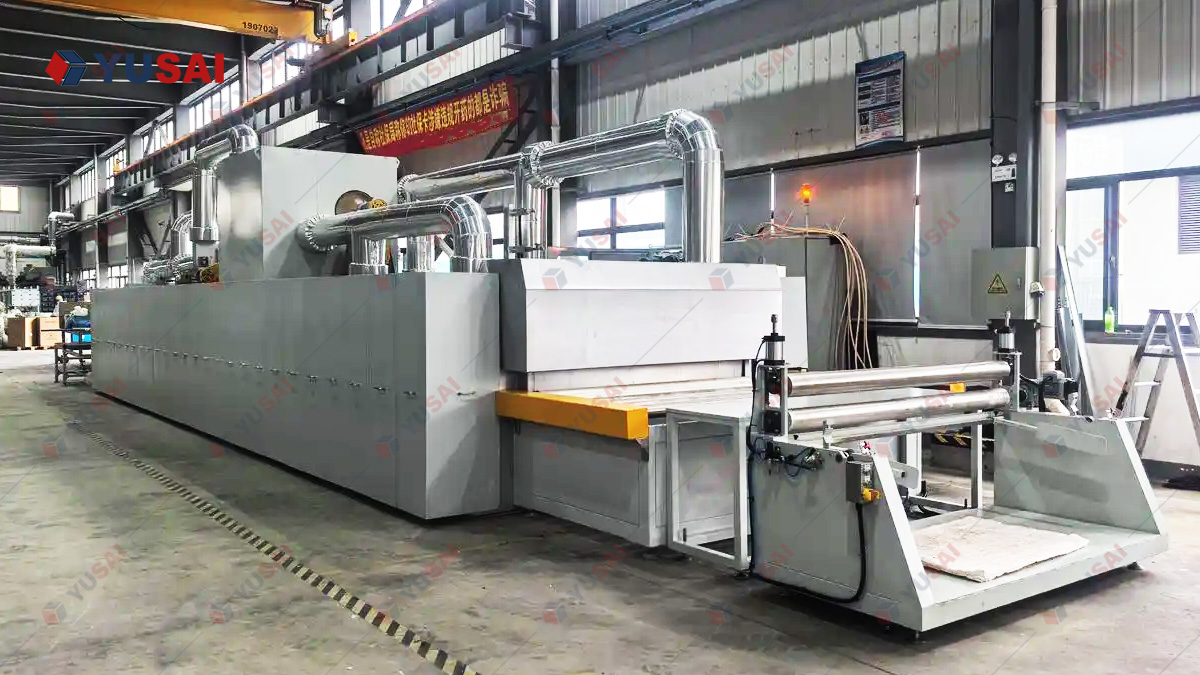
2. Heating and Temperature Control System
Heating Elements: Configured with electric heating tubes, infrared radiation tubes, or gas burners depending on the energy source, supporting precise temperature control from 50°C to over 600°C.
Temperature Zone Modules: Features a modular design comprising preheating, high-temperature constant-temperature, and cooling zones; each zone is independently controlled (with temperature fluctuations kept within ±1.5°C) to meet specific curing or pyrolysis profiles for EVA/POE encapsulant films.
Intelligent Control Cabinet: Integrates PLCs, PID temperature controllers, and Human-Machine Interfaces (HMI) to achieve automated closed-loop control of temperature, speed, and pressure.
3. Transmission and Conveying System
Drive Mechanism: Composed of a motor, speed reducer, and gearbox to drive the main shaft rotation.
Conveying Medium: Selected based on the process requirements—either a variable-speed mesh belt (for standard module curing) or a chain-plate/pusher-plate system (for heavy-load or recycling applications)—supporting continuous 24-hour operation.
Tracking/Alignment Device: Prevents conveyor belt deviation, ensuring the stable movement of PV modules through the furnace.
4. Ventilation and Exhaust Treatment System
Hot Air Circulation Fan: Promotes uniform heat distribution within the furnace and eliminates temperature dead zones. Exhaust and Purification: Equipped with exhaust ducts and an induced draft fan to vent volatile organic compounds (VOCs) generated during curing or waste gases produced during pyrolysis; the system connects to downstream catalytic combustion or activated carbon adsorption units to ensure compliance with environmental standards.
5. Safety and Auxiliary Systems
Emergency Stop and Alarms: Features emergency stop buttons, over-temperature protection, belt breakage detection, and smoke alarm devices; response time is typically ≤3 seconds.
Observation and Maintenance: Observation windows and maintenance access doors are located on the side of the furnace body to facilitate real-time monitoring of material status and the removal of residual adhesive.
*Note: If used for photovoltaic panel recycling (pyrolysis process), the furnace requires additional enhancements for oxygen-free sealing and gas collection/condensation components to prevent explosions caused by oxygen ingress and to recover organic gases.