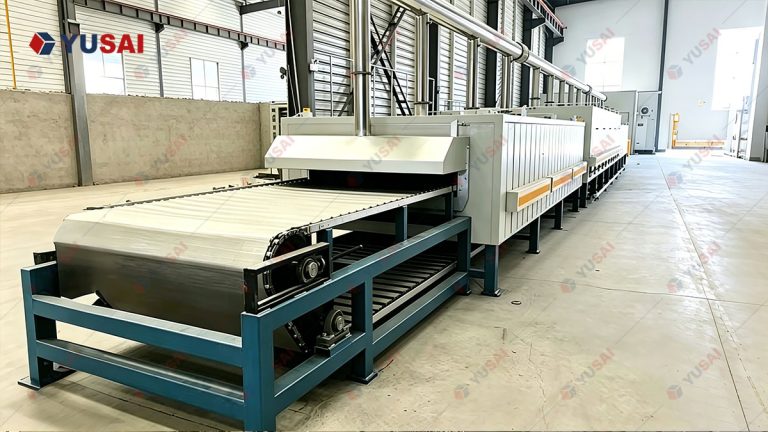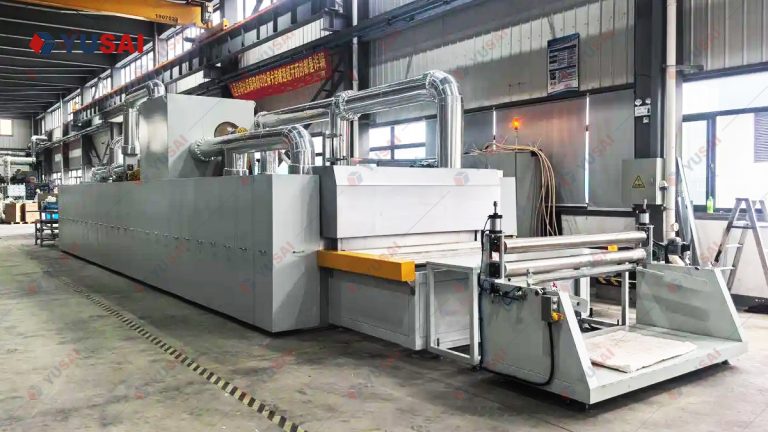
A tunnel furnace is a continuous industrial heat treatment equipment that converts electrical energy and gas into heat energy. It utilizes far-infrared heating technology and a hot air circulation system to achieve precise temperature control from 50℃ to 450℃ (±1-5℃), suitable for processes such as workpiece drying and curing. Its structure features a modular design, with a steel plate outer shell formed by stamping and welding, and an internal structure made of stainless steel or carbon steel, equipped with a thermal insulation layer. Non-standard customization is supported, and the feasibility of the solution can be verified through 3D simulation.
This equipment achieves continuous three-stage processing—preheating, high-temperature heating, and cooling—via a conveyor belt. Heating methods include electric heating tubes, gas heating, and infrared radiation, with heat conduction employing a combination of radiation, convection, and contact. Typical applications include curing electronic components, processing stators/rotors for new energy motors, drying lithium-ion batteries, processing solar photovoltaic modules, heat treatment of hardware and chemicals, molding of carbon fiber composite materials, sterilization of medical glass, IGBT module packaging, OBC aging testing, and potting and dispensing curing. Maintenance requires regular cleaning of conveyor belt residue and testing of heating element resistance. Some equipment integrates intelligent temperature control modules and continuously variable transmission (CVT) systems, supporting a production capacity of over 2000 pieces per hour. Furthermore, at the 28th China International Baking Exhibition in 2026, domestic and international companies showcased intelligent tunnel ovens equipped with IoT energy consumption monitoring systems.
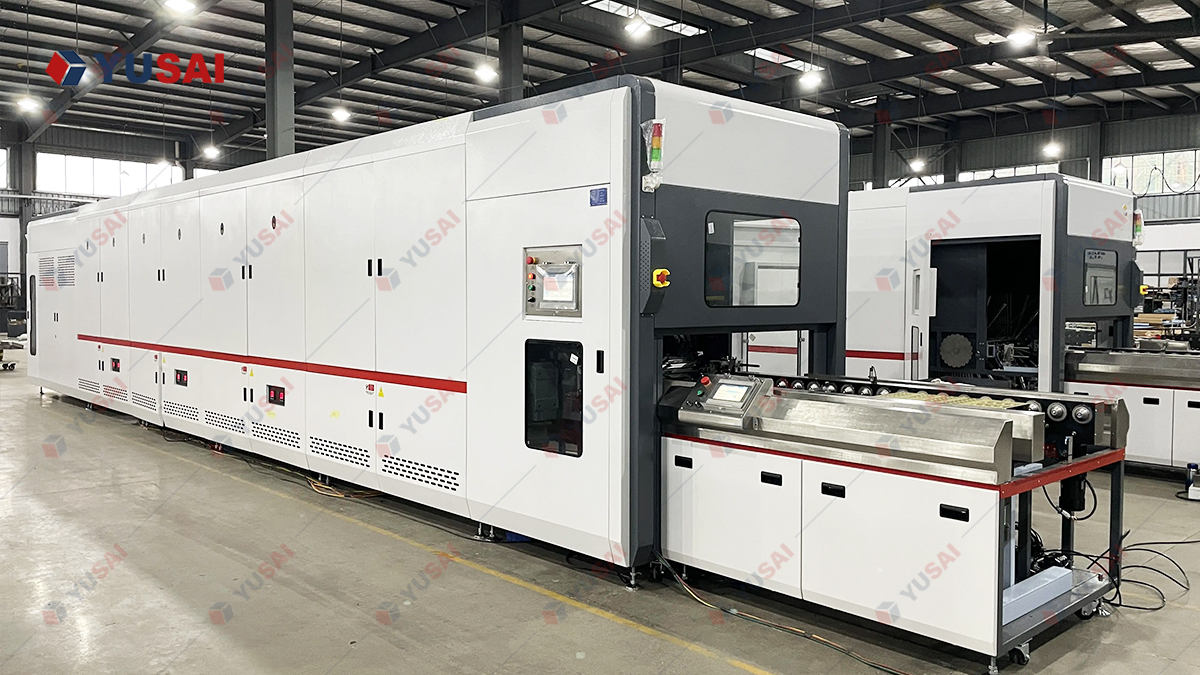
Tunnel Oven Applications
Tunnel ovens have a wide range of applications, including new energy products (new energy vehicle motor stators, rotors, controllers, batteries, lithium batteries, countertop batteries), carbon fiber, hardware and chemical products, military products, medical products, touchscreen mobile phones and electronics, home appliances, photovoltaic glass solar products, rubber vulcanization, IGBT modules, and PET industries.
In traditional industries such as food and sterilization, tunnel ovens can improve drying efficiency and save labor. They are most widely used in the new energy and electronics fields, commonly used in drying processes for new energy vehicles.
Tunnel Oven Working Principle
The specific principle is to convert electrical energy into heat energy, which is then used to heat the air. It uses electricity as its energy source, precisely controlling the temperature within ±1-5°C, and heating within the tunnel to meet the requirements of the workpiece. Mainly used in glue-filling, curing, and drying lines to stabilize the product structure through drying and curing, thermoforming, etc.
Advantages of Automated Tunnel Ovens
1. Tunnel-type heating furnace for drying equipment
2. Energy-saving, environmentally friendly, and easy to operate
3. High production efficiency and stable operation
4. Heating tubes of the tunnel-type heating furnace for drying equipment
5. Made of high-strength stainless steel alloy material
6. High temperature resistance, oxidation resistance, and corrosion resistance
7. Not easily deformed or worn
8. Modular design with a compact structure
9. Easy installation. Compact structure
10. Adopts an advanced H-type furnace arch structure
11. Easy to install and maintain.
Features of Automated Tunnel Ovens
Automated tunnel ovens are a new type of mechanical equipment mainly used in the industrial production of new energy products. They achieve the baking of new energy products through heat conduction, convection, and radiation. With the addition of PLC programming control, this equipment features continuous or intermittent large-batch baking, improving production efficiency, saving manpower, and ensuring stable baking quality.
Tunnel furnaces offer a variety of heat source options, including electricity, natural gas, and fuel gas. Manufacturers can customize the length and width to meet production needs, making them suitable for automated manufacturing applications and thus broadening their applicability. Smart tunnel furnaces equipped with IoT energy monitoring systems have also emerged, significantly reducing energy consumption.