The nation prioritizes new energy as a strategic priority, with photovoltaics (PV) playing a particularly prominent role. By June 2025, installed PV capacity had exceeded 1,000 gigawatts (GW), equivalent to the combined capacity of 48 Three Gorges Dams, firmly establishing China as the world’s leading power.
Data from the National Energy Administration shows that new PV capacity installed in 2025 is expected to reach around 315 GW. Although a decrease to 180-240 GW is projected for 2026, the overall trend remains upward. Why such rapid growth?
Firstly, rapid technological advancements have led to increased module power from 270 watts in earlier years to 590 watts or even higher today, while costs have decreased to just a few cents per kilowatt-hour. Secondly, effective policy support has been crucial. For instance, the 14th Five-Year Plan projects 4.5 times the new PV capacity of the previous five years, with total wind and PV capacity exceeding 1.8 billion kilowatts, accounting for 47.3% of the nation’s total installed power generation capacity.
Large-scale silicon production bases are springing up one after another in western China, while distributed systems are flourishing across the east. These companies account for over 80% of global production, virtually monopolizing the polysilicon and silicon wafer market. The entire industry chain, from silicon materials to modules, is becoming increasingly mature, not only helping to reduce emissions but also driving green transformation.
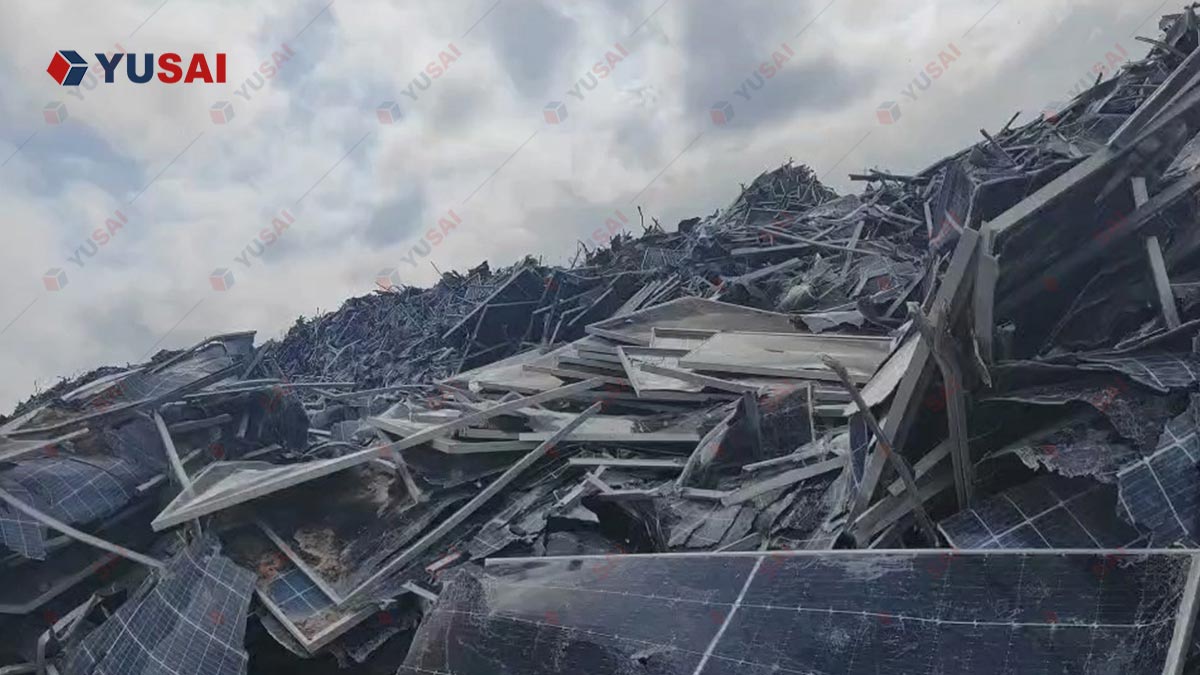
However, with such rapid development, early equipment was designed for a lifespan of around 25 years. Starting in 2025, a large number of modules will begin to be retired. The China Photovoltaic Industry Association estimates that the amount of waste will begin to increase in 2025, peaking at 1.4 million tons by 2030, accumulating to 23 million tons by 2040, and potentially reaching 66 million tons by 2050.
These retired modules have complex structures, containing metal frames, tempered glass, crystalline silicon cells, and some lead and tin, while thin-film types may contain cadmium and copper. Improper disposal could easily pollute soil and water sources.
The government has taken action early on. In 2023, the National Development and Reform Commission, the National Energy Administration, the Ministry of Industry and Information Technology, the Ministry of Ecology and Environment, the Ministry of Commerce, and the State-owned Assets Supervision and Administration Commission jointly issued the “Guiding Opinions on Promoting the Recycling of Retired Wind Power and Photovoltaic Equipment,” emphasizing the construction of a system covering green design, standardized recycling, high-value utilization, and harmless disposal.
In 2024, the Ministry of Ecology and Environment released the “Technical Specifications for Pollution Control in the Recycling and Disposal of Waste Photovoltaic Equipment (Draft for Comments),” setting recycling process standards and enterprise qualification requirements. Enterprises followed suit, building demonstration lines and exploring physicochemical methods.
International experience, such as the EU’s WEEE directive, requires an 85% recycling rate, which we should learn from to ensure resource recycling. In general, the background is rapid development, but a balance must be struck regarding the disposal of retired equipment.
Retired modules are being processed in an orderly manner, with recycling and reuse proceeding through multiple channels.
These discarded photovoltaic panels cannot be simply thrown away; they must be processed in a classified manner. First, regarding recycling and reuse, many retired panels can still generate electricity, albeit at a lower efficiency. Companies first conduct tiered testing. Materials in good condition are reused directly, while those with minor issues can be repaired and continue working. Data shows that approximately 80% of the materials can be recycled back into the industry in this way.
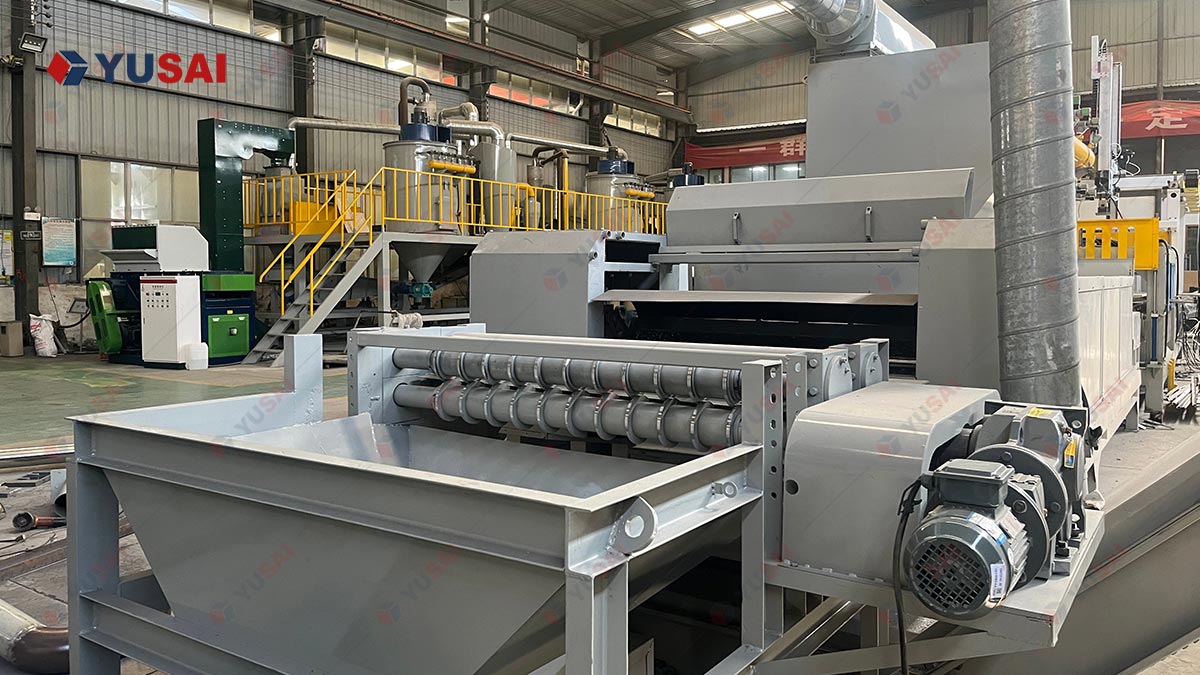
For example, they can be converted into full-color optoelectronic materials for use in billboards or photovoltaic carports, generating electricity during the day and providing lighting at night—a win-win situation. Those that are truly unusable are dismantled and processed. The main methods include physical, chemical, and pyrolysis. Physical methods, through crushing and sorting, recover glass, aluminum, copper, silicon powder, etc., with a recovery rate exceeding 92%.
Chemical methods are used for metal purification; they are more expensive, but yield high purity silver, copper, and silicon. Pyrolysis decomposes organic matter at high temperatures, converting it into fuel or materials. For example, a factory in Henan can dismantle 9 tons of glass, 1.2 tons of aluminum, 0.36 tons of silicon, 0.12 tons of copper, and 0.48 kg of silver every 8 hours, with a gross profit of 1113 yuan per ton of sheet.
Exporting is also a good approach. Our country produces 90% of the world’s polysilicon and 98% of its silicon wafers. Our modules are of high quality, and after 25 years, 80% of their power output remains. In impoverished areas like Africa and Latin America, where grid coverage is incomplete, secondhand panels are ideal. No large-scale projects are needed; a single panel with small batteries can power a household.
South Africa’s solar power installations increased by 349% from 2022 to 2023, providing electricity to many rural areas for the first time. In the first half of 2025, exports to Africa increased by 47.5%, reaching a cumulative 7.27 gigawatts. Egypt, Algeria, and South Africa are leading the way, building small systems or large power plants. Companies provide services, teaching local maintenance and extending lifespan. This not only helps impoverished countries but also exports our technology.
In the process, details are crucial. Policies establish responsibility mechanisms, and manufacturers build recycling systems and provide services. The 2023 guidelines require that by 2025, a basic responsibility mechanism be established, standards improved, and technological breakthroughs achieved. By 2030, the entire process will be mature, and resources will match the scale of decommissioning. Companies like Trina Solar and Dongjiang Environmental Protection are also focusing on module recycling technology.
The recycling market has huge potential; 1 gigawatt of retired modules is worth 300-400 million yuan. In 2022, the cumulative installed capacity reached 392.6 gigawatts, with a production capacity of 288.7 gigawatts, ranking first globally for 15 consecutive years. Recycling one ton of modules can reduce carbon emissions by 5.41 tons. Challenges exist, such as illegal small workshops dismantling modules and disrupting the market, but legitimate companies are qualified and meet environmental standards.
Standards, such as GB/T 39753-2021 “General Technical Requirements for Recycling and Reuse of Photovoltaic Modules,” regulate collection, transportation, and storage, avoiding safety hazards. In 2022, the association issued the “Guideline for Identifying Waste Crystalline Silicon Photovoltaic Modules” to help identify scrapped modules. In general, processing relies on multiple approaches, combining recycling, dismantling, and export, revitalizing the circular economy.
The circular economy has yielded significant results, with resource regeneration contributing to carbon neutrality.
The scale of retired modules will continue to grow, peaking at 4 million tons in 2030 and reaching 66 million tons in 2050. However, with sound national planning, the average annual installed capacity during the 15th Five-Year Plan period is projected to reach 238 to 287 gigawatts. The implementation of green electricity policies has stabilized the market.
Policies are becoming more detailed. The 2025 Energy Standards Plan includes projects for photovoltaic recycling, and the draft Ecological Environment Code establishes a system of responsibility for waste disposal. Tax breaks help businesses, and funds support research into new technologies. International cooperation is being pursued, learning from the EU, to unify standards. The recycling network is digitized, matching supply and demand, and facilitating smooth inter-provincial circulation.
Demand in Africa is stable, with exports to Africa projected to increase by 60% by 2025. Companies are submitting strong ESG reports, and eco-design reduces waste. These efforts enable efficient resource recycling, a lighter environmental burden, and a healthy industry.
Furthermore, recycling helps regenerate resources, extracting 35 kg of silver, 700 kg of aluminum, and 300 kg of silicon from one ton of photovoltaic panels, reducing ore mining. Photovoltaics are green throughout their entire lifecycle, contributing to carbon peaking and carbon neutrality. Businesses are planning ahead, seizing market share, and preventing the bad from driving out the good.
The 2026 plan adjusts export tax rebates, canceling photovoltaic tax rebates and reducing battery tax rebates to 6%, but consumption tax rebates remain unchanged and will continue to be supported. Market regulation, mandatory recycling, and extended producer responsibility are key. Experts suggest improving the “1+N” policy, establishing recycling institutions, and building a comprehensive system.
No waste standards? The 2022 plan promotes industrial resource utilization, and the 2021 action plan promotes innovative development. Achievements are seen in resource regeneration, bringing dual-carbon goals closer.
Photovoltaic panel disposal is ultimately part of the circular economy. China is doing increasingly well in this area, achieving a green entire chain from development to retirement. We hope more companies will participate, and technology will advance further, making new energy a truly sustainable driving force.