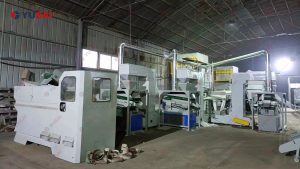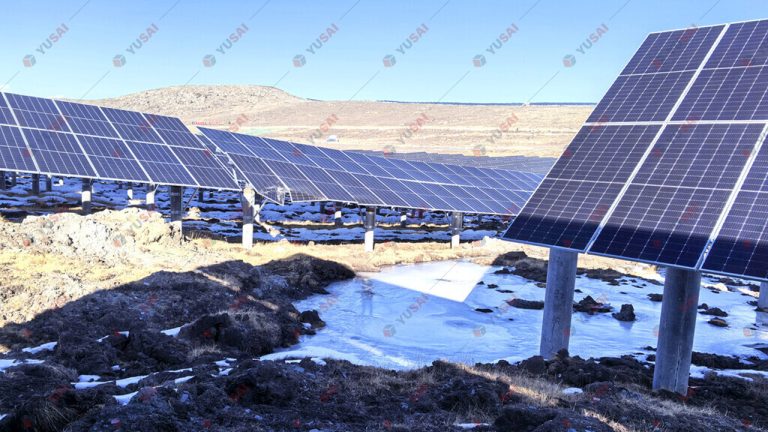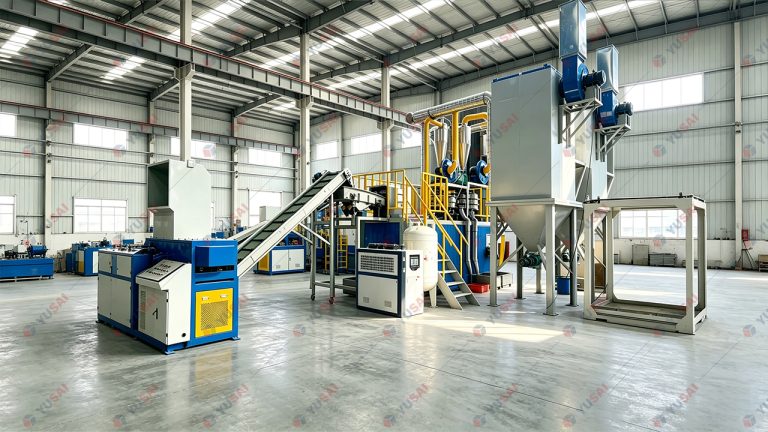
Global energy transition has driven massive deployment of photovoltaic systems. Solar panels typically operate for 25‑30 years, and growing volumes of end‑of‑life PV modules create urgent demand for mature recycling infrastructure. Traditional disposal methods suffer from low recovery yield, high operating cost and limited circular‑material output. Purpose‑built recycling equipment and integrated processing lines can realise automated sorting, dismantling and material regeneration, reclaiming high‑value raw materials while mitigating environmental risks.
Material Composition of Retired PV Modules
Solar modules are composite assemblies combining multiple substance categories. Major fractions include tempered glass, aluminium alloy frames, silicon‑based solar cells, EVA encapsulation films, multi‑layer back‑sheet, copper wiring and metal connectors. Trace valuable metals such as silver are contained inside cell structures. Degraded EVA layers may release organic pollutants when decomposed. Certain advanced modules adopt composite back‑sheet materials with special chemical additives. Different physical and chemical properties determine the whole processing workflow, equipment selection and separation strategies. During recycling, materials shift from intact panel boards to crushed fragments, fine granules and powders, placing strict requirements on crushing, screening and washing units.
Core Design Principles for Recycling Equipment
Equipment development follows four core orientations. First, system‑oriented full‑life‑cycle thinking. Hardware layout shall connect every procedure from incoming waste modules to regenerated‑material output. Modular structure enables flexible combination to handle monocrystalline, polycrystalline and emerging perovskite modules, reserving expandability for future product iterations. Second, balance advanced performance and operational reliability. High‑strength corrosion‑resistant structural materials cope with heavy vibration, dust and corrosive working conditions. Intelligent sensing and automatic control improve overall throughput while keeping failure rates low for continuous industrial operation. Third, balance economic performance and environmental compatibility. Design optimises capital investment and long‑term running expense, avoiding over‑engineering. Equipment configurations minimise carbon footprint, harmful‑substance emission and resource consumption across operation cycles. Fourth, safety and regulatory compliance. Built‑in mechanical interlocks, emergency stop circuits, electrical overload protection and chemical‑hazard prevention safeguard operators against mechanical injury, electric shock and chemical burns. All design points align with international industrial safety and emission norms.
Overall Process and Key Equipment Units
The complete recycling workflow covers collection & reverse logistics, pre‑treatment, separation, crushing‑screening, chemical or thermal refining, automatic control and end‑of‑pipe pollution treatment.
Collection, Transport and Storage System
Reverse‑logistics networks set up collection hubs for utility‑scale solar farms and distributed rooftop installations. Multiple vehicle types serve short‑distance frequent transfer and bulk long‑haul transportation. Shock‑resistant, moisture‑proof packaging prevents glass cracking and component damage in transit. Warehouses implement anti‑static, fire‑proof and moisture‑proof management for stored retired modules. Digital scheduling optimises delivery routes and tracks material flows for closed‑loop traceability.
Pre‑treatment Equipment
Pre‑treatment stations perform feeding, conveying and preliminary classification. Robotic manipulators complete stable grabbing of modules of varying dimensions. Closed conveying systems equipped with dust‑proof shields transport materials toward downstream stations. Machine‑vision sensors and multi‑angle tilting sorting mechanisms identify frame material, module dimension and surface damage status, diverting feedstock into corresponding processing branches.
Crushing and Screening Equipment
Combined double‑impact crusher and flexible hammer mill realise multi‑stage size reduction. Multi‑chamber crushing cavities avoid uneven fragmentation. High‑precision vibrating screens and spiral chutes classify crushed fragments by particle size. Intelligent linkage adjusts vibration frequency and screen tension dynamically, blocks jamming, and diverts off‑spec fragments back for re‑crushing. Granule grading lays the foundation for subsequent physical separation.
Material Separation Technology
Physical separation leverages differences in density, magnetism and electrical conductivity. Magnetic separation extracts ferrous metal particles; air classification separates glass particles from light‑weight polymer fragments. Process parameters including airflow velocity and magnetic‑field intensity require real‑time tuning to raise separation purity.
Chemical recovery routes include organic‑acid depolymerisation, supercritical‑fluid decomposition and green‑solvent dissolution. Such processes break down encapsulation layers to release silicon and metallic fractions. Biodegradation using enzyme reagents represents a mild, low‑energy developing technical path. All chemical workflows require strict control over reagent concentration, reaction temperature and duration to limit secondary pollution.
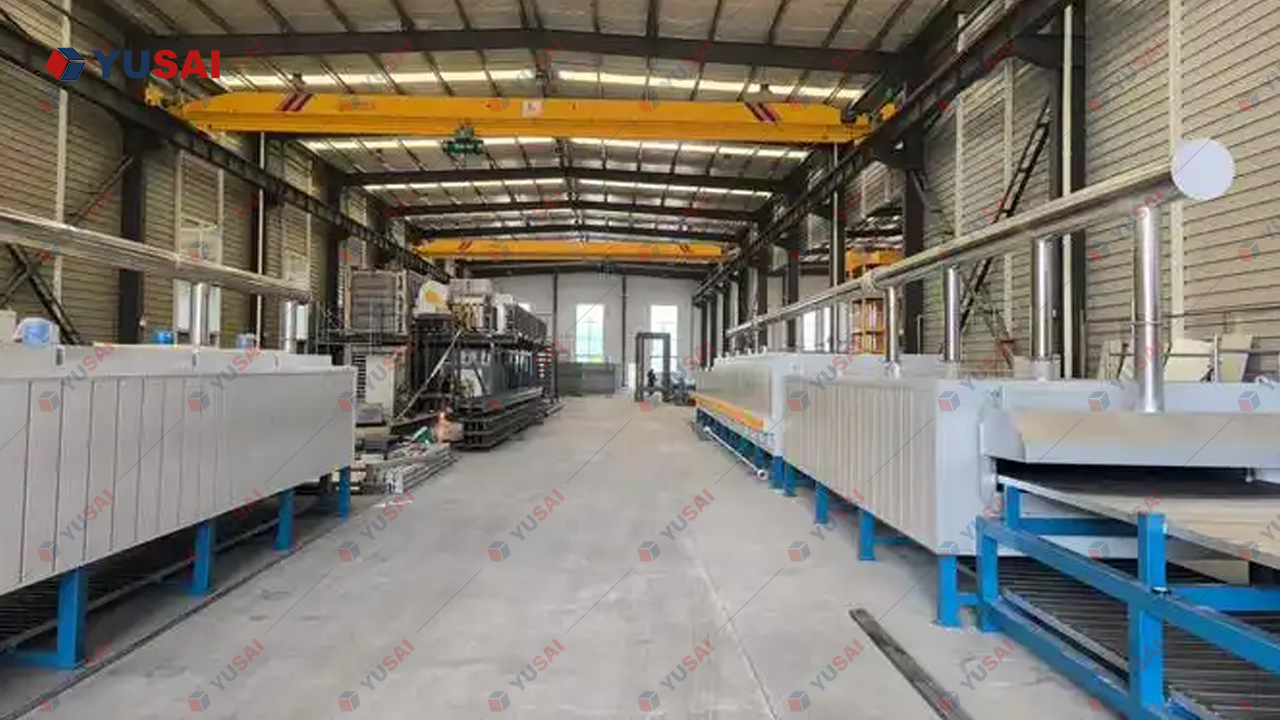
Vacuum induction melting serves as major thermal‑processing equipment. Vacuum atmosphere suppresses material oxidation. Closed‑loop temperature‑vacuum feedback control guarantees refining quality. Waste heat from thermal treatment can be recovered to reduce total plant energy consumption.
Automated Control System
Adopting five‑layer distributed architecture: perception layer, transmission layer, processing layer, execution layer and application layer. Perception layer deploys high‑resolution cameras, multi‑spectral imagers, thermal imagers and multi‑point sensors to detect surface defects, electrical parameters, temperature and on‑site gas concentration. Transmission layer builds redundant industrial communication network with edge‑computing nodes to lower transmission latency. Processing layer consists of local embedded controllers, edge gateways and cloud platform, undertaking logic judgment, fault diagnosis and big‑data analysis. Execution layer drives robotic arms, sorting actuators and cleaning devices. Force‑torque closed‑loop control enables high‑precision, low‑damage dismantling operations. Application layer delivers whole‑process intelligent scheduling, remote monitoring, early‑warning of failures and equipment predictive‑maintenance suggestions. Cybersecurity mechanisms defend industrial control networks against unauthorised access.
Waste Gas and Waste Water Treatment
Dust hoods are arranged at crushing, screening and chemical‑processing positions to collect polluted air. Bag‑house dust filters, activated‑carbon adsorption towers, catalytic oxidation units and scrubbers remove particulate matter, volatile organic compounds and acidic exhaust components.
Waste‑water facilities include regulating tanks, grille separators, biological treatment units and coagulation‑sedimentation modules. Heavy‑metal‑bearing waste liquid is treated separately. Treated water is recycled for factory flushing and site irrigation to cut freshwater intake. Hazardous residual waste is stored in dedicated containment zones for specialised external disposal.
Evaluation Metrics for Recycling Performance
Multiple quantifiable benchmarks measure system performance:
- Gross recovery rate: ratio of effectively processed recyclable modules against total incoming feedstock, reflecting overall sorting capacity.
- Module conversion rate: share of feedstock entering deep regeneration procedures, reflecting comprehensive loss across logistics and processing.
- Single‑module recovery rate: qualification proportion of materials from each processed panel, representing real‑time operational quality.
- Impurity removal rate: capacity for separating target materials from mixed debris, directly determining the purity and commercial value of regenerated outputs.
Well‑optimised integrated lines can achieve comprehensive material recovery rate above 95%, outputting reusable glass, aluminium, silicon powder and metal concentrates.
Operation‑related Considerations
Economic Analysis
Total investment covers production hardware, installation, civil construction, automation software and supporting environmental facilities. Running costs comprise equipment depreciation, power consumption, spare‑part replacement, consumables and labour. Key financial indicators include payback period, static return ratio, internal rate of return and net present value. Sensitivity analysis assesses project robustness facing fluctuation of raw‑material price, energy cost and feed‑module supply volume.
Equipment Maintenance
Digital asset archives assign unique identification for every unit. Vibration, temperature and electrical sensors enable condition‑based preventive maintenance. Regular inspection covers drive components, sensor calibration, electrical safety testing and safety‑interlock verification. Standardised cleaning and lubrication procedures extend service life, and spare‑part inventory management minimises unplanned downtime.
Personnel Competence
Operators require systematic training covering mechanical operation, chemical‑process rules, safety protocols and emergency response. Regular assessment and skill upgrading guarantee safe and stable plant running.
Risk Points in Practical Deployment
Several categories of risks exist for PV recycling projects. Environmental risks originate from potential leakage of heavy metals and organic pollutants, requiring full‑process containment and emergency response plans. Technical risks stem from feedstock complexity and equipment performance drift, mitigated by real‑time parameter monitoring and process optimisation. Market risks come from fluctuation of recycled‑material prices and unstable supply of end‑of‑life panels. Incomplete reverse‑logistics chains raise collection cost. Operational hazards include mechanical injury, high‑temperature risk and chemical exposure, addressed by hardware protection and strict SOPs. Natural‑disaster resilience shall also be considered in site planning and facility construction.
Outlook
As global PV installed capacity keeps expanding, end‑of‑life module volumes will keep growing. Further progress lies in higher automation, low‑carbon chemical‑thermal recycling technologies, modular and versatile equipment adapting to diverse new‑type panels, and improved reverse‑logistics networks.
Recycling technology completes photovoltaic’s full‑life‑cycle sustainability. By reclaiming silicon, aluminium, silver and other critical resources, recycling reduces dependence on virgin mineral exploitation, stabilises industrial supply chains and prevents hazardous waste contamination. Advanced, cost‑effective PV recycling equipment systems are indispensable foundations for realising the circular‑economy vision of solar energy industry.