Introduction
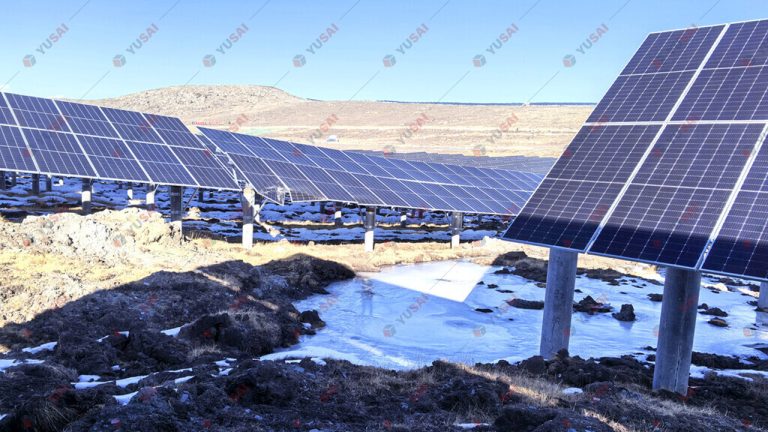
The global photovoltaic industry has expanded rapidly over recent decades. A typical solar PV panel has a service life of roughly 25 years. As massive numbers of installed panels reach their end-of-life phase, waste photovoltaic modules are growing in volume year by year.
Without proper recycling and treatment, scrapped PV panels will create severe environmental pollution. Meanwhile, valuable resources including silicon, copper and aluminium locked inside discarded panels will be wasted. Therefore, developing mature end-of-life PV recycling technology and industrial capacity is critical to support the sustainable development of the solar industry and circular economy.
Complete Recycling Workflow of Waste PV Panels
1. Collection, Transportation & Dismantling
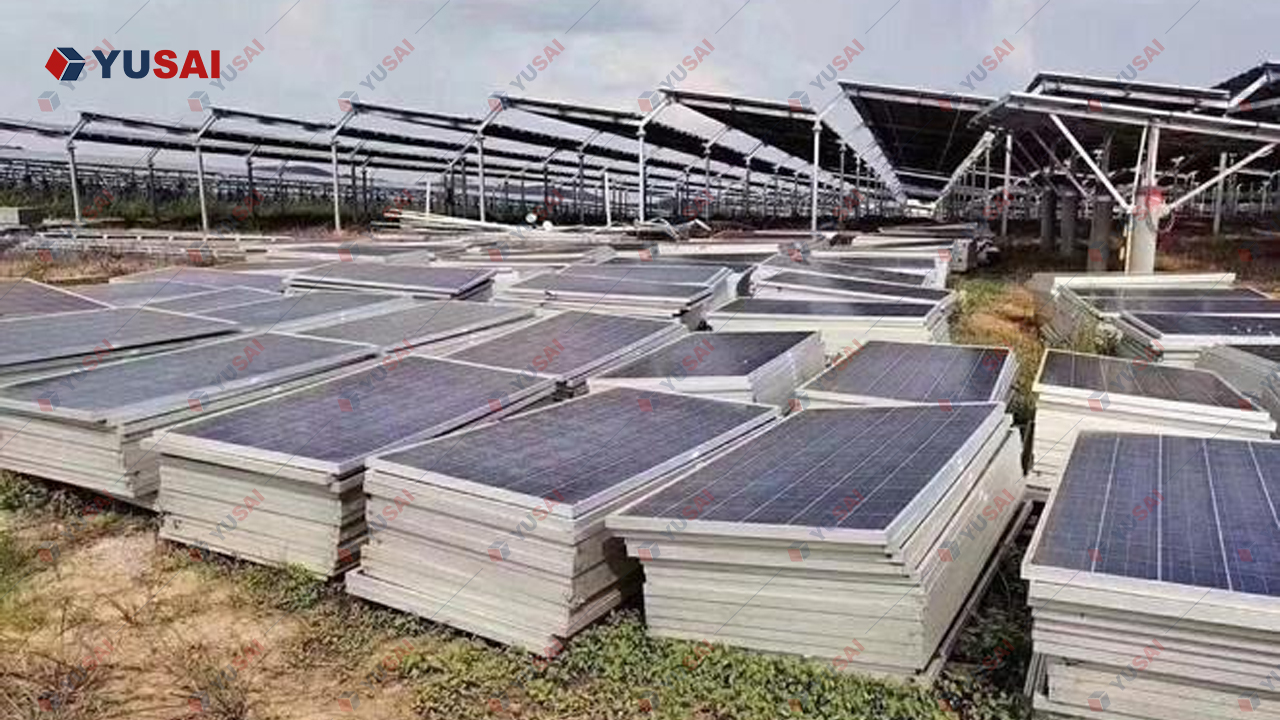
Retired PV panels are transported from installation sites to professional recycling factories. The first on-site step is module dismantling. Workers and machines remove external components such as aluminium frames, junction boxes, backsheets and surface glass to obtain the PV laminate core.
2. Crushing and Screening
The stripped PV laminate is sent into crushing equipment. Broken materials are separated into different particle sizes via screening machines. Classified granular materials are prepared for subsequent separation and purification.
3. Material Separation & Purification
Screened particles go through purification procedures to remove organic residues and impurities. Solvent leaching, ion exchange and chemical etching technologies are applied to extract high-value materials including silicon and copper from the mixture.
4. Material Regeneration and Reuse
Recovered high-purity materials are processed for secondary manufacturing. The refined silicon can be used to produce solar-grade silicon raw materials for new photovoltaic panels. Extracted copper can be made into wires and cables for multiple industries. Recycled glass granules serve as raw materials for architectural glass production. Aluminium frames can also be remelted and reused.
5. Residual Waste Treatment
Organic residues such as EVA film and backsheet plastic, plus fine scraps generated during processing, must be handled separately. Recyclable fractions are reprocessed. Non-recoverable waste will undergo safe incineration or sanitary landfill treatment under controlled conditions to avoid soil and water contamination.
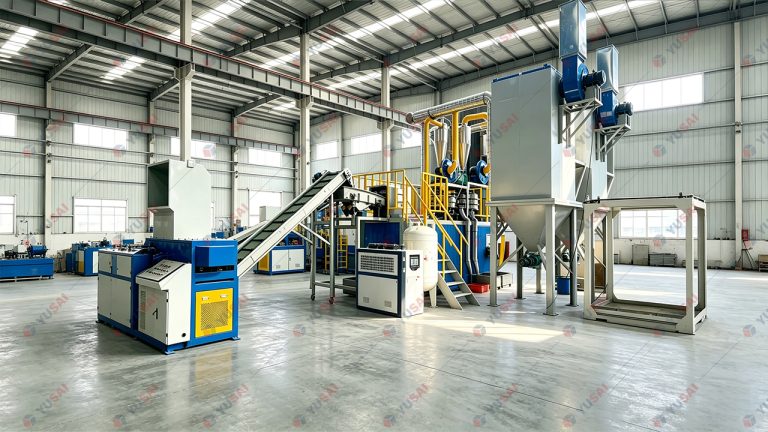
Core Equipment for PV Panel Recycling Line
1. Dismantling & Pre-treatment Equipment
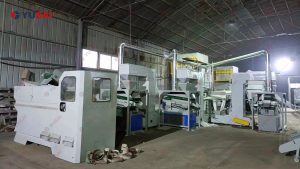
Conveying systems feed waste PV panels steadily into the production line for continuous processing. Mechanical dismantling units equipped with hydraulic cutters and cutting tools remove sturdy aluminium alloy frames from panels. Suction cup devices safely lift the front glass cover off modules to prevent glass fragmentation, which would raise processing difficulty.
2. Silicon Cell & Glass Separation Equipment
This is the key station of the whole recycling line. Ultrasonic cleaning equipment uses high-frequency vibration in cleaning liquid to loosen the EVA adhesive film bonding glass and silicon cells, similar to ultrasonic cleaning removing stubborn stains.
Another mainstream solution is thermal decomposition. Controlled heating melts EVA adhesive for glass and silicon wafer separation. Temperature control is critical: overheating damages silicon cells while insufficient heat leads to incomplete delamination. Many recyclers carry out repeated tests to lock in optimal thermal parameters for intact material separation.
3. Material Purification & Reprocessing Equipment
Chemical etching units use special solutions to strip oxide layers and surface contaminants from silicon wafers. After purification, silicon wafers are sent to grinding and polishing machines to meet reuse standards.
Glass recycling equipment crushes large recovered glass sheets into fine granules. Glass particles then go through washing and screening to eliminate impurities before being supplied to glass manufacturers as recycled raw materials.
4. Waste Treatment Equipment
Incineration systems for EVA and backsheet organics are fitted with complete tail gas purification systems. Adsorption devices capture heavy metal particulates in flue gas, while chemical reaction tanks neutralize acidic exhaust gas. Scrap compactors compress leftover fragments to reduce volume, simplifying storage, transportation and final disposal.
Key Operational & Environmental Notes
- During panel dismantling, take measures to minimize dust and wastewater discharge to reduce environmental impact.
- Chemical purification and leaching processes must strictly comply with environmental regulations to ensure wastewater and exhaust gas meet emission standards.
- All waste streams require classification. Maximize recycling of recoverable materials and ensure safe disposal of non-recyclable waste.
- Continuously upgrade recycling technology to raise recovery rates and cut operational costs.
- Strengthen policy guidance and industrial supervision to scale up the PV recycling sector and achieve long-term sustainability of the photovoltaic value chain.