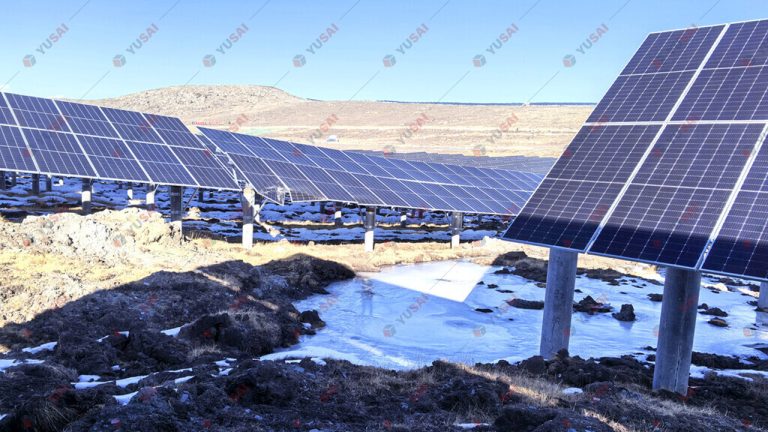
PV modules are generally engineered for a standard service life of 25–30 years, widely accepted as the industry baseline. Most project developers adopt a conservative 20-year revenue calculation cycle to mitigate risk. Real-world field data from early PV installations in China proves that some legacy solar modules have operated reliably for over 40 years, exceeding original design expectations.
Even after passing the rated service life, modules continue generating power, though power output degrades gradually at an annual rate of 0.5%–1%. Typically, a 30-year-old module still retains more than 80% of its original power capacity.
What Drives Differences in PV Module Lifespan
Lifespan varies heavily by cell technology. Crystalline silicon modules (mono & polycrystalline) dominate the market with stable crystal structures and a 25–30 year service life. Amorphous silicon modules suffer severe light-induced degradation, with a typical lifespan of only 15–20 years. Thin-film solar cells remain limited by technical maturity and offer shorter usable life.
Double-glass modules, built with dual glass encapsulation instead of conventional backsheets, deliver superior UV resistance and anti-corrosion performance. In high-temperature and high-humidity climates, double-glass modules can extend service life by an extra 5–8 years.
Five key factors determine module longevity, with power degradation being the top risk. Amorphous silicon modules may lose 15%–20% of output in the first year, while crystalline silicon modules usually keep first-year degradation below 3%, followed by 0.5%–0.7% annual degradation afterwards. Internal defects such as cell detachment and broken ribbons can trigger sudden power drop or total failure; such failures reached 5% in early, low-yield production batches.
Environmental conditions also play a critical role. Every 10°C temperature rise accelerates degradation by roughly 0.5%. When humidity exceeds 85%, EVA encapsulant faces high risk of hydrolysis.
Compared with other renewable hardware, PV modules hold clear lifecycle advantages. Wind turbines are normally designed for 20 years, with maintenance costs rising exponentially as they age. Retired PV modules only require more frequent cleaning, with moderate increases in operational expense. One 2003 grid-connected PV plant in Northwest China still keeps 80% of its modules operational, with a stable annual degradation rate around 0.4%.
Proper Operation & Maintenance Extends PV Service Life
Lifespan management starts at installation. Avoid permanent shading and set tilt angles matching local latitude (30°–35° for regions around 35°N) to maximize annual irradiation capture.
For routine inspection, infrared thermal imaging is recommended every quarter to detect microcracks and hot spots. Annual EL testing evaluates ribbon welding quality.
Choose modules certified to IEC 61215 and IEC 61730 standards, which validate PID resistance, damp heat endurance and other core reliability indicators. Premium double-glass modules pass 1000-hour 85℃ / 85%RH accelerated aging tests with degradation controlled under 2%. Installation quality matters: bolt torque must reach at least 95% of design value, and grounding resistance should stay under 4Ω.
Cleaning follows a balanced principle. Monthly washing is suitable for dusty northern regions; quarterly cleaning works for rainy southern zones. Never use hard brushes to scratch glass surfaces. Field tests show regularly cleaned modules deliver 8%–12% higher annual yield, yet over-cleaning creates micro-scratches and reduces light transmittance.
The Next Chapter: End-of-Life PV Recycling & Precious Metal Extraction
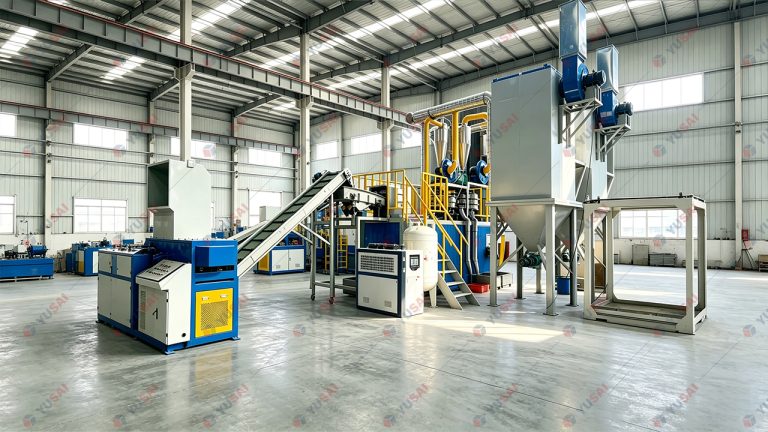
As millions of PV modules reach retirement age, recycling becomes a core link in the PV circular economy. We are a professional manufacturer of waste PV panel recycling equipment and precious metal extraction systems.
Traditional mechanical crushing recycling can recover 95% glass and 90% aluminum frames, yet high-value materials including silver paste and silicon are often recovered below 60%. Chemical etching improves recovered material purity, but high operating cost limits large-scale adoption. Forecasts show China’s retired PV module volume will hit 1.8 million tons by 2030, creating urgent demand for closed-loop recycling infrastructure.
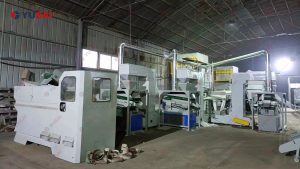
Our integrated recycling lines handle decommissioned, broken and aged solar panels. The physical separation system dismantles, crushes and sorts modules to separate glass, aluminum frames, copper ribbons and silicon-silver concentrate. Our matched precious metal extraction equipment further processes the cell fraction to extract silver, copper and other valuable metals, lifting the recovery rate of high-value materials.
New generation PV technologies reset lifecycle benchmarks. Perovskite/crystalline silicon tandem cells have lab efficiency over 33% with theoretical lifespan above 30 years. N-type TOPCon and HJT cells cut degradation by 40% compared with old PERC modules. New double-sided microcrystalline modules control first-year degradation under 1% and retain 87% of initial power after 25 years. Even these advanced modules will eventually enter the recycling stream, and our equipment supports processing of mainstream module types including PERC, TOPCon, HJT and double-glass panels.
Digital lifecycle management is reshaping PV asset management. IoT sensors track real-time module temperature and current; AI algorithms predict failure risks and lift O&M efficiency by 50%. After their productive power-generating years, these modules do not need to go to landfill — our recycling and precious metal extraction systems unlock residual value for solar farms, recyclers and waste processors.
Why Choose Our PV Recycling & Precious Metal Extraction Equipment
✅ Complete line for waste solar panel dismantling, crushing, sorting and precious metal extraction ✅ Stable mechanical separation + mature metallurgical extraction process for silver, copper and silicon ✅ Compatible with mono, poly, double-glass, PERC, TOPCon and HJT retired modules ✅ Customized capacity layout, CE compliant, turnkey solution available ✅ Support for site layout design, installation guidance and after-sales technical training
If you are looking for reliable end-of-life PV recycling machinery and precious metal recovery systems for your recycling plant, solar park or waste treatment project, contact us for technical datasheets and quotation.