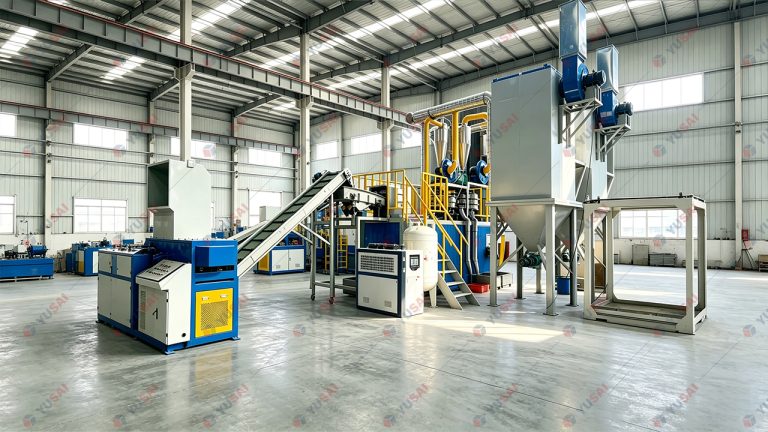
The retired photovoltaic panel recycling industry has boomed in recent years. Many investors are planning to purchase fully automatic PV delamination and disassembly lines. Quite a number of clients ask immediately: “How much does a PV disassembly machine cost?”
We have received batches of customers for factory site visits and witnessed many people fall into traps. After visiting multiple equipment manufacturers, we have summarized four core selection tips for anyone planning to buy PV panel delamination lines.
1. Confirm your PV panel types first, then match the equipment solution
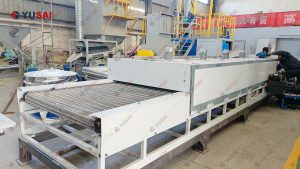
The goal of PV panel delamination is to remove glass and separate silicon cells from backsheets. Monofacial and bifacial panels require completely different processing technology, and one single machine cannot handle both perfectly.
Monofacial panels adopt TPT backsheet on the rear side. Glass and silicon wafers are bonded by EVA film, which is relatively easy to disassemble. Bifacial panels have glass on both sides. They tend to produce excessive glass fragments during crushing and easily damage silicon cells. Higher requirements are placed on cutter structure and sorting systems. A preheating module is usually needed to prevent glass chipping.
Before purchasing, clarify your raw material supply: whether you mainly process monofacial panels or a mixture of monofacial and bifacial panels. If handling both types, confirm whether the equipment supports mixed feeding and if extra modules are required. Otherwise, the machine may fail to process bifacial panels and lead to a low intact silicon cell rate.
2. Verify manufacturer capacity: self-production or OEM assembly only
Many suppliers claim to be PV equipment manufacturers, but they simply buy spare parts for assembly. They only weld frames and fit motors before delivery. Such equipment suffers frequent breakdowns. When faults occur, they cannot even provide engineering drawings, making maintenance and modification difficult.
Check these key points during factory inspection:
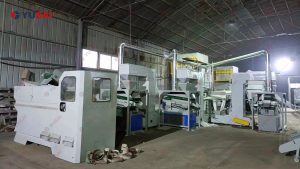
- Tour the production workshop. Check if laser cutters, bending machines and welding jigs are available. Look for semi-finished frames and workstations. Factories with only finished prototypes and warehouses (no machining workshop) are likely OEM assemblers.
- Ask for specifications of core components: material of crushing blades, brand of sorting sensors, conveyors and screening parts.
Genuine manufacturers with independent production capacity can clearly explain component selection. Watch out for vague replies such as “imported parts” without specific details.
PV disassembly equipment manufacturers are concentrated in Changsha and Xiangtan in Hunan Province, with quotations ranging from hundreds of thousands to over 400,000 RMB. Price differences mainly come from automation levels and quality of core components.
3. Bring your own raw panels for machine testing, and measure key performance
Do not judge the machine only by demo tests using the manufacturer’s well-preserved standard panels!
Demo panels prepared by suppliers are usually clean and undamaged, showing ideal separation results. In contrast, retired panels from construction sites are dusty, deformed and aged, with totally different actual working conditions.
Track 3 critical indicators during on-site testing:
✅ Hourly processing capacity (number of panels per hour)
✅ Intact silicon cell rate
✅ Purity of glass and silicon separation
Do not rush through a quick 2–3 minute test. Reserve half a day for repeated runs. Test batches of panels with different aging degrees and types. When our customers bring real retired site panels for testing, hidden problems like material jamming, broken silicon cells and incomplete sorting will show up directly.
4. Look deep into after-sales service and consumable costs, calculate long-term expenses
Equipment purchase is just the initial investment. Blades, screens and belts are regular consumables. Consumable cost and after-sales response directly decide your production uptime.
Crushing blades of the same specification can vary nearly double in price among different manufacturers. Screens also range widely in cost. These consumables usually need replacement every six months, which adds up to substantial long-term costs. Request a separate quotation list of consumables before placing an order.
Clarify after-sales terms: whether support is mainly remote video guidance or on-site engineer service, and the promised response time. Every day of production shutdown causes continuous costs for site rental and labor, so delayed maintenance leads to heavy losses.
Most clients do not end up choosing the cheapest offer. Instead, they pick manufacturers with stable test performance, transparent consumable pricing and reliable after-sales support.
Summary
There is massive information asymmetry in the PV delamination equipment industry. Products all named “fully automatic disassembly line” can have vastly different internal configurations.
Before purchase, define your panel types, verify the factory’s real manufacturing capability, test the machine with your own raw materials, and confirm consumable prices plus after-sales policies. Do not pay deposits hastily. Compare multiple factories to avoid pitfalls and select a disassembly & sorting line matching your recycling project.
We are a source manufacturer of waste PV panel disassembly and sorting equipment. We provide delamination solutions for both monofacial and bifacial PV panels. Customers can bring raw materials for on-site machine testing. Industry partners are welcome to visit our workshop and inspect our equipment.