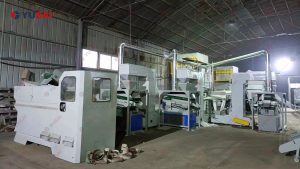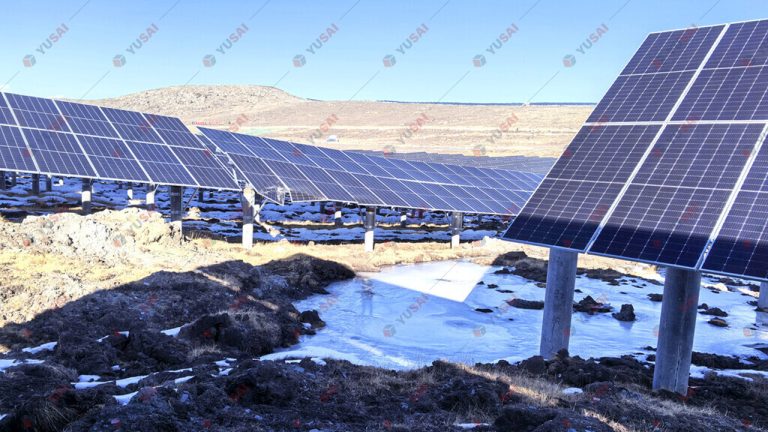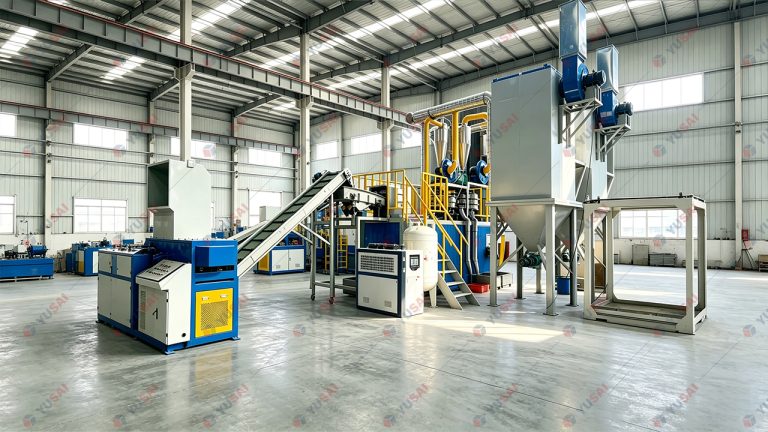
PV tunnel furnace serves as the core thermal treatment equipment across the photovoltaic industry. It is widely adopted for metallization sintering of battery electrodes, encapsulant curing, and pyrolysis recovery of end-of-life PV panels. Leveraging the quantum tunneling micro-reaction principle, the furnace creates atomic-scale confined reaction zones inside the segmented heating chamber. It precisely regulates interfacial reactions between gas and solid materials in a continuous production mode, so as to stabilize the photoelectric conversion efficiency of new solar cells or realize resource separation of waste PV modules. It is an essential unit for PV mass production and solid waste recycling lines.
1. Working Principle of PV Tunnel Furnace
With the tunneling junction quantum effect, numerous atomic-sized micro-reaction tunnels are formed inside the heating zones. Silicon wafers with printed metal paste or discarded PV modules travel forward at a constant speed on the mesh belt. Under multi-zone precise temperature control, gas molecules enter these micro tunnels with shortened intermolecular distance and enhanced interaction. Target reactions including solvent evaporation, organic decomposition, metal particle sintering and adhesive pyrolysis proceed in a controllable manner.
By adjusting furnace temperature, atmosphere, conveying speed and voltage parameters, the reaction pathway can be accurately tuned. It supports low-energy and high-selective continuous heat treatment. Compared with conventional high-temperature thermal equipment, it reduces thermal damage to workpieces and guarantees high yield of solar cells or high purity of recovered materials.
The furnace body is designed with segmented tunneling junction chambers, including preheating & drying zone, binder burnout zone, high-temperature sintering / pyrolysis zone, heat preservation zone and slow cooling zone. Each zone runs with independent temperature control. PV workpieces pass through the whole furnace continuously at a stable speed to complete the full process.
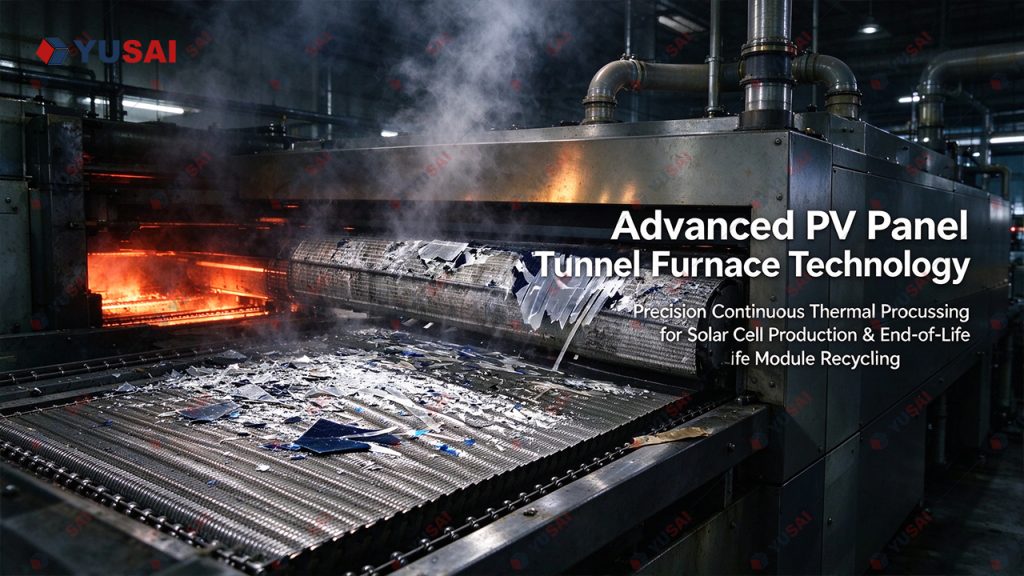
2. Two Main Process Routes for PV Tunnel Furnace
We provide two mature technical solutions for photovoltaic industry: electrode sintering for new solar cell manufacturing and pyrolysis separation for waste PV panel recycling.
Route 1: Electrode Sintering Process for PV Cells
Application: Silicon wafers printed with silver paste and aluminum paste, to form ohmic contact for front and back electrodes.
- Feeding & Positioning: Silicon wafers with finished metal paste printing are neatly placed on the mesh belt and fed into the furnace steadily to avoid paste shifting and contamination.
- Preheating & Drying Zone (80–200°C): Organic solvents inside the paste volatilize gradually through micro-tunnel enhanced diffusion. The paste surface gets initially cured to prevent flowing and blistering. Waste gas is exhausted under negative pressure.
- Binder Burnout Zone (200–450°C): Organic binders inside the paste are fully oxidized and gasified without carbon residue. The atmosphere is strictly controlled to avoid silicon substrate oxidation.
- High-Temperature Sintering Zone (700–900°C, core zone): Silver and aluminum particles diffuse and sinter inside atomic micro tunnels. Silver paste penetrates the passivation layer and forms stable ohmic contact with silicon, building transmission channels for charge carriers, which directly determines the cell efficiency. Temperature and voltage work together to improve reaction selectivity and reduce silicon wafer deformation.
- Thermal Stabilization Zone: Proper heat holding eliminates internal thermal stress and ensures uniform and stable electrode structure.
- Gradient Cooling & Discharging: Slow cooling prevents cracking or peeling of electrode layers. Finished cells are sent out for electrical inspection.
Route 2: Pyrolysis & Recycling Process for End-of-Life PV Panels
Application: Retired PV modules, to pyrolyze EVA / POE encapsulant and separate glass, silicon wafers, ribbons and backsheets.
- Pre-treatment & Feeding: PV modules with frames and junction boxes removed are laid flat on the belt and fed into the sealed tunnel furnace.
- Softening Zone (150–280°C): Molecular chains of encapsulant relax with reduced adhesion, and interlayer debonding starts without massive pyrolysis smoke.
- Pyrolysis Zone (300–550°C, core zone): Operated under low-oxygen or inert atmosphere. EVA adhesive is selectively pyrolyzed into small gas molecules. The bonding effect disappears completely, so glass, silicon cells and copper ribbons can be separated. Pyrolysis smoke is collected centrally for treatment.
- Purification & Holding Zone: Residual organic substances are decomposed thoroughly to minimize carbon contamination on silicon and glass surfaces for high cleanliness of recovered materials.
- Gradient Cooling & Discharging: Controlled cooling avoids glass breakage and silicon fragmentation. Materials are then sent to sorting stations for recovery of clean glass, silicon wafers and copper.
3. Key Process Control Parameters
- Multi-zone Temperature Profile: Independent PID temperature control for each zone. Temperature uniformity is critical. Sintering process is highly sensitive to peak temperature and heating rate.
- Mesh Belt Speed: It decides the residence time of materials in each zone. Unstable speed will lead to inconsistent quality between batches.
- Furnace Atmosphere & Oxygen Content: Appropriate oxygen level is maintained for sintering to fully burn organics. Low-oxygen / inert atmosphere is required for PV recycling to protect silicon from oxidation.
- Tunneling Junction Voltage: Adjust the intensity of quantum tunneling to tune reaction rate and activate reactions at lower energy input.
- Negative Pressure Exhaust System: Timely remove solvent vapor and pyrolysis oil gas to avoid carbon accumulation and secondary pollution.
4. Advantages of PV Tunnel Furnace Process
- Continuous High Throughput: Stable assembly-line operation for large-volume processing. Micro-tunnel reaction accelerates interface conversion for consistent production cycle.
- Low Thermal Impact: Quantum tunneling effect reduces activation energy required for reactions. It delivers lower thermal shock than traditional furnaces and cuts loss rate of silicon and glass.
- Multi-dimensional Precision Control: Temperature, belt speed, atmosphere and voltage can be adjusted flexibly for PERC, TOPCon, perovskite cells and double-glass modules.
- Excellent Reaction Selectivity: Confined-space effect inside micro tunnels triggers target reactions only. Sintering forms qualified ohmic contact while pyrolysis breaks encapsulant without damaging base materials, delivering high-purity recovered products.
- Sealed & Eco-friendly Design: Fully sealed furnace chamber with centralized waste gas collection and tail gas treatment, complying with environmental standards for PV manufacturing and waste disposal.
5. Development Trends
- Adapt to New-generation Solar Cells: Develop low-temperature sintering profiles for perovskite and tandem cells to protect heat-sensitive functional layers.
- Intelligent Recycling for Waste PV: Adaptive temperature curves for mixed retired modules, automatic identification of module types to boost silicon recovery yield.
- Intelligent Co-control of Atmosphere and Tunneling Parameters: Real-time monitoring of cell performance and flue gas composition, with AI auto-adjustment of temperature zone, voltage and belt speed.
- Integrated Production Line: Combine with auto feeding, visual inspection, sorting and flue gas purification for fully automatic PV manufacturing and recycling workflow.
Summary
PV tunnel furnace realizes electrode sintering for solar cell production and encapsulant pyrolysis for waste PV recycling inside segmented tunnel chambers. With precise temperature and atmosphere control throughout preheating, burnout, high-temperature reaction and cooling stages, it helps improve solar cell performance and supports resource recovery of retired photovoltaic modules. Featuring high efficiency, low thermal damage, flexible controllability and high product purity, this technology will keep growing along with the expansion of PV capacity and booming demand for PV circular economy.