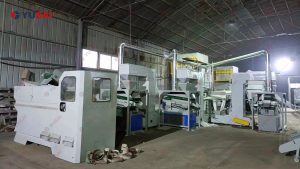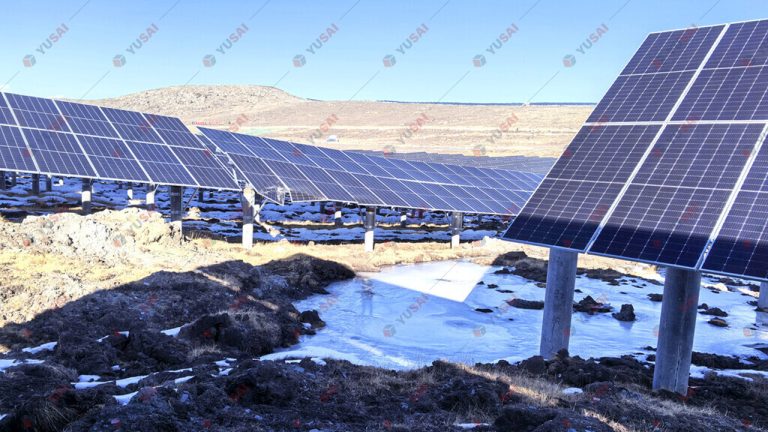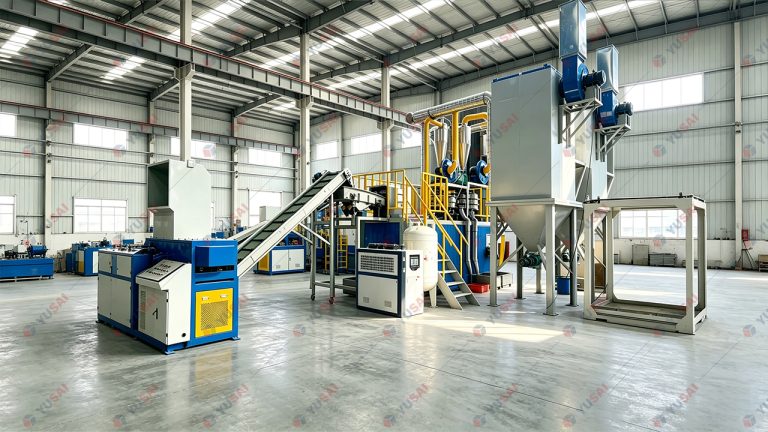
The continuous pyrolysis tunnel furnace acts as a core pretreatment unit in waste photovoltaic panel recycling. It removes the EVA encapsulant layer through controlled heating, separates silicon solar cells from glass and other materials, and creates favorable conditions for subsequent silver extraction. However, the tunnel furnace itself does not produce pure silver. Silver is finally recovered through downstream hydrometallurgical leaching and electrolytic refining.
The key to tunnel furnace operation lies in low-oxygen or nitrogen-shielded pyrolysis. This controlled atmosphere reduces silver oxidation and volatilization, protects the silver grid structures on silicon cells, and improves the stability of subsequent silver recovery.
1. Pre-Dismantling and Sorting
Before waste PV modules enter the tunnel furnace, they must be properly dismantled and sorted.
First, remove the aluminum frames, junction boxes, and output cables. Aluminum parts can be sorted separately for resale. The backsheet should also be removed because fluorine-containing backsheets may generate harmful byproducts during thermal processing. Large modules are then cut into suitable pieces, usually in the range of 200–400 mm, to match the feeding size of the tunnel furnace.
During pretreatment, heavily carbonized, burnt, or highly contaminated modules should be excluded. Double-glass modules require separate process parameter adjustment. Surface dust removal is also recommended to reduce particulate carryover into the furnace.
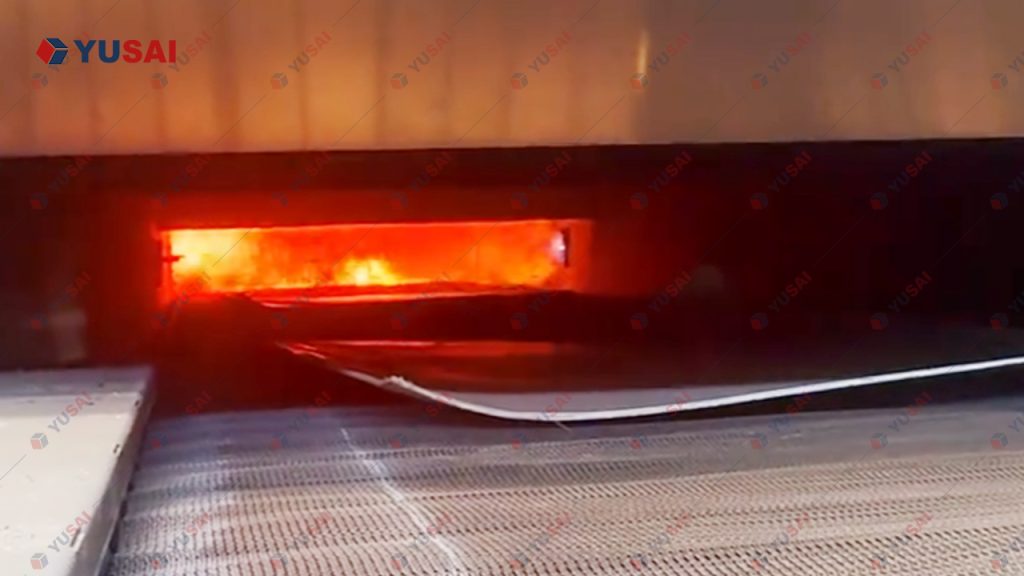
2. Continuous Pyrolysis in the Tunnel Furnace
The tunnel furnace adopts a mesh belt conveyor for continuous feeding and is divided into three thermal stages: preheating, main pyrolysis, and residual carbon removal.
Preheating Zone
In the preheating zone, the temperature is gradually increased to 150–280°C. This softens the EVA encapsulant, evaporates moisture, and removes low-molecular-weight organic components. Slow preheating reduces the risk of sudden foaming, material breakage, and silver grid peeling.
Main Pyrolysis Zone
The main pyrolysis zone operates at 380–480°C. In this stage, the EVA layer decomposes and gasifies, causing the bonding force between glass, silicon cells, and other layers to weaken. The materials then delaminate, making it easier to separate glass and silicon cells in downstream sorting.
Long-term operation above 500°C should be avoided. Excessively high temperature may cause the glass-frit components in silver paste to melt and bind silver into the silicon substrate, making silver difficult to leach and reducing recovery efficiency.
Residual Carbon Removal Zone
After the main pyrolysis stage, materials enter the residual carbon removal zone at 480–530°C. A small amount of air is introduced under strict control to burn surface carbon residues and tar. The oxygen level must remain low to avoid oxidizing the silver grids.
Cooling Discharge
After thermal processing, materials are cooled in a nitrogen atmosphere below 100°C before discharge. Rapid exposure of high-temperature silicon cells to air should be avoided, as this may cause oxidation and reduce silver activity in the subsequent leaching stage.
3. Off-Gas Treatment
The off-gas generated during tunnel furnace pyrolysis requires proper treatment.
Pyrolysis gas is sent through a quench tower, baghouse filter, scrubber system, catalytic combustion unit, and activated carbon adsorption system. The scrubber removes acidic gases and fluorine-containing components, while the catalytic combustion and activated carbon sections control VOCs and other organic emissions. Continuous monitoring of dioxins, fluoride, and VOCs is recommended.
4. Post-Furnace Sorting
After cooling, the discharged mixture contains tempered glass, silicon solar cells, copper-tin ribbons, and a small amount of carbon residue.
Vibrating screening, air classification, color sorting, or electrostatic separation can be used. Bulk glass is separated for recycling. Copper-tin ribbons are collected separately. The most valuable fraction is silicon cells with intact silver grids, which are sent to the silver recovery section.
If crushing is required, only coarse crushing is recommended. Fine grinding should be avoided, because it may encapsulate silver inside silicon powder and reduce leaching efficiency.
5. Hydrometallurgical Silver Leaching
Silver recovery from silicon cells is completed through hydrometallurgical leaching and purification.
Two routes are commonly used: nitric acid leaching and methanesulfonic acid leaching. Nitric acid leaching is a traditional process, while methanesulfonic acid leaching is a cleaner option with lower corrosion risk and better environmental performance.
Nitric Acid Leaching
In the nitric acid route, silver is dissolved from the silver grids using dilute nitric acid and selective additives. After filtration, the silver-containing solution is purified to remove impurities such as copper, tin, lead, and aluminum. Silver is then precipitated as silver chloride, which is further reduced into sponge silver. The sponge silver can be smelted into silver ingots or purified by electrolysis.
Methanesulfonic Acid Leaching
The methanesulfonic acid route uses a less corrosive acidic system and produces less nitrogen oxide than the nitric acid route. After leaching, silver can be recovered directly by electrowinning. This reduces the number of precipitation steps, lowers wastewater treatment pressure, and is more suitable for new PV recycling projects.
6. Back-End Material Handling
Silicon slag generated after leaching can be filtered, washed, dried, and sent to silicon recycling facilities.
Wastewater and leachate residues must be treated through neutralization, heavy metal removal, and filtration. Water recycling is recommended to reduce fresh water consumption and discharge risk.
Lead- and fluorine-containing residues should be managed as hazardous waste and treated by licensed facilities.
7. Key Process Control Points
Several parameters directly affect silver recovery and system stability.
First, atmosphere control is critical. Low-oxygen or nitrogen-shielded operation helps prevent silver oxidation and volatilization. Second, temperature control is essential. The main pyrolysis zone should remain within the effective EVA decomposition range, while overheating above 500°C should be minimized. Third, mesh belt speed must match module thickness and heating requirements.
Finally, the tunnel furnace should be correctly understood as a delamination and pretreatment unit. It separates silicon cells from glass and other materials, but does not directly produce pure silver. Pure silver is obtained only after leaching, purification, and electrolytic refining.