Abstract
With the rapid expansion of global photovoltaic installed capacity, end-of-life (EOL) crystalline silicon PV modules are forming a growing waste stream. This article introduces applicable regulatory frameworks, mainstream recycling technologies, unit processing costs and residual value revenue under China’s 2025 compliance requirements. It also provides cross-border benchmark cases and economic analysis, to support PV project developers, investors and recycling partners in reserve budgeting, contract risk control and circular supply chain layout.
1. Regulatory & Technical Compliance Framework
1.1 Regulatory Rules
Extended Producer Responsibility (EPR)
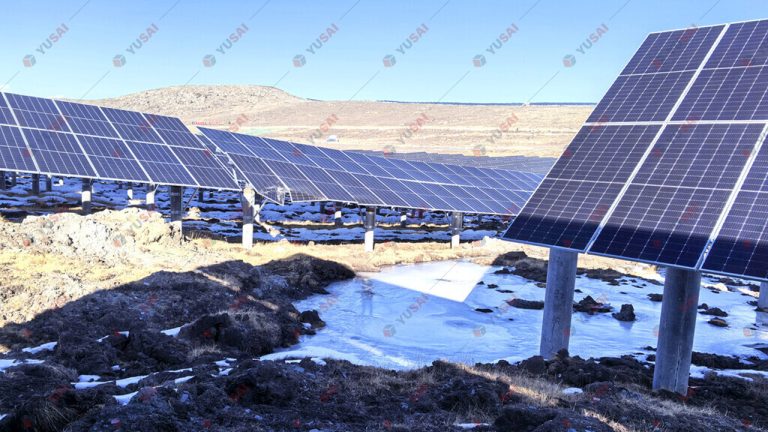
China’s Guidance on Promoting the Circular Utilization of Decommissioned Wind Power and PV Equipment (NDRC Circular〔2023〕No.1030) clarifies that utility-scale PV station operators shall bear legal responsibilities for retired module treatment. Illegal landfilling and uncontrolled dumping are prohibited.
The EU WEEE Directive (2012/19/EU) sets a minimum overall recovery rate of 85% for PV panels. Drawing on overseas experience and domestic industrial practice, the national standard Physical Recycling Method for Crystalline Silicon PV Modules (released in 2024) specifies a minimum mass recovery rate of 90%.
Pollution Control Specifications
The Pollution Control Technical Specification for Waste PV Equipment Recycling and Treatment (Draft for Comment) issued by the Ministry of Ecology and Environment requires qualified recyclers to equip complete flue gas, wastewater and residue treatment systems. Discharge limits for heavy metals including lead and cadmium shall comply with standards for hazardous waste incineration.
1.2 Main Recycling Technology Routes
Three mature commercial pathways are widely adopted for crystalline silicon modules, with different recovery rates, energy consumption and cost profiles:
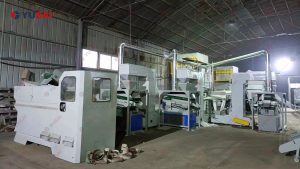
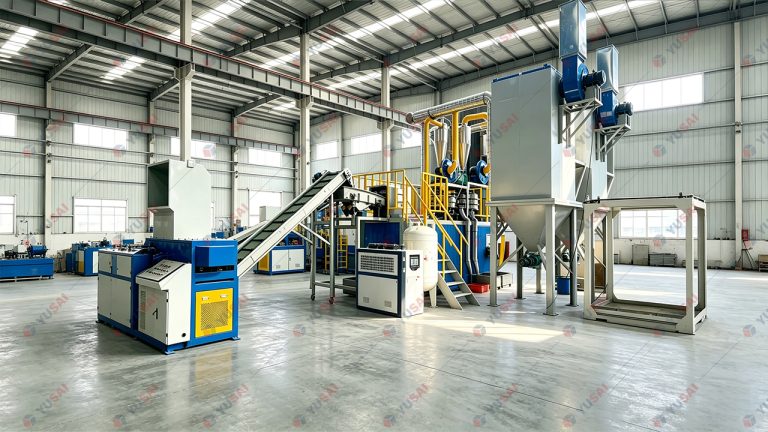
- Physical / Mechanical Recycling Modules go through crushing, screening and air separation to sort glass (~70%), aluminum frame (~18%), silicon wafer (~4%) and other fractions. Mass recovery ≥90%. Processing cost: CNY 40–60 / kWp. This route features low chemical risk and stable operation.
- Chemical Delamination Recycling Acid or alkaline solution dissolves the EVA encapsulant. Silver and copper recovery ≥95%. Supporting wastewater treatment facilities are mandatory. Processing cost: CNY 50–80 / kWp.
- Pyrolysis Recycling High-temperature thermal decomposition removes organic encapsulant materials. Recovered silicon can reach 99.99% purity. Higher power consumption leads to higher operating expense. Processing cost: CNY 60–100 / kWp.
1.3 Recycled Material Quality Standards
- Aluminum frames: meet chemical composition requirements of wrought aluminum and aluminum alloys
- Silicon feedstock: electronic-grade purity (99.999%)
- Silver powder: purity ≥99.9%
2. Market Cost & Residual Value Calculation
2.1 Basic Reference Parameters
The calculation adopts mainstream 182mm c-Si PV modules as the baseline.
- 1,000 m² installed area ≈ 150 kWp
- Total weight ≈ 1.5 tonnes (including glass, aluminum frame, cells and backsheet)
2.2 Economic Outcome
For every 1,000 m² of retired PV panels:
- Total market processing fee range: CNY 6,000 – 12,000 (midpoint: CNY 9,000)
- Residual value revenue from recovered glass, aluminum, silicon, silver and copper: approx. CNY 10,000
From an economic perspective, physical mechanical recycling delivers the best balance of compliance, throughput and margin.
3. Contract & Risk Suggestions
It is recommended that EOL recycling obligations, budget reserves and liability boundaries are clearly defined in PV EPC and operation contracts. Operators shall set aside dedicated decommissioning and recycling provisions in advance to avoid non-compliance penalties when modules reach end of service life.
4. Global Benchmark Cases
- PV CYCLE (EU) Membership-based centralized recycling network. 2024 treatment cost approx. EUR 80 / tonne; recovered material residual value offsets around 60% of total processing cost.
- First Solar Closed-Loop Recycling Cadmium telluride thin-film module recovery rate ≥95%. Closed-loop reuse rate of semiconductor materials reaches 90%, cutting raw material cost versus virgin feedstock by 40%.
5. Conclusion
Under 2025 domestic compliance rules, physical mechanical recycling remains the preferred route for retired crystalline silicon PV panels. It achieves the mandatory 90% mass recovery target with relatively low unit cost, while recovered commodities can offset most treatment expenses.
Project stakeholders need to continuously track policy updates and technical iteration. As recycling equipment automation improves and precious metal separation efficiency rises, the net treatment cost of EOL PV panels is expected to decline further, unlocking larger circular economy value for the global PV industry.