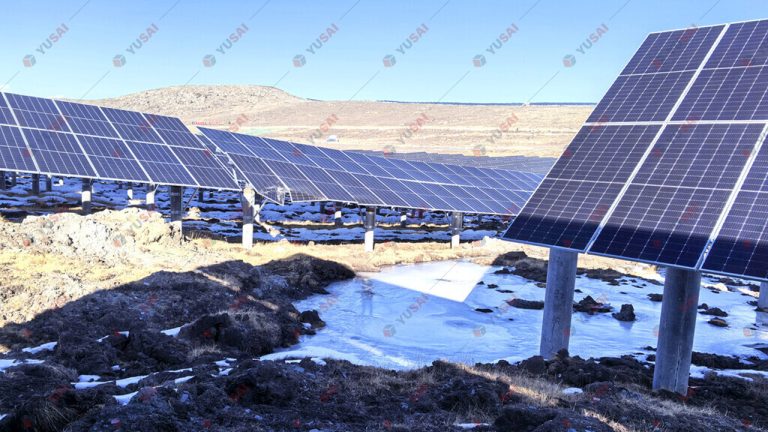
Few market participants fully recognise that the world is entering a massive wave of end-of-life photovoltaic panels.
Global cumulative PV installed capacity has grown exponentially over the past two decades. Solar panels have a service lifespan of only 20–25 years. The first large-scale solar farms commissioned in the early 2000s are now approaching the end of their operational life and entering mass retirement. Many early distributed PV projects, installed with inconsistent component quality, will retire even earlier than utility-scale power plants.
Scale of Global Retired PV Modules
According to IRENA and international PV industry forecasts, global volumes of retired solar panels are rising rapidly. Annual decommissioned PV waste will surge from hundreds of thousands of tonnes today to more than 5 million tonnes globally by 2035. This creates a multi-billion-dollar circular economy market worldwide.
Yet this sector remains vastly underserved across most regions.
Why Investors Have Held Back
To many operators, solar panel recycling appears unattractive. PV modules are bulky and heavy, pushing up logistics costs while disassembly is labour-intensive. A standard PV panel weighs roughly 20 kg, composed of glass (70%), aluminium frame (15%), silicon wafers plus precious metals (10%) and plastic backsheet (5%). If treated merely as low-grade scrap, recovered glass and aluminium deliver minimal returns. After deducting transport and labour expenses, operators struggle to turn a profit.
This conventional view overlooks a major market opportunity shaped by new global regulatory trends.
New Rules Reshape the Commercial Logic
Regulators worldwide are tightening end-of-life requirements for solar hardware. The European Union has incorporated PV modules under the WEEE Directive, imposing mandatory collection and recovery targets, with clear recycling rate obligations for producers. Japan, Australia, several US states and India are rolling out extended producer responsibility (EPR) schemes, bans on landfilling PV waste, financial incentives and tax relief for licensed recyclers.
Common mandatory requirements across leading markets:
- Solar asset owners must arrange compliant treatment for retired PV panels. Landfilling or uncontrolled dumping is prohibited, carrying heavy fines.
- Qualified recycling operators receive government grants, per-tonne treatment subsidies or tax incentives to offset processing costs.
- Strict recovery benchmarks are enforced: glass, aluminium, silicon and precious metal fractions must meet minimum recycling rates to qualify for incentives.
These policies completely rework the project economics. A standard 20 kg panel yields limited revenue when sold as simple scrap. When processed through certified recycling workflows:
- Operators qualify for per-ton governmental treatment incentives.
- Separated aluminium frames generate steady revenue.
- Silicon wafers contain silver. Approximately 3–5 kg of silver can be extracted from one tonne of waste PV panels, which delivers high-value returns.
Combined with policy incentives, the total revenue per panel more than doubles compared with basic scrap sales, unlocking healthy profit margins.
Profit Model for Large-Scale PV Decommissioning Projects
When utility or distributed solar farms reach end-of-life, thousands or even hundreds of thousands of panels are decommissioned in a single batch. A typical small distributed solar installation may hold around 1,800 panels totalling 36 tonnes.
Recycling providers can offer free decommissioning and removal services, which appeals greatly to asset owners who would otherwise bear demolition costs.
- Total treatment subsidies for the batch: calculated based on per-ton regional incentive rates
- Material revenue from separated aluminium, silicon and silver
- Total operational costs include transport, labour for disassembly, site rental and power consumption
Once operational costs are subtracted, the project delivers solid net returns. Such a small solar farm can be fully processed within a week. Running multiple projects monthly creates stable recurring profits.
Core Entry Barriers
- Recycling licensing & compliance documentation: Operators must obtain relevant waste-handling permits and certifications required by local environmental authorities.
- Industrial storage and sorting site: A secured facility of at least 1,000 sq.m for material stockpiling and separation, isolated from residential zones.
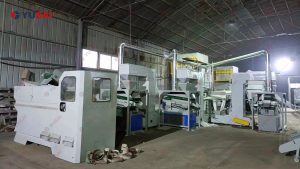
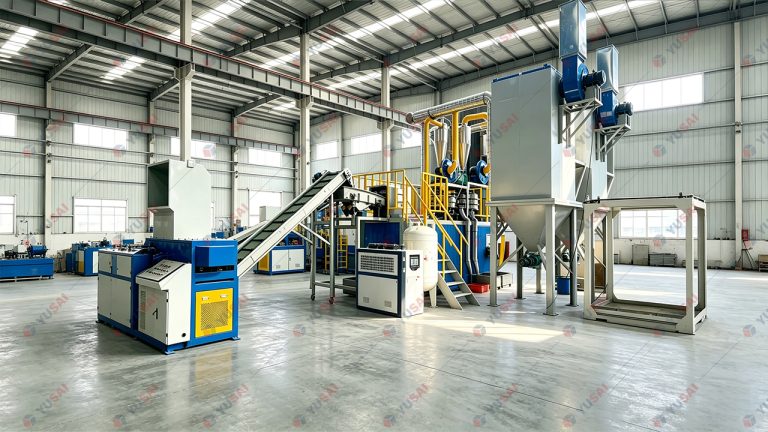
- PV recycling and dismantling equipment: Mobile PV panel dismantling systems are commercially available. These machines can process roughly 50 panels per hour. New market entrants can begin with semi-manual disassembly for early projects before scaling up automated lines.
Reliable Lead Generation Channels
Sourcing end-of-life panels is the most critical part of the business. Solar waste generators and certified recyclers often lack reliable connections. High-value channels include:
- Public databases of distributed and rural solar installations. National energy authorities publish registers listing solar project locations, commissioning dates and installed capacity. Operators can directly contact asset owners whose systems are approaching end-of-life.
- Solar O&M contractors. Operation and maintenance teams identify degraded, irreparable modules long before formal decommissioning and act as primary sources of market intelligence.
- Databases of early utility-scale solar projects. Assets commissioned between 2008–2018 are the first cohort entering retirement. These project registers cover thousands of sites globally for screening and outreach.
Three Irreversible Global Trends Shaping This Market
- Binding international and regional regulations: Governments are banning uncontrolled disposal, creating non-negotiable compliance obligations for solar farm owners.
- Massive incoming retirement wave: Solar capacity installed in the early 2000–2018 boom will reach end-of-life over the next 5–10 years. Annual PV waste volumes grow exponentially.
- Severe shortage of compliant processing capacity: Only a limited number of licensed PV recycling plants operate globally. Existing processing capacity cannot keep pace with incoming retired panel volumes.
Mandatory compliance rules, fast-growing waste streams, insufficient certified capacity and financial incentives combine to create a high-potential global blue ocean market.
How New Market Players Can Start
There is no requirement to build a full-scale metallurgical plant at the beginning. Investors may start with an intermediate recycling hub: secure permits and a local site, collect retired panels from nearby solar projects, conduct primary separation of aluminium frames and glass, then sell pre-sorted materials to licensed metallurgical facilities for deep extraction.
Operators earn margins plus policy incentives on each panel. A single solar farm with thousands of panels delivers substantial profits. As business volume expands, advanced recycling equipment can be deployed to recover silver and silicon, further boosting profit levels.
Henan YuSai Precision Machinery Co., Ltd. is a professional manufacturer of waste photovoltaic panel recycling equipment. We develop and fabricate complete PV module dismantling, crushing and sorting production lines for recycling hubs and full-scale treatment plants worldwide. Our machinery achieves efficient separation of aluminium frames, glass, silicon wafers and precious metals, helping customers meet international recycling rate standards, cut labour expenses and maximise recovered material value. We supply customised equipment, installation & commissioning, technical training and after-sales support to global investors entering the PV recycling sector, helping them capture opportunities amid the worldwide PV retirement wave.
This content can be further refined for overseas promotion. Work task mode supports optimizing titles, adjusting paragraph hooks, designing supporting images and polishing materials for different overseas platforms. Would you like to use it?